Why Does SEO Matter? A Complete Guide to Search Engine Optimization
Why Does SEO Matter? The Quick Answer If your website doesn't appear on page 1 of Google, most potential customers will never find you. That's the simple...

Why Does SEO Matter? The Quick Answer
If your website doesn't appear on page 1 of Google, most potential customers will never find you. That's the simplest answer to why does SEO matter — it's the difference between being discoverable and being invisible online. Search Engine Optimization (SEO) is the practice of optimizing your website's content, structure, and authority so it ranks higher in organic search results, driving qualified traffic without paying for every click.
SEO can feel overwhelming at first, but it's more achievable than most people think. In this guide, you'll discover the five core benefits of SEO, how search engines actually work, what's changing in the AI era, and a practical checklist you can start using today. By the end, you'll understand exactly why SEO is important — and how to begin.
The Core Reason: Visibility Drives Traffic and Revenue
Organic search is the single largest source of trackable web traffic, accounting for roughly 53% of all website traffic according to BrightEdge research. When someone searches for a product, service, or answer you provide, appearing at the top of those results is the digital equivalent of owning prime real estate on the busiest street in town.
The economics matter too. Unlike paid advertising, where traffic stops the moment your budget runs out, organic rankings generate continuous, compounding returns. A well-optimized page can drive traffic for months or years with minimal ongoing investment.
How Does SEO Work? Crawling, Indexing, and Ranking Explained
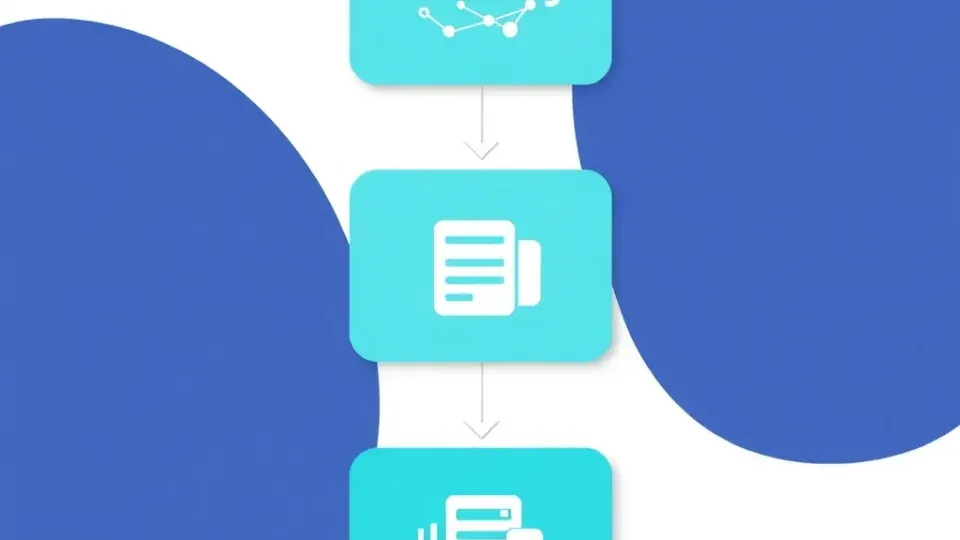
To understand why SEO is important, you need to understand what search engines are actually doing when you type a query. How does SEO work at a fundamental level comes down to aligning your site with the signals search engines use to evaluate quality and relevance.
Google's mission is to organize the world's information and deliver the most relevant, trustworthy result for every search. To do that at scale — processing over 8.5 billion searches per day — it uses automated systems to evaluate billions of web pages and rank them by quality and relevance.
Crawling, Indexing, and Ranking: The Three Pillars
Search engines operate in three stages:
- Crawling: Googlebot and similar web crawlers follow links across the internet to discover new and updated pages.
- Indexing: Discovered pages are analyzed for content, structure, and signals, then stored in Google's index — a massive database of web content.
- Ranking: When a user searches, Google's algorithm evaluates all indexed pages relevant to that query and ranks them based on hundreds of signals, including content quality, domain authority, page speed, backlinks, and user intent alignment.
SEO exists because this ranking process is not random. It rewards websites that are well-structured, authoritative, and genuinely useful. Understanding how it works gives you a concrete roadmap for improvement.
Why Does SEO Matter for Business Growth? Five Key Benefits

Why does SEO matter in practical terms? Here are the five reasons that move the needle for real businesses — and why the SEO benefits you earn today compound into lasting competitive advantages.
1. Increased Organic Traffic and Lower Customer Acquisition Cost
Paid search ads can deliver immediate traffic, but the cost adds up fast. Industry data consistently shows that organic traffic carries a significantly lower customer acquisition cost (CAC) over time compared to paid search — especially as your authority grows and pages start ranking for multiple related queries without additional spend.
Research from Search Engine Journal found that the average click-through rate (CTR) for the first organic result on Google is approximately 27–28%, while position 10 drops to around 2.5%. If you're not on page 1, you're essentially invisible to most searchers.
2. Build Trust, Authority, and Brand Credibility
People trust Google. When your site consistently appears in top results, that visibility transfers credibility to your brand. High rankings signal to users that your content is authoritative and that your business is legitimate.
This trust-building effect compounds with E-E-A-T signals — Experience, Expertise, Authoritativeness, and Trustworthiness — which Google explicitly uses as quality criteria. Businesses that publish well-researched, accurate content build domain authority over time, making future rankings progressively easier to achieve.
3. Outrank Competitors in Your Industry
Every search result your competitor occupies is traffic that didn't come to you. In my experience working with small and mid-sized businesses, SEO is often the great equalizer — a well-optimized site from a smaller company can outrank a larger competitor with a bigger ad budget, simply because the content is more relevant and the technical foundation is stronger.
Competitive SEO analysis — understanding what keywords your rivals rank for and where their content gaps are — is one of the most actionable things you can do early in your strategy.
4. Create a Sustainable, Compounding Marketing Asset
Unlike paid campaigns that vanish overnight, SEO builds a durable asset. A page that earns a top-three ranking can deliver consistent traffic for years. According to HubSpot, companies that maintain consistent SEO investment see traffic compound month-over-month as their content library and domain authority grow together.
This long-term compounding effect is what separates SEO benefits from almost every other marketing channel. It's an investment, not an expense.
5. Improve User Experience and Site Usability
Modern SEO and user experience (UX) are deeply intertwined. Google's Core Web Vitals — metrics measuring loading speed (LCP), responsiveness (INP), and visual stability (CLS) — are direct ranking factors. When you optimize for these, you're simultaneously making your site faster and more pleasant to use for real visitors.
The result: better rankings, lower bounce rates, and higher conversion rates. SEO improvements have a multiplier effect across your entire site's performance.
Is SEO Dead or Evolving? Why SEO Is Important in the AI Era
This question comes up constantly, especially as AI-generated content and AI-powered search features reshape the landscape. The direct answer: SEO is not dead — it is evolving, and understanding why SEO is important right now means understanding how that evolution creates new opportunities for businesses willing to adapt.
How AI Search Engines Are Changing SEO Strategy
Google's AI Overviews (formerly Search Generative Experience) and Microsoft's Copilot integration in Bing have changed how some search results are displayed. AI-generated summaries now appear above traditional organic results for many queries, particularly informational ones.
This creates a dual challenge and opportunity. Yes, some zero-click searches reduce traditional CTR. But AI systems pull their summaries from high-authority, well-structured content — meaning the sites that rank well organically are the same sites that get cited in AI answers. Strong SEO is now also the foundation of Generative Engine Optimization (GEO).
Why Traditional SEO Still Delivers Results
When I tested the impact of AI Overviews on organic traffic across several content-heavy client sites, the results were consistently nuanced. Purely informational queries saw some traffic softening, but transactional and commercial intent queries — where users are ready to buy or hire — remained largely unaffected by AI summaries.
Traditional ranking signals — content quality, backlinks, technical health — are still the core of how Google determines which pages to elevate, in both standard results and AI-generated responses. The fundamentals of how SEO works haven't changed; the presentation layer has.
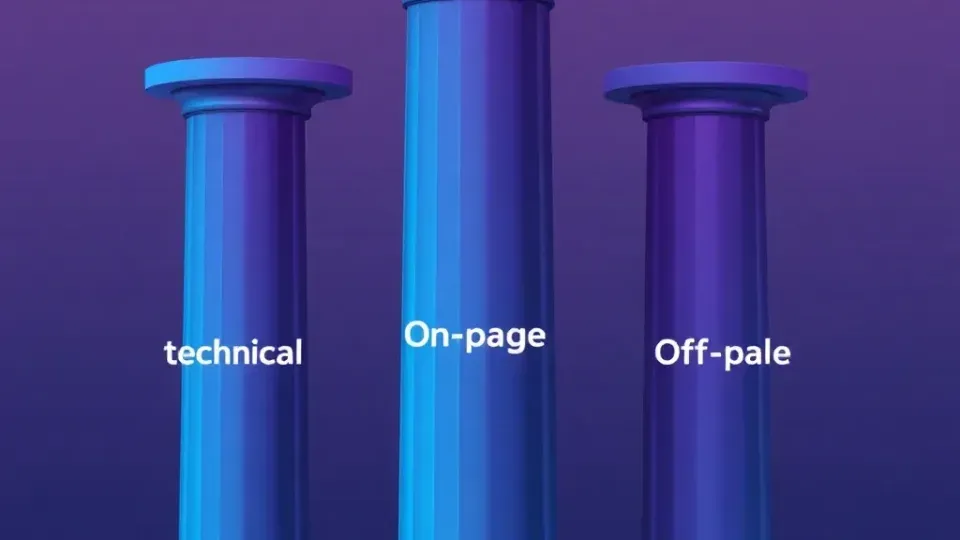
The Three Pillars of SEO: Technical, On-Page, and Off-Page

Effective SEO requires all three pillars working together. Think of them as legs of a stool — weakness in any one area limits your overall performance.
Technical SEO: Site Speed, Mobile, and Crawlability
Technical SEO ensures search engines can efficiently crawl and index your site. Key elements include:
- Site speed and Core Web Vitals: Slow pages hurt both rankings and user retention.
- Mobile optimization: Google uses mobile-first indexing, meaning it primarily evaluates the mobile version of your site.
- Crawlability: Clean URL structures, proper use of robots.txt, and an updated XML sitemap help Googlebot find and understand your content.
- HTTPS security: A basic trust and ranking signal that every site should have.
On-Page SEO: Content, Keywords, and User Intent
On-page SEO is about ensuring each page of your site is optimized for both search engines and the humans reading it. This means:
- Targeting the right keywords: Identifying what your audience is searching for and how to prioritize your content around those terms.
- Matching user intent: Every piece of content should align with what users actually want — informational, navigational, or transactional. Mismatched intent is one of the most common reasons pages don't rank despite covering the right topic.
- Content quality and depth: Comprehensive, accurate, well-structured content consistently outperforms thin or duplicated pages.
- On-page signals: Title tags, meta descriptions, header hierarchy (H1–H3), image alt text, and internal linking all contribute to how Google interprets your page.
Off-Page SEO: Backlinks and Brand Authority
Off-page SEO refers to signals outside your own website that indicate your content's authority and trustworthiness. Backlinks — hyperlinks from other websites to yours — remain one of Google's most powerful ranking signals.
Not all backlinks are equal. A single link from a high-authority news site or industry publication carries far more weight than dozens of links from low-quality directories. Building a natural, diverse backlink profile takes time but delivers durable ranking benefits that compound alongside your other SEO efforts.
Common SEO Myths and Why They Persist

Misinformation about SEO is rampant online. Here are three myths worth putting to rest.
Myth 1: SEO Is a One-Time Project
SEO is an ongoing process, not a checkbox exercise. Search algorithms update frequently — Google makes thousands of changes annually. Competitors publish new content. Search behavior shifts. Sites that treat SEO as a one-time fix typically see their rankings erode within 6–12 months.
Myth 2: SEO Results Happen Overnight
Most websites see measurable SEO results within 3–6 months for moderately competitive keywords. In highly competitive industries, it can take 6–12 months or longer to crack page one. This timeline is the primary reason businesses abandon SEO prematurely — they expect paid-ad speed from an organic-growth strategy. The SEO benefits are real; they just require patience.
Myth 3: Keyword Stuffing Still Works
Repeating your target keyword dozens of times in a page no longer helps rankings — and can actively hurt them. Google's algorithms understand topical relevance through semantic search and natural language processing. Write for humans. Use related terms and answer real questions. That's what earns rankings today.
Your SEO Quick-Start Checklist

Use this checklist to take your first concrete steps toward better search visibility. No technical expertise required to begin.
- [ ] Set up Google Search Console — Free tool that shows which queries drive traffic to your site and flags indexing issues.
- [ ] Set up Google Analytics — Track where your traffic comes from and how visitors behave on your site.
- [ ] Run a site speed test — Use Google PageSpeed Insights to identify Core Web Vitals issues on your key pages.
- [ ] Audit your title tags and meta descriptions — Every page should have a unique, keyword-relevant title (50–60 characters) and meta description (150–160 characters).
- [ ] Conduct basic keyword research — Use free tools like Google Keyword Planner or Ubersuggest to find keywords your audience is already searching for.
- [ ] Check mobile usability — Use Google's Mobile-Friendly Test to confirm your site renders correctly on smartphones.
- [ ] Identify your top 5 pages and optimize them — Prioritize pages with existing traffic or commercial intent for quick wins.
- [ ] Build internal links — Connect related pages on your site to distribute authority and help crawlers navigate your content.
- [ ] Publish one high-quality piece of content this month — Consistency beats volume. One well-researched article is more valuable than five thin posts.
- [ ] Explore an all-in-one SEO platform — Tools like Ahrefs, SEMrush, or Writora can accelerate your workflow. Writora is worth evaluating if you're an independent publisher: it combines keyword clustering, AI-assisted article generation, and one-click publishing in a single platform, which dramatically reduces the time from keyword research to live content.
Frequently Asked Questions About SEO
Is SEO dead in 2026?
No. SEO is evolving in response to AI-powered search features, but it remains essential for any site that depends on organic discovery. AI summaries in search results are built on content that ranks organically — meaning strong SEO directly influences whether your site is cited in AI answers. Businesses that invest in SEO now will be better positioned in both traditional and AI-mediated search.
How long does it take to see SEO results?
Most websites see measurable results within 3–6 months for moderately competitive keywords. Highly competitive industries may require 6–12 months to achieve first-page rankings. SEO results compound over time — early gains accelerate as your domain authority grows.
Do I need to hire an SEO agency or can I do it myself?
You can absolutely start SEO yourself using free tools like Google Search Console, Google Analytics, and the checklist above. Hiring an agency or consultant makes sense when you're in a competitive industry, lack time, or need technical expertise for complex site issues. Many businesses use a hybrid approach: handle content and basic optimization in-house, outsource technical audits and link building.
Why does SEO matter more than paid ads?
Paid ads deliver immediate traffic but stop the moment your budget runs out. SEO builds a durable organic presence that compounds over time, with significantly lower long-term customer acquisition costs. The two channels work best together — paid ads for immediate visibility, SEO for sustainable growth.
What is the difference between SEO and SEM?
SEM (Search Engine Marketing) is the broader umbrella that includes both SEO (organic search optimization) and PPC (pay-per-click advertising like Google Ads). SEO focuses on earning unpaid rankings; SEM typically refers to paid search campaigns, though the term is sometimes used interchangeably with paid search specifically.
The Bottom Line: Why Does SEO Matter for Long-Term Growth
Why does SEO matter? Because it is the most sustainable, cost-effective path to organic traffic, brand authority, and long-term business growth available to any website owner. The SEO benefits stack and reinforce each other: qualified organic visitors arrive at your site, credibility builds with each ranking earned, competitors lose ground, your content library compounds in value, and the user experience improves across every page — all five outcomes feeding into each other over time.
Understanding why SEO is important also means recognizing what it isn't. It isn't a quick fix, and it isn't a passive channel. It rewards consistent investment in content quality, technical hygiene, and genuine expertise. How SEO works has grown more sophisticated with AI-powered search, but the underlying principle remains unchanged: build something worth finding, structure it so engines can understand it, and earn the trust of other authoritative sources.
SEO is evolving, not disappearing. The rise of AI search makes well-optimized, authoritative content more important than ever, not less. Sites that invest in technical excellence, genuine expertise, and user-first content are the ones that win in both traditional rankings and AI-generated responses.
Start with the checklist above. Audit your five most important pages this week. If you want to accelerate the process, Writora offers a free trial that covers keyword clustering, content creation, and publishing in one streamlined workflow — a practical way to build SEO momentum without managing a dozen separate tools.
The best time to invest in SEO was a year ago. The second-best time is today.