What About SEO: A Complete Guide to Search Engine Optimization
What About SEO? The Quick Answer So, what about SEO ? It's a question people ask in boardrooms, Slack channels, and coffee shops every single day — usual...

What About SEO? The Quick Answer
So, what about SEO? It's a question people ask in boardrooms, Slack channels, and coffee shops every single day — usually when someone realizes their website isn't showing up where it should. Let me give you the straight answer.
SEO (Search Engine Optimization) is the practice of optimizing a website and its content to rank higher in organic (non-paid) search engine results. It involves technical improvements, content quality, and authority building to help search engines understand and rank your pages. That's the SEO meaning at its core — making your site more visible to people actively searching for what you offer.
In 2026, understanding what is search engine optimization isn't optional. Organic search still drives over 50% of all trackable website traffic, according to BrightEdge research, and businesses that neglect SEO are leaving revenue on the table every single day.
This guide will walk you through exactly how SEO works, why it matters for your business, the core components you need to master, whether SEO is truly "dead" in the age of AI, and a practical implementation checklist you can start using today. Whether you're a complete beginner or a business owner evaluating your digital strategy, you'll leave with clarity and a concrete plan.
How Does SEO Work: The Core Mechanism
SEO works by aligning your website with the criteria search engines use to evaluate, categorize, and rank web pages. When someone types a query into Google, the search engine doesn't scan the entire internet in real time. Instead, it draws from a massive index of pre-crawled pages and uses algorithms to determine which results best match the searcher's intent.
Understanding this mechanism is the foundation of every SEO strategy. Let's break it into two parts.
How Search Engines Crawl and Index Your Content
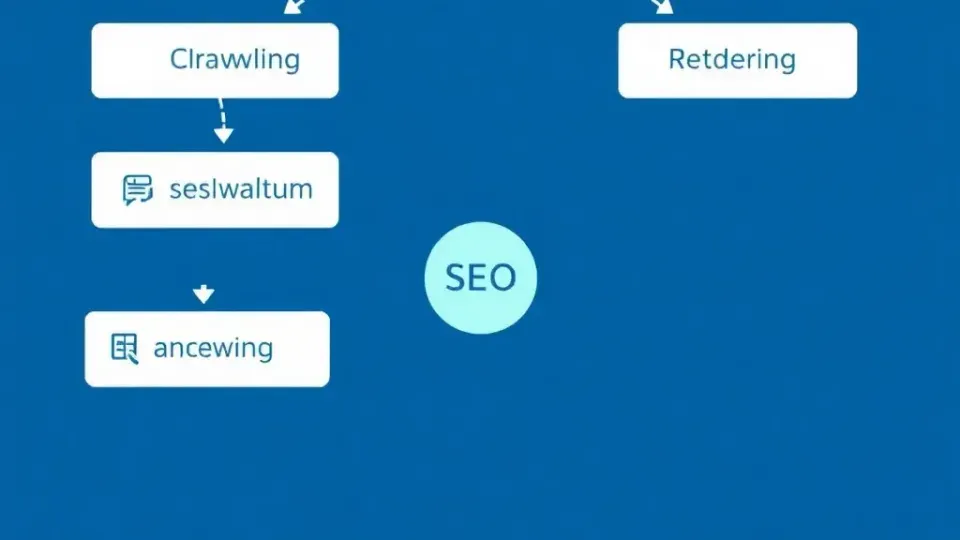
Search engines use automated programs called crawlers (also known as spiders or bots) to discover and catalog web pages. Here's the simplified process:
- Crawling — Googlebot discovers your pages by following links from other websites or your sitemap. It reads your HTML, content, images, and code.
- Rendering — The crawler processes JavaScript and CSS to understand how your page actually looks and functions for users.
- Indexing — If the page meets quality thresholds, Google stores it in its index — a massive database of web pages organized by topic, relevance, and quality signals.
- Serving — When a user searches, Google's algorithm pulls relevant pages from the index, ranks them, and displays results in fractions of a second.
If your pages aren't crawlable, they can't be indexed. If they're not indexed, they simply don't exist in search results. This is why technical SEO — ensuring your site's infrastructure allows search engines to access and understand your content — is a non-negotiable starting point.
The Role of Ranking Factors and Algorithms
Once your content is indexed, ranking factors determine where you appear. Google has confirmed that it uses hundreds of signals, but after working with SEO for over a decade, I can tell you that the most impactful ones cluster into a few core categories:
- Content quality and relevance — Does your page thoroughly answer the searcher's question?
- Backlinks — Do authoritative external sites link to your content, signaling trust and credibility?
- Page experience — Is your site fast, mobile-friendly, and easy to navigate? Google's Core Web Vitals initiative, documented extensively on Google Search Central, formalized these metrics.
- User engagement signals — Click-through rate, dwell time, and bounce rate help Google assess whether users find your content valuable.
- Semantic relevance — Modern algorithms like Google's MUM and AI-powered systems understand meaning, context, and intent — not just exact keyword matches.
In my experience, businesses that focus obsessively on one factor (usually backlinks or keywords) while ignoring the others plateau quickly. SEO success comes from balanced optimization across all these areas.
SEO in Business: Why It Matters

SEO in business isn't just a marketing tactic — it's a growth channel with compounding returns. Unlike paid advertising, where traffic stops the moment you stop spending, organic search traffic builds over time and continues delivering value long after the initial investment.
Here's what the data shows:
- 68% of online experiences begin with a search engine, according to BrightEdge's channel research.
- Organic search has an average close rate of 14.6%, compared to just 1.7% for outbound leads like cold calls and direct mail (HubSpot).
- Businesses investing in SEO report an average ROI of 275% over three years, according to Terakeet's enterprise SEO research.
These aren't vanity metrics. When someone searches "best project management software for remote teams," they have purchase intent. They're actively looking for a solution. SEO puts your business in front of those high-intent users at exactly the right moment.
SEO vs. Paid Search: Cost and Sustainability
A common mistake I see is businesses treating SEO and paid search (SEM) as interchangeable. They're fundamentally different:
| Factor | SEO (Organic) | Paid Search (PPC) | |---|---|---| | Cost structure | Upfront investment, declining cost per click over time | Ongoing cost per click; stops when budget stops | | Time to results | 3–12 months for significant impact | Immediate visibility | | Sustainability | Compounds over time | No lasting equity | | Trust signals | Users trust organic results more (70–80% skip paid ads, according to Search Engine Journal) | Perceived as advertising | | Click share | ~70% of all search clicks | ~30% of search clicks |
The smart play? Use paid search for immediate visibility while building your organic presence. Over time, SEO becomes your most cost-effective acquisition channel because the cost per visitor decreases as your rankings stabilize and content matures.
Core SEO Components You Need to Know
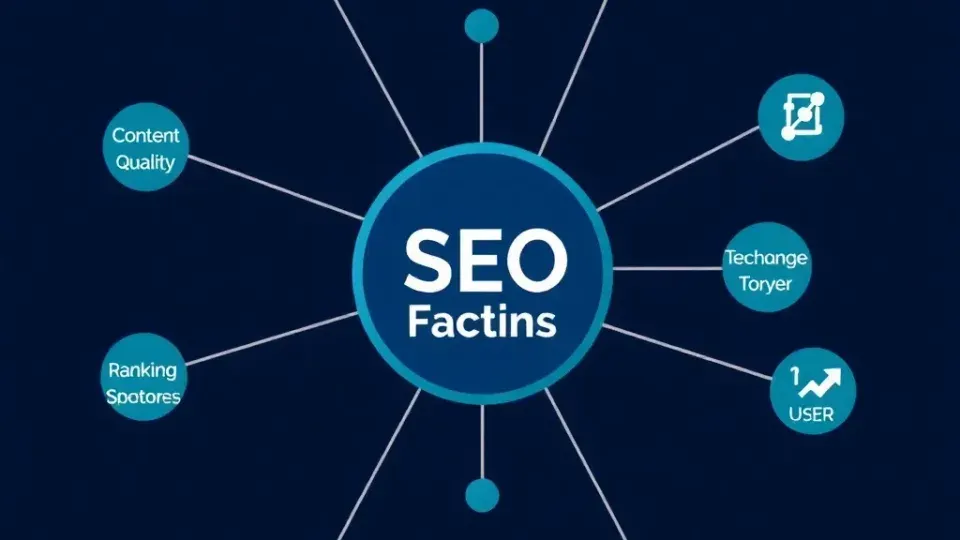
SEO breaks down into three interconnected disciplines. Neglecting any one of them creates a ceiling on your results.
On-Page SEO: Content, Keywords, and Structure
On-page SEO refers to optimization techniques applied directly to your website's pages. This is where you have the most control, and it's where most businesses should start.
The fundamentals include:
- Keyword targeting — Identify the terms your audience actually searches for, then map them to specific pages. A solid keyword research strategy is the backbone of effective on-page SEO.
- Title tags and meta descriptions — Your title tag is one of the strongest on-page ranking signals. Keep it under 60 characters, include your primary keyword, and make it compelling enough to click.
- Heading structure — Use H1 for your page title, H2 for major sections, and H3 for subsections. This hierarchy helps both users and search engines understand your content's organization.
- Content quality — Google's Helpful Content system explicitly rewards content that demonstrates experience, expertise, authoritativeness, and trustworthiness (E-E-A-T). Thin, generic content gets filtered out. For deeper guidance on creating content that ranks, explore content marketing best practices.
- Internal linking — Link related pages together to help search engines discover content and distribute authority across your site.
- Image optimization — Compress images, use descriptive file names, and add alt text that describes the image content.
After years of working with content-heavy sites, I've found that the single biggest on-page lever is matching search intent. A page can have perfect keyword placement and flawless structure, but if it doesn't answer what the searcher actually wants, it won't rank.
Technical SEO: Site Speed, Mobile, and Crawlability
Technical SEO is the backend optimization of your website's infrastructure. It ensures search engines can effectively crawl, render, and index your content. Think of it as the foundation of a house — invisible when done right, catastrophic when neglected.
Key technical SEO elements include:
- Site speed — Google has explicitly confirmed page speed as a ranking factor. Aim for a Largest Contentful Paint (LCP) under 2.5 seconds, as outlined in Google's Core Web Vitals guidelines.
- Mobile-friendliness — Google uses mobile-first indexing, meaning it primarily uses the mobile version of your site for ranking. If your site isn't responsive, you're already behind.
- Crawlability — Ensure your robots.txt file isn't blocking important pages, your XML sitemap is up to date, and your site architecture allows bots to reach every important page within 3–4 clicks.
- Structured data (Schema markup) — Adding schema markup helps search engines understand your content type (articles, FAQs, products, how-tos) and can earn rich snippets in search results.
- HTTPS security — A secure site is a confirmed ranking signal and a basic trust requirement.
- Canonical tags and redirect management — Prevent duplicate content issues and preserve link equity when pages move.
If you haven't audited your site recently, a technical SEO audit checklist is the best place to start. In my experience, fixing technical issues often produces the fastest ranking improvements because you're removing barriers that prevent Google from properly evaluating your content.
Off-Page SEO: Backlinks and Authority
Off-page SEO encompasses everything that happens outside your website to build its authority and reputation. The primary signal here is backlinks — links from external websites pointing to your own.
Backlinks function as votes of confidence. When a reputable site links to your content, it signals to Google that your page is trustworthy and valuable. Correlation studies from Ahrefs and Moz consistently show that the number and quality of referring domains is among the top three ranking factors.
However, not all backlinks are equal:
- Quality over quantity — One link from a high-authority domain (like a major publication or university) is worth more than hundreds of links from low-quality directories.
- Relevance matters — A backlink from a site in your industry carries more weight than one from an unrelated niche.
- Natural acquisition — Google's algorithms are sophisticated enough to detect manipulative link schemes. Buying links or participating in link farms can result in manual penalties.
Effective link building strategies include creating original research, developing linkable assets (tools, calculators, comprehensive guides), digital PR, and guest contributions on authoritative sites. For a deeper dive, explore link building strategies that align with Google's guidelines.
Is SEO Dead or Evolving in 2026?

Let me be direct: SEO is not dead. It is evolving — rapidly and significantly.
This question surfaces every year, and in 2026, it's louder than ever because of AI-powered search features like Google's AI Overviews, which synthesize answers directly in search results. The concern is legitimate: if Google answers the question right on the results page, why would anyone click through to your site?
Here's the reality, backed by data:
- Organic search traffic hasn't collapsed. According to Semrush's 2025 State of Search report, organic click-through rates decreased by approximately 8–12% for certain query types (especially simple factual queries) but remained stable or grew for commercial, navigational, and complex informational searches.
- Google still needs source content. AI Overviews pull from indexed web pages. If you're the authoritative source Google cites, you benefit from AI features rather than being displaced by them.
- Search behavior is expanding, not shrinking. Statista reports that global search query volume continues to grow year over year, meaning the total addressable market for organic traffic is larger than ever.
What has changed is how SEO works in practice:
- Semantic relevance now matters more than keyword density. Google's AI systems understand topics, entities, and context — not just exact-match phrases.
- User experience signals carry more weight. Pages that are fast, accessible, and genuinely helpful outperform thin content with perfect keyword targeting.
- E-E-A-T is non-negotiable. Google's quality rater guidelines emphasize first-hand experience, demonstrated expertise, authoritativeness, and trustworthiness. Content from credible, named authors with verifiable expertise consistently outranks anonymous, generic alternatives.
- Multi-format content (video, images, structured data) earns more visibility in blended search results.
The businesses that thrive with SEO in 2026 are the ones adapting to these shifts — not the ones clinging to 2015-era tactics. SEO's core promise remains unchanged: connect your content with people actively searching for it. The methods simply evolve alongside the technology.
What About SEO Implementation: Your Practical Checklist

Knowing the theory is valuable, but execution is everything. Here's a practical checklist you can start working through immediately, organized by priority:
Phase 1: Foundation (Week 1–2)
- [ ] Set up Google Search Console and Google Analytics to track performance
- [ ] Submit an XML sitemap to Google Search Console
- [ ] Run a technical SEO audit to identify crawl errors, broken links, and speed issues
- [ ] Ensure your site is mobile-responsive and loads in under 3 seconds
- [ ] Install an SSL certificate (HTTPS) if you haven't already
Phase 2: Keyword Research & Content Strategy (Week 2–4)
- [ ] Identify 20–50 target keywords using tools like Google Keyword Planner, Ahrefs, or Semrush
- [ ] Map keywords to existing pages or plan new content for uncovered topics
- [ ] Analyze search intent for each keyword — is the user looking for information, a product, or a comparison?
- [ ] Develop a content calendar prioritizing high-intent, achievable keywords
- [ ] Build a keyword research strategy that clusters related terms into topic hubs
Phase 3: On-Page Optimization (Week 4–8)
- [ ] Optimize title tags and meta descriptions for your top 10 priority pages
- [ ] Structure content with proper heading hierarchy (H1 → H2 → H3)
- [ ] Add internal links between related pages (aim for 3–5 per article)
- [ ] Optimize images: compress files, add descriptive alt text
- [ ] Implement FAQ and Article schema markup where appropriate
Phase 4: Content Creation & Off-Page (Ongoing)
- [ ] Publish 2–4 high-quality, comprehensive pieces per month
- [ ] Build backlinks through original research, digital PR, and guest contributions
- [ ] Monitor rankings and adjust strategy based on performance data
- [ ] Update and refresh existing content quarterly to maintain relevance
For independent publishers and content creators looking to streamline this process, platforms like Writora can accelerate several of these steps. It combines keyword clustering, AI-assisted content generation, and one-click publishing into a single workflow — which is particularly useful if you're managing SEO alongside other business responsibilities. You can try it free to see if it fits your workflow.
For a comprehensive overview of available options, check out our SEO tools and software comparison to find the right stack for your needs and budget.
Frequently Asked Questions About SEO

Is SEO dead in 2026?
No, SEO is not dead — it's evolving. In 2026, SEO remains a critical channel for sustainable, long-term traffic growth. However, success now requires adapting to AI-powered search features, emphasizing user experience, and prioritizing semantic relevance over keyword density alone. Google's AI Overviews have changed how some results appear, but organic search still drives the majority of website traffic across industries.
How long does it take to see results from SEO?
SEO is a long-term strategy. Most websites see meaningful traffic improvements within 3–6 months, but significant results often take 6–12 months or longer. The timeline depends on your current domain authority, the competitiveness of your target keywords, and the quality of your optimization efforts. According to an Ahrefs study analyzing over 2 million keywords, only 5.7% of newly published pages reach Google's top 10 within one year — but those that do tend to stay there, compounding returns over time.
What is the difference between SEO and SEM?
SEO focuses on earning organic (unpaid) search visibility through content optimization, technical improvements, and authority building. SEM (Search Engine Marketing) is a broader term that includes both SEO and paid search advertising (PPC). In common usage, SEM often refers specifically to paid search campaigns through platforms like Google Ads. The key difference: SEO builds long-term equity, while paid search delivers immediate but temporary visibility.
Can I do SEO myself or do I need an agency?
You can absolutely start SEO yourself, especially for small businesses and personal websites. The fundamentals — keyword research, on-page optimization, content quality, and technical basics — are learnable with the right resources. Tools like Google Search Console (free), Ahrefs, Semrush, and platforms like Writora make the process more accessible. However, for competitive industries or enterprise-level sites, an experienced agency or consultant can accelerate results and handle complex technical challenges.
What are the most important SEO ranking factors right now?
Based on Google's official guidance and industry research, the most impactful ranking factors in 2026 include:
- Content quality and relevance — Comprehensive, helpful content that matches search intent
- Backlinks from authoritative sites — Quality and relevance of referring domains
- Page experience — Core Web Vitals (LCP, INP, CLS), mobile-friendliness, and HTTPS
- E-E-A-T signals — Demonstrated experience, expertise, authoritativeness, and trustworthiness
- Semantic relevance — Topical depth and entity coverage beyond exact keyword matching
- User engagement — Click-through rate, dwell time, and satisfaction signals
Final Thoughts

If you came here asking "what about SEO?" — the answer is clear. SEO isn't dead, it isn't dying, and it isn't optional. It remains one of the most cost-effective, high-ROI marketing channels available to businesses of any size. What has changed is how you do it. The days of keyword stuffing and link schemes are long gone. In their place, search engines reward genuine expertise, excellent user experiences, and content that truly serves the searcher.
The key takeaway from this guide: successful SEO in 2026 requires a balanced approach across on-page content quality, technical infrastructure, and off-page authority — all guided by a deep understanding of what your audience actually needs.
Don't try to do everything at once. Start with the implementation checklist above. Get your technical foundation right, build a keyword research strategy, and commit to creating content that's genuinely better than what currently ranks. The compounding nature of SEO means that every improvement you make today pays dividends for months and years to come.
If you're ready to streamline your workflow, give Writora a try — it's built specifically for independent publishers who want to handle keyword research, content creation, and publishing without juggling five different tools. And if the scope feels overwhelming, there's no shame in bringing in professional help to set the strategy while you focus on running your business.
The search engines aren't going anywhere. The question isn't whether SEO matters — it's whether you'll invest in it before your competitors do.