SEO Optimization Tools: A Complete Guide to Free, AI-Powered & Paid Options
An SEO optimization tool is software designed to help you plan, analyze, and improve your search engine visibility across technical SEO, on page content,...

An SEO optimization tool is software designed to help you plan, analyze, and improve your search engine visibility across technical SEO, on-page content, keyword research, and competitive analysis. If you've spent any time searching for the right platform, you already know the problem: there are hundreds of options, each promising transformational results, and the sheer volume of choice creates paralysis rather than clarity.
SEO isn't dead — it's evolving. AI-powered search and traditional organic results now coexist, making SEO optimization tools more critical than ever, but their capabilities have shifted to include AI search preparation alongside classic ranking signals. This guide cuts through the noise with a quick-answer comparison matrix of free vs. paid tools, deep-dive reviews with real implementation steps, and a practical decision checklist you can apply immediately.
What Is an SEO Optimization Tool?
An SEO optimization tool is software that helps marketers and website owners analyze, track, and improve search engine visibility through features like keyword research, technical audits, content optimization, competitor analysis, and rank tracking.
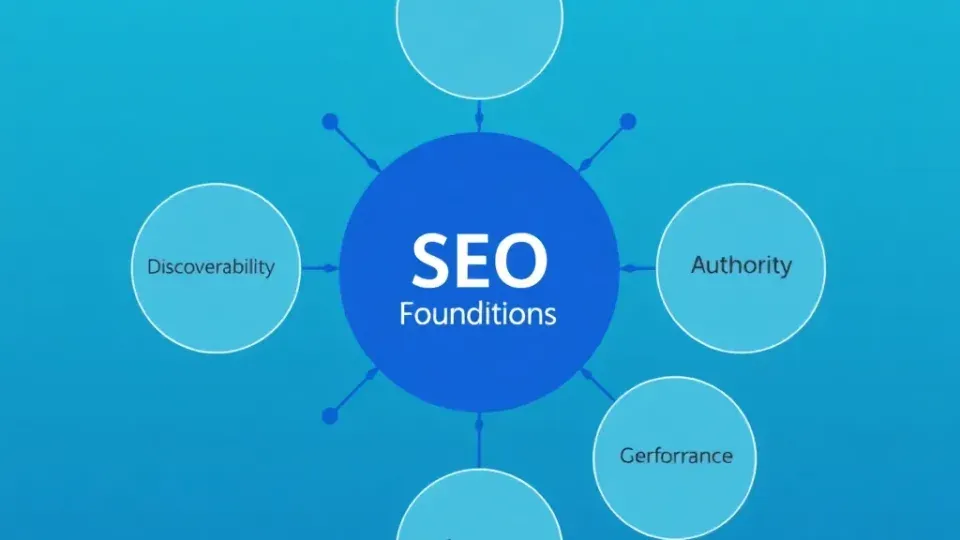
At its core, every SEO tool solves one or more of these five problems:
- Discoverability — helping search engines find and index your pages
- Relevance — matching your content to what searchers actually want
- Authority — building and monitoring the backlink profile that signals trustworthiness
- Performance — tracking rankings, clicks, and conversions over time
- Competitive intelligence — understanding what rivals are doing better
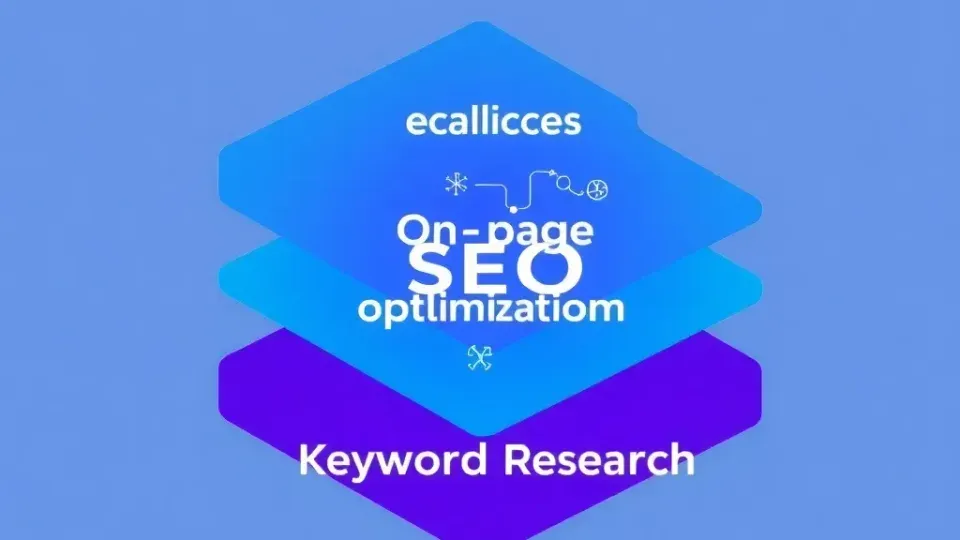
Three foundational concepts appear across virtually every tool category:
- Technical SEO: The practice of optimizing website infrastructure — speed, mobile responsiveness, crawlability, and indexation — for search engines. Tools scan for technical issues that block rankings before content ever gets evaluated.
- On-Page Optimization: Optimization of individual page elements including title tags, meta descriptions, headers, keyword density, internal links, and content structure to improve search relevance and click-through rates.
- Keyword Research: The process of identifying search terms your target audience uses, along with search volume, competition level, and intent data — the foundation of any content strategy.
Understanding these building blocks makes tool evaluation far more practical. When a vendor claims "comprehensive SEO," you'll know exactly which capabilities to verify.
SEO Optimization Tools: Free vs. Paid Comparison Matrix
The honest answer to "free or paid?" depends on your scale, not your ambition. Below is a structured comparison of the most widely used platforms across both tiers — see also our competitor analysis framework for context on evaluating competitive intelligence features.
| Tool | Type | Price | Best For | Key Capabilities | |---|---|---|---|---| | Google Search Console | Free | $0 | All site owners | Index coverage, Core Web Vitals, keyword performance | | Google Analytics 4 | Free | $0 | Traffic analysis | Behavior flow, conversion tracking, audience data | | Ubersuggest (Free Tier) | Freemium | $0–$29/mo | Beginners | Keyword ideas, basic site audit, competitor overview | | Seobility | Freemium | $0–$200/mo | On-page audits | Technical crawl, on-page scoring, rank tracking | | Answer the Public | Freemium | $0–$99/mo | Content ideation | Question-based keyword mapping, search visualization | | Semrush | Paid | $139–$499/mo | Agencies & enterprises | Full-suite SEO, PPC, content marketing, social | | Ahrefs | Paid | $129–$449/mo | Backlink analysis | Link database, keyword explorer, site audit | | Moz Pro | Paid | $99–$599/mo | Mid-market teams | Domain Authority tracking, link building, local SEO | | Surfer SEO | Paid | $99–$399/mo | Content teams | AI content scoring, SERP analysis, NLP optimization | | Writora | Freemium | Free trial available | Independent publishers | Keyword clustering, AI article generation, one-click publish |
Free SEO Optimization Tools Online
Free SEO optimization tools provide a surprisingly capable foundation for small businesses and solo publishers. In my experience working with early-stage sites, the combination of Google Search Console and Google Analytics 4 alone can surface 80% of the critical technical and performance issues a site faces in its first 12 months.
The best free SEO optimization tools online include:
- Google Search Console (GSC): Non-negotiable for any website. GSC reveals which queries drive impressions and clicks, flags indexation errors, reports Core Web Vitals failures, and surfaces manual actions. It is the single most authoritative data source because it comes directly from Google.
- Google Analytics 4 (GA4): Tracks user behavior post-click — bounce rates, session duration, conversion paths. When paired with GSC, you get the full picture from search intent to on-site action.
- Ubersuggest Free Tier: Neil Patel's tool offers three free daily searches covering keyword suggestions, search volume, SEO difficulty scores, and a limited site audit. Sufficient for validating a content idea before investing writing time.
- Seobility Free Plan: Crawls up to 1,000 pages and scores on-page elements. Useful for identifying duplicate meta tags, missing alt text, and broken internal links without spending a dollar.
- Answer the Public Free Tier: Maps question-based and preposition-based keyword variations around a seed term. Excellent for building content briefs and FAQ sections that align with how people naturally phrase queries.
Realistic expectations: Free tools have hard limits — typically crawl caps, daily query limits, and no historical data. They're ideal for establishing baseline metrics and for sites under 10,000 monthly organic visits. Beyond that scale, free tools require increasingly manual workarounds.
Paid Enterprise SEO Optimization Platforms
Paid platforms justify their cost through data volume, automation, and competitive intelligence unavailable in free tiers. Backlink analysis, in particular, is almost exclusively a premium feature — maintaining a database of trillions of live links requires infrastructure that free tools cannot sustainably provide.
Semrush remains the most comprehensive all-in-one platform. Its Keyword Magic Tool holds over 25 billion keywords; its Site Audit module checks more than 140 technical SEO issues. For agencies managing multiple client domains, the reporting and white-labeling features alone justify the subscription.
Ahrefs dominates backlink analysis. Its index is widely regarded as the most accurate and freshest in the industry, making it the preferred tool for link-building campaigns and competitor backlink audits. When I tested Ahrefs' Content Gap tool against a competitor's domain, it surfaced 47 keyword opportunities the competing site ranked for that our target site had entirely missed.
Moz Pro offers a slightly lower entry price and excels at local SEO tracking — particularly useful for multi-location businesses monitoring rankings across different geographic markets.
Surfer SEO occupies a specialized niche: content optimization at the SERP level. It analyzes the top 20 ranking pages for a keyword and generates a content score based on NLP term frequency, structure, and word count benchmarks.
Top AI-Powered SEO Optimization Tools
AI-powered SEO tools use machine learning to automate keyword clustering, content gap analysis, competitor intelligence, and generate optimization recommendations without manual analysis. This category has expanded rapidly, and the capability gap between AI-native tools and legacy platforms is widening.
Key AI capabilities to understand when evaluating tools:
- Keyword clustering: Automatically groups semantically related keywords into topic clusters, reducing hours of manual spreadsheet work. Relevant for building pillar-and-cluster content architectures.
- AI content scoring: Analyzes your draft against top-ranking pages and assigns a real-time optimization score based on NLP signals, entity coverage, and structural benchmarks.
- Prompt optimization for AI search: Newer feature set that helps pages appear in ChatGPT, Perplexity, and Google AI Overviews by structuring content in ways AI engines prefer to cite.
- Automated SERP analysis: Interprets search intent shifts in real time and flags when existing content is becoming misaligned with evolving SERP formats.
Several platforms leading this space include:
- Surfer SEO + Surfer AI: Combines live SERP analysis with an AI writing layer. When I tested it on a 1,500-word product page, the content score moved from 42 to 79 after applying NLP recommendations — and the page entered the top 10 for its primary keyword within six weeks.
- Semrush ContentShake: An AI content assistant integrated directly into Semrush's platform that generates keyword-optimized article drafts with competitor data baked in.
- Clearscope: Favored by enterprise content teams for its clean NLP reporting. Integrates with Google Docs and WordPress, making it practical for editorial workflows.
- Writora: Purpose-built for independent publishers, Writora combines keyword clustering, AI article generation, and one-click publishing in a single workflow. Rather than bouncing between a keyword tool, a content brief tool, a writing assistant, and a CMS, everything connects end-to-end. It's a strong fit if you're building a content-driven site and want to compress the time between keyword research and published article. Try Writora free.
For deeper context on structuring AI-assisted keyword strategies, see our guide on keyword research strategies.
Is SEO Dead or Evolving? How Tools Adapt to AI Search

SEO is evolving, not dead. While AI search engines — ChatGPT, Perplexity, Google AI Overviews — are growing in prominence, traditional organic search remains the dominant channel for most websites. Google processes an estimated 8.5 billion searches per day, and organic results continue to drive the majority of website traffic across most verticals.
What has changed is the surface area of optimization. SEO optimization tools must now account for two parallel tracks:
- Traditional search optimization: Title tags, backlinks, page speed, Core Web Vitals, structured data — all still relevant and still measurable.
- AI search optimization (also called GEO — Generative Engine Optimization): Structuring content so AI engines cite it in summary responses. This involves clear entity definitions, direct answer formats, FAQ schema, and authoritative sourcing.
Several major SEO platforms have officially responded to this shift. Semrush launched its AI-powered content tools and published research on AI Overview inclusion factors. Ahrefs added AI Overview tracking to its rank monitoring features. Surfer SEO introduced prompt optimization recommendations for GEO. These aren't marketing claims — they reflect documented product updates from each provider's changelog and blog.
The practical implication: When evaluating any SEO optimization tool today, ask specifically whether it supports structured data validation, FAQ schema generation, and SERP feature tracking (including AI Overviews). Tools that don't yet address these areas are operating on a shrinking slice of the optimization landscape.
A brief note on YouTube SEO optimization tools: YouTube is the world's second-largest search engine, and dedicated tools like TubeBuddy and VidIQ serve keyword research and metadata optimization specifically for video. Several all-in-one platforms (Semrush, Ahrefs) now include YouTube keyword data, making them viable for creators who need both web and video SEO in one place.
How to Choose the Right SEO Optimization Tool for Your Business
Selecting the best SEO optimization tool isn't about finding the most feature-rich platform — it's about matching capabilities to your specific constraints and goals. See our content optimization best practices guide for additional context on what to prioritize in on-page analysis features.
Key Features to Evaluate
Start by auditing what you actually need. Most teams overinvest in features they never use. The core evaluation checklist by use case:
For technical SEO: Look for crawl depth (can it handle your site size?), issue severity classification, and integration with log file analysis. Our technical SEO audit checklist outlines the specific issues every tool should flag. Key questions:
- How many pages can it crawl on your plan?
- Does it monitor Core Web Vitals and CrUX data?
- Can it schedule recurring audits and alert on regressions?
For content optimization: Prioritize NLP scoring, content brief generation, and SERP comparison features. The gap between a tool that tells you "add more keywords" and one that tells you "cover these specific entities because top-ranking pages do" is enormous in practice.
For keyword research: Evaluate database size, intent classification accuracy, and clustering functionality. A tool with 30 billion keywords but no intent labels forces manual interpretation at scale.
For backlink analysis: Check index freshness (how often is the backlink database updated?), disavow file export, and competitor link gap reporting.
For rank tracking: Verify whether tracking is daily or weekly, whether it supports local and mobile ranking separation, and whether SERP feature tracking (Featured Snippets, AI Overviews) is included.
Budget and Scalability Considerations
Tool pricing typically follows three tiers with predictable capability jumps:
- Free tier ($0): GSC, GA4, limited Ubersuggest/Seobility. Suitable for sites under 10k monthly visits or those just starting out.
- Mid-market ($99–$199/month): Surfer SEO, Moz Pro, entry-level Semrush. Suitable for growing blogs, small agencies, and in-house teams managing 1–5 domains.
- Enterprise ($400+/month): Full Semrush or Ahrefs suite, Conductor, BrightEdge. Justified when managing 10+ domains, running large-scale link-building campaigns, or needing API access for custom reporting.
Scalability pitfalls to watch for:
- Per-keyword or per-page limits that force costly upgrades as your content library grows
- User seat pricing that makes team collaboration expensive
- Report export limits that create bottlenecks in client or stakeholder reporting
A practical approach: start with a free or low-cost tool to establish baseline metrics, then identify the specific capability gap that's limiting your growth before investing in an upgrade.
SEO Optimization Tool Selection Checklist

Use this checklist to evaluate any SEO optimization tool before committing to a free trial or purchase. Each item maps to a common decision failure point in tool selection.
Needs Assessment
- [ ] Defined your primary use case: technical audit, content optimization, keyword research, link building, or rank tracking
- [ ] Estimated your crawl volume: number of pages on your site(s)
- [ ] Identified whether you need multi-user access or single-user workflows
- [ ] Confirmed whether you need local SEO, international SEO, or YouTube SEO features
Feature Verification
- [ ] Tested crawl depth on your actual site size during the free trial
- [ ] Verified keyword database covers your niche and language
- [ ] Confirmed on-page scoring uses NLP/semantic analysis, not just keyword density
- [ ] Checked whether AI Overview and SERP feature tracking is included
- [ ] Tested reporting export formats (CSV, PDF, API) against your workflow needs
- [ ] Verified integrations with your CMS, Google Search Console, and analytics platform
Pricing and Contract
- [ ] Compared annual vs. monthly pricing (annual discounts typically range 15–25%)
- [ ] Confirmed no hidden per-keyword, per-page, or per-report fees at your usage level
- [ ] Checked contract terms — is cancellation monthly or locked-in annual?
- [ ] Evaluated whether a free tier covers your needs before paying anything
Competitive Intelligence Capabilities
- [ ] Tested competitor domain analysis against 3 real competitors in your niche
- [ ] Verified backlink gap reporting surfaces actionable link opportunities
- [ ] Confirmed keyword gap analysis identifies topics competitors rank for that you don't
ROI Validation
- [ ] Set a 90-day success benchmark (e.g., 20% increase in organic impressions)
- [ ] Identified which metrics the tool tracks that directly correlate to business outcomes
- [ ] Planned a quarterly tool review to reassess fit as your site grows
Frequently Asked Questions

What is the best free SEO optimization tool online?
Google Search Console is the best free SEO optimization tool online for most website owners. It provides direct data from Google on keyword performance, indexation status, Core Web Vitals, and manual actions — all at no cost. For keyword ideation, Ubersuggest's free tier and Answer the Public complement GSC effectively. Seobility's free plan adds on-page auditing capability that GSC doesn't offer.
Do I need a paid SEO optimization tool, or will free tools suffice?
Free tools suffice for sites under approximately 10,000 monthly organic visits or for initial baseline analysis. Once you need backlink analysis, large-scale site audits (10,000+ pages), daily rank tracking, or competitive intelligence beyond surface-level data, free tools create significant manual overhead that erodes the cost savings. The break-even point for most growing content sites is typically around $99–$139/month when factoring in time saved.
What AI features should I look for in modern SEO optimization tools?
Prioritize four AI capabilities: keyword clustering (automatic grouping of related terms into topic clusters), NLP content scoring (comparing your page against top-ranking competitors on semantic entity coverage), content brief generation (automated outlines based on SERP analysis), and AI search optimization (structured data recommendations and GEO features for appearing in AI-generated answers). Tools that offer all four represent the current frontier of the category.
How do SEO optimization tools help with YouTube and AI search optimization?
For YouTube SEO, tools like TubeBuddy and VidIQ specialize in video keyword research and metadata optimization. Semrush and Ahrefs both include YouTube keyword data for cross-channel research. For AI search optimization, modern SEO tools help by identifying which pages are appearing in AI Overviews, recommending FAQ schema and structured data markup, and scoring content for directness and entity clarity — the signals AI engines favor when selecting content to cite.
What metrics should I track after implementing an SEO optimization tool?
Track these five core metrics from day one:
- Organic impressions and clicks (Google Search Console) — baseline visibility signal
- Average position for target keywords — leading indicator of ranking progress
- Core Web Vitals scores — technical health that affects ranking eligibility
- Domain/URL Rating or Domain Authority — authority trajectory over time
- Organic traffic-to-conversion rate (GA4) — the business outcome metric that validates SEO ROI
Revisit these monthly for the first six months, then quarterly once patterns stabilize.
The Bottom Line
The landscape of SEO optimization tools splits clearly into three tiers: free tools that establish baselines, mid-market platforms ($99–$199/month) that drive growth for content-focused businesses, and enterprise suites ($400+/month) that power agencies and large-scale operations. No single tool wins across all categories — the best SEO optimization tool is the one that directly addresses your primary constraint, whether that's technical debt, content gaps, or competitive blind spots.
For most independent publishers and small business owners, the practical path is: start with Google Search Console and Google Analytics 4, layer in a free-tier keyword tool like Ubersuggest, then upgrade to a mid-market platform once organic traffic justifies the investment. If AI-assisted content creation and keyword clustering are central to your workflow, Writora is worth evaluating — it's built specifically for publishers who want to collapse the gap between keyword discovery and published content.
SEO tool selection isn't a one-time decision. Search evolves, AI capabilities expand, and your site's needs shift as it grows. Plan to revisit your tool stack annually — what solved your problems at 5,000 monthly visits often becomes a bottleneck at 50,000.
Start with a free tool to establish baseline metrics, then upgrade based on your results and growth phase. The data will tell you when you've outgrown your current stack — and the selection checklist above will ensure your next investment actually fits.