SEO Is What: Complete Definition and How Search Engine Optimization Works
What Is SEO? The Simple Answer SEO is what you do to make your website rank higher in Google search results—for free. The full name is Search Engine Opti...

What Is SEO? The Simple Answer

SEO is what you do to make your website rank higher in Google search results—for free. The full name is Search Engine Optimization, and it's the practice of improving your website's content, structure, and authority so that search engines like Google understand what you offer and show your site to people actively searching for it.
Imagine you run a plumbing business in Portland. Someone has a burst pipe at midnight. They pull out their phone and search "emergency plumber near me." If your website appears at the top of those results, you get the call. If you're buried on page five, a competitor does. That's the practical power of SEO.
Search engines display two types of results: organic results (which SEO influences) and paid results (which you purchase through ads). Organic results are free and persistent—once you rank, you don't pay per click. This article covers the complete definition of what SEO is, how search engines work, and how to start implementing SEO for your business. Whether you're a small business owner, content creator, or marketer, understanding SEO is non-negotiable for online visibility.
SEO Definition and What It Stands For
SEO stands for Search Engine Optimization. More formally, it is the process of aligning your website's content, technical structure, and online authority with the way search engines discover, index, and rank web pages. The goal is to increase organic traffic—visitors who find you through unpaid search results.
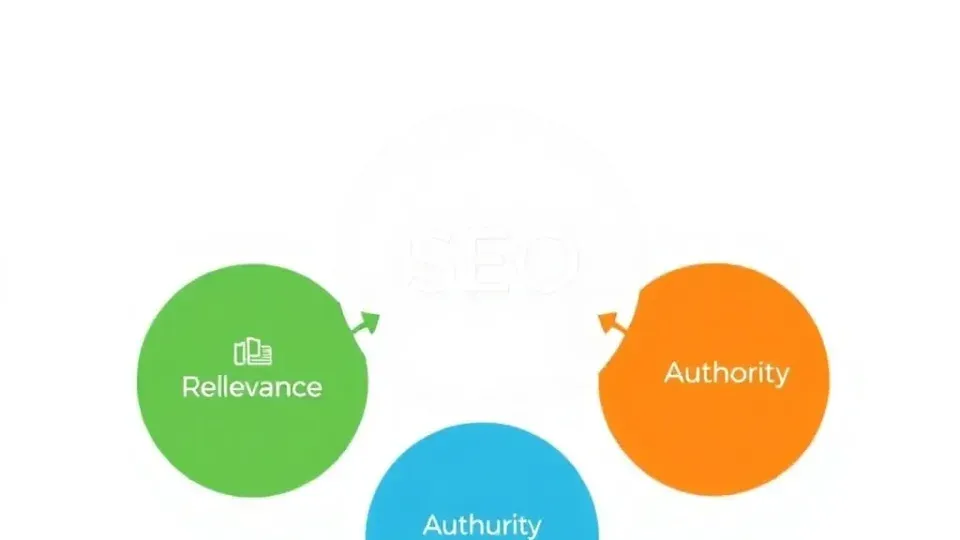
Search engines like Google use complex algorithms to rank millions of pages for billions of queries every day. SEO works because it directly addresses what those algorithms measure: relevance (does your content answer the user's question?), authority (are other trusted websites linking to you?), and user experience (can people easily navigate and read your site?).
The SEO meaning in business is straightforward: more organic traffic equals more customers, leads, and revenue. Unlike paid advertising, SEO results compound over time. A well-optimized article from three years ago can still drive traffic today—your ads stop the moment you stop paying.
Why SEO Matters for Your Website
Most web traffic originates from organic search. According to a widely cited BrightEdge research report, organic search accounts for roughly 53% of all website traffic across industries, making it the dominant traffic source ahead of direct visits, social media, and paid advertising.
Here's why SEO matters for your specific website:
- Free, sustainable traffic: Every organic visitor costs you nothing per click, unlike paid search or social ads. This compounds your ROI over time.
- Brand credibility: Users trust organic results more than ads. Ranking at the top of Google signals authority and relevance.
- Lower customer acquisition cost: Over time, organic traffic typically carries the lowest cost per acquisition of any marketing channel.
- Long-term visibility: Paid campaigns end when your budget ends. Organic rankings persist and improve with ongoing optimization.
- Competitive advantage: If competitors aren't investing in SEO, you can dominate your market's search results.
Worth acknowledging: SEO doesn't work equally well for every business. Highly competitive industries—personal injury law, insurance, enterprise software—may require 12–24 months of sustained effort before meaningful rankings appear. Businesses targeting extremely niche audiences may find that their total addressable search volume is too small to justify SEO as a primary channel. The channel works best when there's genuine search demand for what you offer.
How Search Engines Work and Why SEO Exists

SEO exists because search engines face a fundamental challenge: how do you rank billions of pages fairly and accurately? Understanding how search engines work clarifies why SEO matters and which optimization tactics actually move the needle.
The Search Engine Crawler and Indexing Process
Search engines deploy automated bots called crawlers (Google's is called Googlebot) that continuously scan the web, following links from page to page. These crawlers download and read every page they find, extracting text, links, images, and structural information.
Here's the simplified process:
- Crawling: Googlebot discovers your website through links from other sites or your XML sitemap.
- Indexing: The crawler reads your content and stores a record of it in Google's index—a massive database of web pages.
- Ranking: When someone searches, Google ranks indexed pages based on hundreds of factors (relevance, authority, user experience, freshness, and more).
- Display: The top-ranking pages appear on the Search Engine Results Page (SERP).
SEO optimizes for each stage. You make crawling easier by improving site structure and XML sitemaps. You help indexing by using proper HTML markup and clear content organization. You improve ranking by targeting the right keywords, building authority through backlinks, and creating content that satisfies user intent.
Without SEO, your site might be indexed—but buried under thousands of competitors for any keyword that matters to your business.
Organic vs. Paid Search Results
Most SERPs display both organic results and paid results (ads). Understanding the difference is critical because they require entirely different strategies.
| Aspect | Organic Results | Paid Results (Ads) | |--------|----------------|--------------------| | Cost | Free per click; ongoing optimization costs | Pay per click (PPC) | | Speed | Slower to rank (3–12 months typically) | Immediate visibility | | Longevity | Persist indefinitely after ranking | Stop when budget ends | | Trust | Perceived as more credible | Clearly labeled "Ad" | | Click-through rate | Higher (users prefer organic) | Lower (users skip ads) | | Effort | Ongoing content and technical work | Ongoing bid management |
The difference between SEO and SEM (Search Engine Marketing) is often misunderstood. SEM is the umbrella term covering both organic SEO and paid search (PPC). Many marketers use these terms interchangeably, but functionally, SEO is organic and SEM often refers specifically to paid search. Best practice is to run both simultaneously: paid ads for immediate visibility while you build organic rankings for long-term traffic.
What Is SEO in Digital Marketing and Business Strategy

For most businesses, SEO is the most cost-effective marketing channel available—if executed consistently. Let me be direct about how SEO fits into broader business and marketing strategies, and where its limits lie.
SEO Meaning in Marketing Strategy
What is SEO in digital marketing? It's the foundation of a traffic strategy that brings qualified prospects to your website without ongoing ad spend. Unlike brand awareness campaigns (which cast a wide net), SEO is intention-driven: you're reaching people actively searching for what you offer.
In a marketing strategy, SEO serves these functions:
- Lead generation: SEO attracts high-intent visitors (people ready to buy or learn) at scale.
- Content distribution: SEO articles become permanent assets that generate traffic for months or years.
- Brand authority: High rankings reinforce brand perception as an industry leader.
- Sales enablement: SEO attracts prospects earlier in their buying journey, giving sales teams warmer leads.
- Market research: Keyword demand and search trends reveal what customers actually want—often better than surveys.
Many businesses treat SEO as a one-time project. That's a mistake. SEO is an ongoing discipline—like accounting or customer service. Markets evolve, competitors optimize, and Google's algorithm changes hundreds of times per year. Consistent SEO work is what maintains and improves rankings over time.
SEO vs. Other Digital Marketing Channels
SEO doesn't exist in isolation. A complete digital marketing strategy integrates SEO with other channels:
SEO vs. Paid Advertising (PPC):
- SEO is slower but cheaper long-term. Paid is faster but expensive at scale.
- Best approach: Use paid to test messaging and capture immediate traffic, then build SEO content around proven angles.
SEO vs. Social Media Marketing:
- SEO captures existing demand; social builds awareness and creates demand. They complement each other.
- Social content sometimes ranks in Google; SEO content often gets shared on social, earning natural backlinks.
SEO vs. Email Marketing:
- Email is owned media (your list); SEO is earned media (search visibility).
- SEO brings new prospects into your ecosystem; email nurtures those prospects toward conversion.
SEO vs. Content Marketing:
- Content marketing creates valuable content for audiences. SEO optimizes that content for search visibility.
- In practice, the best approach is content marketing and SEO working as a unified strategy, not separate disciplines.
Smart businesses layer these channels. SEO attracts traffic, paid captures high-intent moments, social builds community, and email converts. SEO is rarely sufficient alone—but it's almost always the most durable foundation.
Core Search Engine Optimization Techniques and Best Practices

Search engine optimization techniques split into two categories: on-page (what you do on your website) and off-page (what happens off your site). Both matter for competitive keywords, though their relative weight shifts depending on your industry and competition level.
On-Page SEO: Content, Keywords, and Technical Optimization
On-page SEO means optimizing elements directly on your website to improve rankings. The key on-page factors Google evaluates are:
1. Keyword Targeting and Relevance Your content must target the keywords people actually search for. Conduct keyword research to identify search terms related to your business with meaningful volume and achievable competition. Place those keywords in strategic locations: your page title, H1 heading, first 100 words, and naturally throughout the body.
Don't overstuff keywords—write for humans first. Google's spam policies explicitly penalize unnatural keyword repetition, and in practice, over-optimized pages often rank worse than naturally written ones.
Practical example: If you run a fitness blog, instead of targeting a generic keyword like "exercise," target specific intent: "how to build muscle at home with dumbbells." This is more specific, less competitive, and attracts truly interested readers.
2. Content Quality, Depth, and Search Intent Google's algorithms favor comprehensive, well-researched content that thoroughly answers a user's question. Thin content (200 words of generic advice) consistently ranks worse than detailed, structured content (1,500–3,000+ words with examples, data, and actionable steps).
More importantly, your content must match search intent—the underlying reason behind a query:
- Informational intent: User wants to learn ("how to start a blog")
- Commercial intent: User is evaluating options ("best CRM software")
- Transactional intent: User is ready to buy ("buy ergonomic office chair")
- Navigational intent: User wants a specific site ("Facebook login")
Misaligning content format with intent is one of the most common reasons pages fail to rank—even when the keyword targeting is technically correct.
3. Title Tags and Meta Descriptions Your title tag (the clickable headline on the SERP) and meta description (the preview text) influence both rankings and click-through rate.
- Keep title tags under 60 characters and include your target keyword near the front.
- Write meta descriptions as a mini-pitch: 150–160 characters, with a clear value proposition and call-to-action where relevant.
4. Header Tags and Site Structure Use H1, H2, and H3 tags logically to organize your content. Your H1 should reflect the page's primary topic. H2s break content into sections. This hierarchy helps crawlers understand your content's structure and helps users scan pages quickly—both directly affect engagement metrics Google tracks.
5. Technical SEO Foundations Technical SEO ensures search engines can crawl and index your site efficiently:
- Site speed: Pages should load in under 3 seconds. Google's own PageSpeed Insights tool will identify specific bottlenecks.
- Mobile optimization: Google uses mobile-first indexing, meaning it crawls and ranks your mobile version primarily. Over 60% of searches happen on mobile.
- XML sitemap: Submit a sitemap to Google Search Console so crawlers discover all your pages.
- Robots.txt: Guide crawlers toward important content and away from duplicate or private pages.
- Structured data (Schema markup): Mark up your content with schema.org code so Google understands context (reviews, FAQs, products, events).
Off-Page SEO: Links, Authority, and Reputation
Off-page SEO refers to optimization that happens outside your website—primarily link building and brand authority signals.
1. Backlinks and Domain Authority A backlink is a link from another website to yours. Google's original PageRank algorithm—the foundation of its ranking system—treated backlinks as votes of confidence. A link from a trusted, relevant website signals that your content is credible. Not all backlinks are equal: a single link from a major industry publication can outweigh dozens of links from low-authority directories.
Building quality backlinks requires:
- Creating content other websites naturally want to reference (original research, definitive guides, data-rich resources).
- Proactive outreach to relevant websites and media outlets.
- Guest posting on industry blogs with a contextual link back to your site.
- Broken link building (identifying broken links on other sites and proposing your content as a replacement).
Avoid black-hat tactics like purchasing links, link farms, or reciprocal link exchanges at scale. Google's manual actions and algorithmic penalties (Penguin) specifically target these patterns, and recovery can take months.
2. Brand Mentions and Online Reputation Google's systems also process unlinked brand mentions as indirect authority signals. Build your brand's online presence proactively:
- Ensure your business is listed on Google Business Profile, Yelp, and relevant industry directories.
- Monitor brand mentions and encourage positive reviews across platforms.
- Build relationships with industry influencers and trade media.
3. Social Signals Social media likes and shares don't directly influence rankings per Google's public guidance. However, they're meaningful indirectly: content that performs well on social earns more natural backlinks and brand mentions, which do influence rankings. Treat social amplification as a distribution mechanism for SEO content, not a ranking tactic in itself.
SEO Examples in Practice
Seeing how SEO works in real scenarios makes the strategy concrete. These examples illustrate different applications across business types.
E-Commerce Store Example: You sell sustainable yoga mats online. Instead of one generic page titled "Yoga Mats," you create specific pages: "Best Yoga Mats for Beginners," "Non-Slip Yoga Mats for Hot Yoga," "Eco-Friendly Yoga Mats." Each targets a different keyword with specific user intent. You optimize each page's content to answer that specific query comprehensively. You earn backlinks by getting featured in yoga and sustainability blogs. Over 6–12 months, you rank for dozens of long-tail yoga-related keywords, driving consistent organic traffic and sales without ongoing ad spend.
B2B SaaS Example: You offer accounting software for freelancers. You create a detailed guide: "How to Track Income and Expenses as a Freelancer." This content attracts links from accountant blogs, freelancer communities, and finance publications. You optimize it for keywords like "freelance accounting," "expense tracking software," and "self-employed tax deductions." The guide ranks in the top three for several of these keywords within 9–12 months, bringing qualified leads consistently.
Local Service Example: You're a pest control company in Austin. You optimize your Google Business Profile with photos, service hours, and responses to every review. You create location-specific pages: "Pest Control in South Austin," "Termite Treatment in Austin." You earn local backlinks from Austin business directories and community websites. Within 3–6 months, you rank in the local pack (the map results) for nearby pest control searches, driving inbound calls without paying per click.
Each of these outcomes reflects sustained, systematic effort—not a one-time setup. SEO success is cumulative.
SEO Key Ranking Factors You Should Know

Google's algorithm considers hundreds of factors, but the most influential ones—backed by Google's own documentation and industry research from organizations like Moz and Ahrefs—cluster into these categories:
1. Content Relevance and Quality Does your content answer the user's query thoroughly? Is it original, well-researched, and more useful than competing pages? Thin, duplicate, or low-effort content consistently ranks below expert-written, high-effort content for competitive terms.
2. Backlinks and Domain Authority Links from trusted, relevant websites signal credibility. Sites with established domain authority generally rank faster and more consistently than brand-new domains, particularly for competitive keywords.
3. User Experience (Core Web Vitals) Google's Core Web Vitals are specific, measurable UX signals:
- LCP (Largest Contentful Paint): How quickly the main content loads (target: under 2.5 seconds).
- FID/INP (Interaction to Next Paint): How responsive the page is to user interaction.
- CLS (Cumulative Layout Shift): How stable the page layout is (no unexpected shifts).
4. Search Intent Alignment Your content format must match what the user is searching for. A product page won't rank well for "how to" queries, and a blog post won't rank well for high-intent commercial searches. Misalignment here is frequently the root cause of underperforming pages.
5. Mobile Optimization and Page Speed With mobile-first indexing, non-responsive sites face a structural disadvantage. Pages that load in over 3 seconds typically have higher bounce rates and lower engagement—both of which correlate with weaker rankings.
6. Freshness For trending topics or rapidly evolving subjects, Google favors recently updated content. For evergreen topics, consistent updates signal active maintenance and can improve rankings over time.
7. E-E-A-T (Experience, Expertise, Authoritativeness, Trustworthiness) Google's Search Quality Rater Guidelines emphasize that content creators should demonstrate first-hand experience and expertise, especially for YMYL (Your Money Your Life) topics like health, finance, and legal advice. For these categories, author credentials, citations, and editorial standards carry more weight than in lower-stakes niches.
How to Get Started with SEO: Quick Checklist

Ready to implement SEO? Here's a practical, phased approach grounded in how search rankings actually develop over time. Based on how Google's crawl and indexing cycles work, the general sequence below reflects realistic expectations—though results will vary by niche and competition level.
Month 1: Research and Audit
- [ ] Conduct keyword research using free tools (Google Keyword Planner, Ubersuggest free version) or paid tools (SEMrush, Ahrefs). Identify 20–30 target keywords relevant to your business.
- [ ] Audit your current website: Is it mobile-friendly? Does it load quickly? Run it through Google PageSpeed Insights.
- [ ] Check your current rankings: Use Google Search Console (free) to see how often your site appears in searches and which queries drive impressions.
- [ ] Analyze competitors: What content are the top-ranking sites creating? What backlinks do they have? Identify gaps your content could fill.
Month 2: On-Page Optimization
- [ ] Create or update 5–10 high-priority pages with keyword-optimized content. Ensure each page targets a specific keyword and satisfies the correct user intent.
- [ ] Optimize title tags, meta descriptions, and header tags for each page.
- [ ] Confirm your site is mobile-responsive and loads in under 3 seconds.
- [ ] Add an XML sitemap and submit it to Google Search Console.
- [ ] Add schema markup (structured data) for your main content types.
Month 3: Off-Page and Authority Building
- [ ] Create or optimize your Google Business Profile (if you're a local business).
- [ ] List your business on relevant industry directories.
- [ ] Identify 20 websites in your industry and build a list of potential link opportunities (guest post targets, broken link opportunities, resource pages).
- [ ] Reach out to 5–10 prospects with a specific, non-spammy pitch to earn backlinks.
- [ ] Monitor brand mentions and encourage reviews on Google and relevant platforms.
Ongoing (Every Month)
- [ ] Check Search Console for new keywords driving impressions. Update pages to better address related queries.
- [ ] Build one new high-quality backlink through outreach or content creation.
- [ ] Refresh top-performing content to keep it accurate and comprehensive.
- [ ] Track rankings for target keywords. For low-competition keywords, expect visible movement by months 3–4. Competitive keywords may take 9–18 months.
Tools to Use:
- Free tools: Google Search Console, Google Analytics, Google Keyword Planner, Ubersuggest.
- Paid tools: Ahrefs, SEMrush, Moz, SE Ranking, Screaming Frog.
- All-in-one platform: Writora is an SEO platform built for independent publishers that clusters keywords, generates AI-optimized articles, and publishes at scale. Free trial available.
Frequently Asked Questions About SEO

What is SEO and why does it matter for my business?
SEO (Search Engine Optimization) is the practice of optimizing your website to rank higher in organic search engine results.
It matters for three core reasons: (1) Cost: Organic traffic is free per click, unlike paid ads. (2) Credibility: Users consistently trust organic results more than labeled advertisements. (3) Scale: Organic traffic grows over time—an article you optimize today can drive traffic for years without ongoing spend.
For businesses, SEO is often the highest-ROI marketing channel available. A plumber ranking #1 for "emergency plumber [city]" receives calls every day without paying per click. That said, results vary significantly by industry, competition level, and the quality of execution. SEO is an investment, not a switch you flip.
What is SEO in digital marketing and how does it fit my overall strategy?
SEO is the organic traffic foundation of a digital marketing strategy. While paid ads generate immediate visibility and social media builds brand awareness, SEO captures demand that already exists—people actively searching for your product, service, or information.
In practical terms, what is SEO in digital marketing comes down to: creating content that search engines can understand and rank, building enough authority that Google trusts your site, and ensuring your site is technically accessible to crawlers. These three pillars—content, authority, and technical health—drive every SEO activity.
SEO works best when integrated with other channels. Use paid search to test messaging quickly, then double down on organic content for angles that convert. Use email to re-engage the organic visitors SEO brings in. Treat SEO as the long-term infrastructure, not a standalone tactic.
How long does it take to see results from SEO?
Most websites see initial improvements in 3–6 months, with significant results appearing in 6–12 months. Google itself has acknowledged in documentation and via Search Central that new sites typically take several months to build ranking stability.
Timeline depends on:
- Competition: Competitive keywords take longer to rank for than niche long-tail terms.
- Domain history: Older domains with existing authority rank faster than brand-new ones.
- Current site quality: Improving an existing site typically moves faster than starting from scratch.
- SEO investment: More consistent content creation and link building accelerates results.
Realistic timeline: Weeks 1–4 (setup and initial content), months 1–3 (crawling and indexing, minor ranking movement), months 3–6 (visible improvements for low-competition keywords), months 6–18 (competitive keywords ranking, meaningful traffic growth).
Avoid agencies promising first-page rankings in 30 days. It's not achievable for competitive keywords and is a red flag for black-hat tactics that risk penalties.
Can I do SEO myself, or do I need an agency?
Yes, you can do basic SEO yourself. Keyword research, on-page content optimization, and site structure improvements are manageable with free tools and focused learning time. Many small businesses have built significant organic traffic entirely in-house.
When to DIY:
- You have 5–10 hours per week to dedicate to learning and implementation.
- You're targeting low-to-medium competition keywords.
- You have basic writing and web skills.
- Your budget is limited (under $500/month for tools and resources).
When to hire an agency or consultant:
- Your target keywords are highly competitive.
- Your website has technical complexity (large e-commerce platforms, complex databases, enterprise CMS).
- You need faster results and have budget to invest.
- You lack internal expertise in content strategy, technical SEO, or link building.
Hybrid approach: Many growing businesses handle content creation in-house and bring in specialists for technical audits and link building. This balances cost and quality effectively.
Is Odoo good for SEO, and what tools should I use?
Odoo is an enterprise resource planning (ERP) platform designed for business operations—inventory, accounting, HR. It is not a dedicated SEO tool.
Odoo has limited native SEO features and isn't designed for search visibility optimization. If you use Odoo for business operations, you'll need a separate tool stack for SEO:
- Essential free tools: Google Search Console, Google Analytics, Google Keyword Planner.
- Paid SEO platforms: Ahrefs, SEMrush, Moz, Screaming Frog, SE Ranking.
- Content and publishing: Your CMS (WordPress, Webflow) or e-commerce platform (Shopify, WooCommerce) handles on-page SEO. Pair it with Writora for keyword research, AI-powered content generation, and publishing optimization.
- Local SEO: Google Business Profile (free), Yext, BrightLocal.
The right tool stack depends on your use case, but Odoo is the wrong answer for SEO specifically.
What is the difference between SEO and SEM (paid search)?
SEO targets organic (unpaid) search results through content and technical optimization. SEM (Search Engine Marketing) is the umbrella term covering both organic SEO and paid search advertising (PPC).
Practically speaking:
- SEO: You rank in organic results. You pay $0 per click but invest in content creation, technical optimization, and link building over months.
- SEM/PPC: You appear at the top of results labeled "Sponsored." You pay $1–$50+ per click depending on industry and keyword competitiveness.
Key differences:
- SEO takes 3–12+ months; PPC delivers traffic the same day your campaign launches.
- SEO compounds (rankings improve and persist); PPC stops immediately when budget ends.
- SEO is better for long-term, sustainable visibility; PPC is better for immediate traffic, testing, and high-intent moments.
Best practice: Run both. Use PPC to capture immediate high-intent traffic and test messaging while you build organic rankings through SEO over time. The two strategies reinforce each other when coordinated properly.
Conclusion: Why Understanding SEO Is Essential Today
SEO is what separates visible online businesses from invisible ones. It's the practice of aligning your website with how search engines discover, understand, and rank content—and it directly determines whether customers find you or your competitors when they search.
The core insight is simple: search engines want to surface the most relevant, authoritative, and trustworthy content for each query. When you create excellent content, optimize it for search intent and keywords, and build authority through quality backlinks, you're not gaming Google—you're helping it do its job more accurately. That alignment is the essence of SEO.
SEO isn't a one-time project. It's an ongoing investment that improves over months and years. It works best in industries where meaningful search demand exists, and it requires patience—results for competitive terms often take 12 months or more. Businesses that rank at the top today got there through consistent content creation, systematic authority building, and adaptation to algorithm changes over time.
The landscape continues to evolve. AI-powered search features (Google's AI Overviews, LLM-based search engines) are changing how results are displayed. But the fundamentals—relevance, authority, and user experience—remain stable. Businesses that master search engine optimization now will be better positioned to adapt as the landscape shifts.
Your next step: Pick one action from the checklist above—conduct keyword research, audit your site speed, or create one optimized piece of content. Start small, track results, and build momentum. For a faster path to SEO implementation, explore Writora, which streamlines keyword research, content creation, and publishing. Try it free today.
SEO isn't optional for any business that depends on online visibility. The sooner you invest in it, the sooner your website becomes the one customers find first.