SEO for Professionals: Essential Strategies, Tools, and Skills to Master
An SEO professional is someone who specializes in optimizing websites, content, and digital properties to rank higher in search engines and attract quali...

An SEO professional is someone who specializes in optimizing websites, content, and digital properties to rank higher in search engines and attract qualified organic traffic. They combine technical expertise, analytical skills, and strategic thinking across on-page, off-page, technical, and local SEO disciplines.
But here's the tension many working professionals face right now: Is SEO still relevant? The answer is an unequivocal yes—but it has evolved dramatically. AI-powered search, generative results, and multi-platform visibility have reshaped what it means to practice SEO at an advanced level. This guide on for professionals SEO bridges the gap between foundational knowledge and professional-level execution, covering essential strategies, tools, skills, salary expectations, and—critically—what AI cannot do.
Whether you're an aspiring SEO specialist, a marketing professional adding search skills to your toolkit, or a seasoned practitioner reassessing your approach, this guide delivers actionable depth. If you're starting from scratch, consider reviewing our SEO for beginners guide first, then return here for professional-level strategy.
What Does "For Professionals SEO" Actually Mean?

An SEO professional is a specialist skilled in optimizing websites and content for search engine visibility and organic traffic using technical, on-page, off-page, and strategic methods. Unlike general digital marketers or content creators who touch SEO peripherally, the for professionals SEO mindset treats search optimization as a primary discipline—not an afterthought bolted onto a marketing campaign.
In my experience working across agencies and in-house teams, the line between "someone who knows SEO" and "an SEO professional" comes down to three things: depth of technical knowledge, ability to build and execute strategy, and measurable impact on organic performance.
Core Responsibilities of Modern SEO Experts
The best SEO experts don't just optimize title tags. Their responsibilities span a wide operational scope:
- Keyword research and intent mapping — Identifying not just high-volume terms but understanding the search intent behind queries (informational, navigational, commercial, transactional).
- Technical auditing — Diagnosing crawl errors, indexation issues, Core Web Vitals failures, and site architecture problems.
- Content strategy — Planning and guiding content creation that aligns with search demand and topical authority frameworks.
- Link acquisition — Building authoritative backlinks through outreach, digital PR, and strategic partnerships.
- Performance analysis — Interpreting data from Google Search Console, analytics platforms, and rank-tracking tools to refine strategy.
- Stakeholder communication — Translating technical findings into business outcomes for executives, clients, or cross-functional teams.
A common mistake I see is professionals treating SEO as purely technical work. In reality, communication and strategic thinking separate mid-level practitioners from senior professionals who command premium compensation.
SEO Professional vs. SEO Specialist vs. SEO Manager
These titles overlap but carry distinct expectations:
| Role | Focus | Typical Experience | |------|-------|--------------------| | SEO Specialist | Executes specific SEO tasks (keyword research, on-page optimization, link building) | 1–4 years | | SEO Professional | Broad term covering anyone practicing SEO at a professional level | Varies | | SEO Manager | Leads strategy, manages teams or agency relationships, reports on performance | 4–8+ years | | SEO Director/VP | Sets organizational SEO vision, manages budgets, aligns with business goals | 8+ years |
Understanding where you sit—and where you want to go—helps you prioritize which SEO professional skills to develop next.
The Four Types of SEO for Professionals to Master
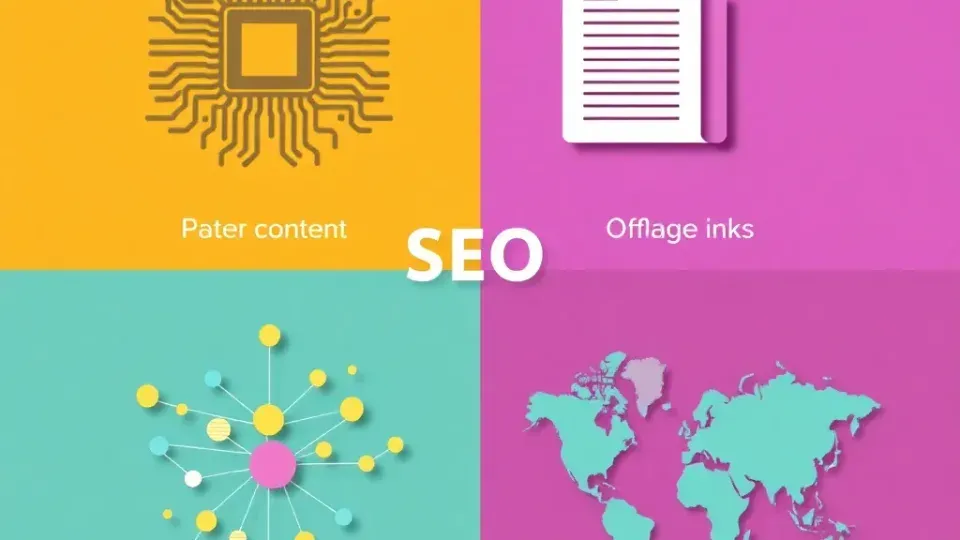
The four types of SEO are the foundational pillars every professional must understand deeply. While you may specialize in one area, professional-level competence requires working knowledge of all four. Google's own SEO Starter Guide reflects these core areas, and every major SEO framework builds on this taxonomy.
On-Page SEO
On-Page SEO is the practice of optimizing content, HTML elements (titles, meta descriptions, headers), and user experience factors within a website to improve search rankings.
This is where most professionals begin, and it remains critical at every career stage. Key on-page elements include:
- Title tags and meta descriptions — Your most direct lever for click-through rate from SERPs.
- Header hierarchy (H1–H6) — Signals content structure to both users and crawlers.
- Content quality and depth — Matching or exceeding the comprehensiveness of competing pages while maintaining originality.
- Internal linking — Distributing page authority and guiding users through related content. For deeper tactical guidance, check out our SEO tips and best practices resource.
- Image optimization — Alt text, compression, and modern formats like WebP that balance quality and load speed.
After years of working with on-page optimization, I've found that intent alignment matters more than keyword density. A page that precisely answers the user's question will outperform a page stuffed with keywords every time.
Off-Page SEO and Link Building
Off-Page SEO is the practice of building authority and trust signals outside a website through backlinks, brand mentions, social signals, and third-party validation.
Link building remains one of the most impactful—and most misunderstood—SEO activities. In competitive markets, strong on-page SEO alone won't win. You need external validation.
Effective off-page strategies include:
- Digital PR — Creating newsworthy content or data studies that earn editorial links from authoritative publications.
- Guest contributions — Publishing expert content on relevant industry sites (not link farms).
- Broken link building — Finding broken links on authoritative sites and suggesting your content as a replacement.
- Brand mentions and unlinked citations — Monitoring where your brand is mentioned without a link and requesting attribution.
- Strategic partnerships — Co-marketing initiatives that generate natural referral links.
A critical distinction: link building is not link buying. Google's spam policies explicitly penalize manipulative link schemes. Professional-grade off-page SEO builds genuine authority, and that takes time, relationships, and quality content. Many SEO freelancers who specialize in digital PR and outreach earn premium retainers precisely because authentic link acquisition is labor-intensive and relationship-driven.
Technical SEO
Technical SEO is the optimization of website infrastructure—including site speed, crawlability, indexation, Core Web Vitals, SSL, and site architecture—to enable search engines to crawl and rank pages effectively.
This is the skill area that most clearly differentiates professional-level SEO from basic content optimization. If search engines can't efficiently crawl and index your site, no amount of content quality will save your rankings.
Key technical SEO focus areas:
- Core Web Vitals — Largest Contentful Paint (LCP), Interaction to Next Paint (INP), and Cumulative Layout Shift (CLS) are confirmed Google ranking signals.
- Crawl budget management — Ensuring search engines prioritize your most valuable pages, especially on large sites with thousands of URLs.
- Structured data (Schema markup) — Implementing FAQPage, HowTo, Article, and other schema types to enhance SERP features and AI extractability.
- XML sitemaps and robots.txt — Controlling what gets crawled and indexed.
- HTTPS and security — A baseline ranking factor since 2014.
- JavaScript rendering — Ensuring content rendered via JavaScript is accessible to search engine crawlers.
When I tested a client's migration from a JavaScript-heavy framework to server-side rendering, organic traffic increased 34% within 60 days—with no content changes. That's the power of technical SEO, and it's why the for professionals SEO skill set demands deep technical fluency.
Local SEO
Local SEO encompasses optimization strategies targeting geographic search intent, including Google Business Profile optimization, local citations, reviews, and location-based keywords.
For professionals serving location-dependent businesses—law firms, medical practices, restaurants, service contractors—local SEO is a specialization that commands premium rates. Many SEO freelancers build their entire practice around local search optimization.
Core local SEO tactics include:
- Google Business Profile optimization — Complete, accurate profiles with categories, services, photos, and regular posts.
- Local citation building — Consistent NAP (Name, Address, Phone) across directories like Yelp, BBB, and industry-specific platforms.
- Review management — Generating and responding to reviews, which directly influence local pack rankings.
- Local content strategy — Creating location-specific service pages and community content.
- Local link building — Earning links from local organizations, chambers of commerce, and community publications.
Essential Skills and Tools for Professionals SEO Demands

Knowing the four types of SEO is necessary but not sufficient. Professional execution requires a specific combination of SEO professional skills and tool proficiency that separate practitioners who deliver results from those who simply follow checklists.
Technical Skills Every Professional Needs
Based on what I consistently see in hiring managers' requirements and in the workflows of the best SEO experts I've collaborated with, these technical skills are non-negotiable:
- HTML and CSS fundamentals — You don't need to be a developer, but you must understand how meta tags, canonical tags, hreflang attributes, and structured data work in the code.
- Data analysis — Comfort with Google Analytics 4, Looker Studio (formerly Data Studio), and spreadsheet functions (VLOOKUP, pivot tables, regex) for large data sets.
- Keyword research methodology — Beyond basic volume checks: understanding keyword clustering, intent classification, and competitive gap analysis.
- Content optimization — Ability to audit and improve existing content using NLP-informed strategies and competitive benchmarking.
- Python or SQL (intermediate level) — Increasingly expected for automating audits, scraping data, and querying large datasets. Not mandatory for entry-level roles but a clear differentiator at the mid-to-senior level.
- Log file analysis — Understanding how search engine bots interact with your site by analyzing server logs.
Top SEO Tools Professionals Use Daily
| Tool | Primary Use | Cost | |------|-------------|------| | Google Search Console | Indexation monitoring, performance data, Core Web Vitals | Free | | Google Analytics 4 | User behavior, conversion tracking, traffic analysis | Free | | Ahrefs | Backlink analysis, keyword research, competitive intelligence | Paid (free limited tools) | | SEMrush | Keyword tracking, site audits, competitive analysis | Paid (free limited tools) | | Screaming Frog | Technical crawling and auditing | Free (up to 500 URLs) / Paid | | Writora | Keyword clustering, AI-assisted content generation, publishing workflow | Free trial available | | Surfer SEO | Content optimization and on-page grading | Paid | | Google Looker Studio | Custom SEO reporting dashboards | Free |
For independent publishers and professionals managing multiple sites, Writora streamlines the workflow from keyword clustering through AI-assisted article creation to one-click publishing—eliminating the need to juggle separate tools for each step. It's particularly useful for professionals who need to scale content production without sacrificing SEO rigor.
For step-by-step instructions on implementing these tools, our SEO tutorial walks through practical setup and workflow examples.
Free SEO Resources for Professionals on a Budget
Not every professional has a $200+/month tool budget, especially early in their career or during freelance ramp-up. These free resources provide genuine professional-grade functionality:
- Google Search Central documentation — The authoritative source for understanding how Google Search works. Updated regularly with guidance on AI search, structured data, and best practices.
- Moz's SEO Learning Center — Comprehensive free guides covering every SEO discipline.
- Ahrefs' free tools — Webmaster tools (with site verification), keyword generator, and backlink checker provide meaningful functionality at zero cost.
- SEMrush's free tier — Limited daily searches but valuable for keyword research and basic site audits.
- Google Search Console — Often underutilized; provides real crawl data, indexation status, and actual search query performance.
- Community forums — r/SEO on Reddit, SEO-focused Slack communities, and Twitter/X conversations among practitioners offer real-time tactical discussion.
- Free courses — Google's Digital Garage, HubSpot Academy, and Coursera's SEO specializations from top universities.
For a structured learning path that connects these resources, see our how to learn SEO guide.
Is SEO Dead or Evolving? What Professionals Need to Know

SEO is not dead; it is evolving. This question resurfaces every time a major platform shift occurs—voice search, mobile-first indexing, and now AI-powered search. Each time, the core discipline adapts and becomes more sophisticated, not less relevant.
Here's the concrete evidence:
- Organic search still drives the majority of website traffic. According to BrightEdge research, organic search accounts for approximately 53% of all trackable web traffic—a figure that has remained remarkably stable even as AI search features have expanded.
- Google processes over 8.5 billion searches per day (per Internet Live Stats), and while AI Overviews and generative results have changed the SERP landscape, they haven't eliminated the need for optimized content—they've increased the importance of structured, authoritative information that AI can extract and cite.
- Google's own Search Central blog continues to publish guidance for SEO practitioners, acknowledging that optimizing content for search remains a valid and important practice.
What has changed is the surface area of SEO. Professionals now need to optimize for:
- AI-powered answer engines (Google AI Overviews, Bing Copilot, Perplexity, ChatGPT search)
- Multi-platform search (YouTube, TikTok search, Reddit, Amazon)
- Zero-click queries — Providing value even when users don't click through
- Entity optimization — Ensuring your brand and content are recognized as authoritative entities by knowledge graphs
The professionals who thrive are those who see these shifts as opportunities to deepen their value, not threats to their relevance. The for professionals SEO playbook now extends well beyond Google's ten blue links.
Can ChatGPT and AI Replace SEO Professionals?

ChatGPT and AI tools can assist with content creation, research, and data analysis, but they cannot replace professional SEO. They lack strategic insight, cannot assess search intent nuance at scale, cannot build authority through genuine link relationships, and cannot measure competitive landscape shifts with business context.
This is the single most important nuance for professionals to internalize: AI is a force multiplier, not a replacement.
How AI Tools Complement Professional SEO Work
In my day-to-day workflow, I use AI tools for:
- Content drafting and ideation — Generating first drafts, outlines, and topic variations that I then refine with expertise and intent-matching.
- Data analysis acceleration — Summarizing large crawl reports, categorizing keyword lists by intent, and identifying patterns in rank-tracking data.
- Schema markup generation — Producing structured data snippets that I validate and implement.
- Competitor content analysis — Quickly summarizing competing pages to identify content gaps.
- Code scripting — Writing Python scripts for log file analysis, redirect mapping, and data cleaning.
Tools like Writora integrate AI content generation directly into the SEO workflow, allowing professionals to move from keyword research to published content without context-switching between platforms. The key is that a professional still directs the strategy—the AI handles execution speed.
Skills AI Cannot Automate
Despite rapid advancement, AI fundamentally cannot perform several critical SEO functions:
- Strategic judgment — Deciding which keywords to prioritize based on business objectives, competitive positioning, and resource constraints requires human business acumen.
- Relationship-based link building — Genuine outreach, digital PR, and partnership development depend on human trust and relationship cultivation. This is why the best SEO experts consistently emphasize relationship skills alongside technical proficiency.
- Brand voice and originality — AI can mimic tone, but authentic brand storytelling and differentiated perspectives come from human experience.
- Cross-functional alignment — Convincing engineering teams to prioritize technical SEO fixes, or persuading executives to invest in content, requires interpersonal influence.
- Ethical judgment and risk assessment — Understanding when a tactic crosses from aggressive to manipulative, and making the call to avoid short-term gains that create long-term penalties.
- Real-time competitive response — Interpreting a competitor's strategic move and adjusting your own approach requires contextual understanding AI currently lacks.
The bottom line: professionals who leverage AI as a tool within a human-directed strategy will dramatically outperform both pure-AI approaches and professionals who ignore AI entirely.
SEO Specialist Salary: What Professionals Earn

Transparency around SEO specialist salary data helps professionals benchmark their compensation and plan career progression. The following ranges are aggregated from Glassdoor, PayScale, the Bureau of Labor Statistics (under "Search Marketing Specialists"), and industry surveys from Search Engine Journal and Backlinko.
Average Salary by Experience Level
| Experience Level | Annual Salary Range (USD) | Typical Titles | |------------------|--------------------------|----------------| | Entry-Level (0–2 years) | $35,000–$50,000 | SEO Coordinator, Junior SEO Specialist | | Mid-Level (2–5 years) | $50,000–$80,000 | SEO Specialist, SEO Analyst | | Senior (5–8 years) | $80,000–$110,000 | Senior SEO Specialist, SEO Strategist | | Management/Director (8+ years) | $110,000–$130,000+ | SEO Manager, SEO Director, VP of Organic |
Geographic location significantly impacts these numbers. Professionals in major metro areas (New York, San Francisco, London) typically earn 15–30% above national averages, while remote roles are increasingly benchmarked to national or regional midpoints.
Freelance vs. In-House Compensation
Many SEO freelancers earn substantially more per hour than their in-house counterparts, but with the trade-off of variable income, self-managed benefits, and business development overhead.
- Freelance hourly rates: $50–$150+ per hour, depending on specialization, reputation, and client tier.
- Monthly retainers: $1,500–$10,000+ per client for ongoing SEO management.
- Project-based pricing: $2,500–$25,000+ for audits, migrations, or strategy development.
In my experience, freelancers who specialize in a specific niche (e.g., healthcare SEO, e-commerce technical SEO, or local SEO for multi-location businesses) consistently command higher rates than generalists. The best SEO experts in freelance often earn $150,000–$250,000+ annually by maintaining 3–5 high-value retainer clients.
In-house professionals typically receive benefits (health insurance, retirement contributions, equity) that freelancers must fund independently—factor this into any compensation comparison.
Building Your Professional SEO Portfolio
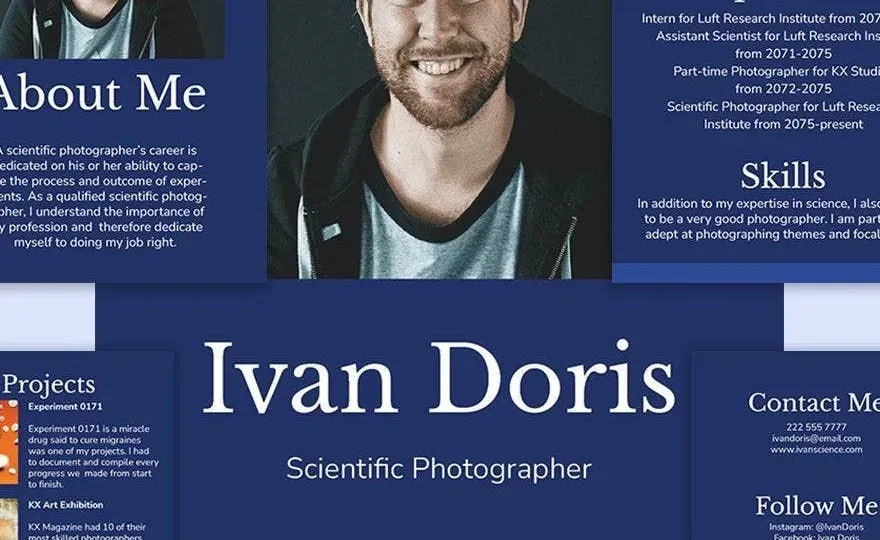
A strong portfolio separates credible professionals from those who merely claim expertise. Whether you're applying for roles or pitching freelance clients, your portfolio should demonstrate measurable results, not just activities.
Here's what to include:
-
Case studies with specific metrics — "Increased organic traffic 147% over 12 months" is compelling. "Did SEO for a client" is not. Include before/after data, the strategy you implemented, and the business impact.
-
Technical audit samples — A redacted or anonymized technical audit shows your analytical depth. Include crawl analysis, prioritized recommendations, and implementation results.
-
Content strategy examples — Show keyword research process, content briefs, topic cluster maps, and resulting rankings.
-
Tool proficiency demonstrations — Screenshots or Loom videos showing how you use tools like Screaming Frog, Ahrefs, or Google Search Console for analysis.
-
Certifications and credentials — Google Analytics certification, SEMrush Academy certifications, and HubSpot's SEO certification add credibility, especially for entry and mid-level professionals.
-
Testimonials and references — Client or manager testimonials that speak to both technical ability and communication skills.
Pro tip for professionals without client work to showcase: Build case studies from personal projects. Launch a niche site, optimize it, document everything, and track results. Many of the best SEO experts I know built their reputations by publicly sharing what they learned from their own sites.
Common Pitfalls Professionals Must Avoid
After years of reviewing SEO strategies, auditing campaigns, and mentoring junior professionals, these are the mistakes I see most frequently:
-
Chasing algorithm updates instead of building fundamentals — Every Google update refines the same core principle: serve users well. Professionals who obsess over each update's tactical implications while neglecting content quality and technical health are playing a losing game.
-
Ignoring search intent — Ranking for a keyword means nothing if the page doesn't satisfy the user's actual need. A common mistake I see is optimizing a product page for an informational query, or vice versa.
-
Neglecting technical SEO — Many professionals focus exclusively on content and links while their site has critical crawl issues, slow load times, or indexation problems that undermine everything else.
-
Over-reliance on a single tool or data source — No tool has perfect data. Cross-reference keyword volumes, backlink counts, and traffic estimates across multiple platforms.
-
Failing to communicate value in business terms — Telling a stakeholder "we improved crawl efficiency by 40%" means nothing to most executives. Translate into revenue impact: "This fix made 2,000 previously invisible pages discoverable, which we project will generate $X in additional organic revenue."
-
Treating AI-generated content as publish-ready — AI content requires professional editing, fact-checking, expertise integration, and intent optimization. Publishing raw AI output at scale is a fast path to quality penalties.
-
Ignoring E-E-A-T signals — Google's quality rater guidelines emphasize Experience, Expertise, Authoritativeness, and Trustworthiness. Professionals who don't build these signals into their content strategy are leaving rankings on the table.
Quick Professional SEO Skills Checklist

Use this checklist to self-assess your professional readiness. Rate yourself honestly on each item:
- [ ] Keyword research & intent classification — Can you identify and cluster keywords by intent, volume, and competitive difficulty?
- [ ] On-page optimization — Can you audit and optimize title tags, headers, internal links, and content structure?
- [ ] Technical auditing — Can you run and interpret crawl reports, identify indexation issues, and diagnose Core Web Vitals failures?
- [ ] Link building strategy — Can you plan and execute ethical link acquisition campaigns?
- [ ] Local SEO — Can you optimize a Google Business Profile and manage local citation consistency?
- [ ] Analytics & reporting — Can you set up GA4, interpret Search Console data, and build stakeholder-ready reports?
- [ ] Content strategy — Can you develop topic clusters, content briefs, and editorial calendars informed by search data?
- [ ] AI tool proficiency — Can you effectively use AI tools to accelerate research, drafting, and analysis while maintaining quality control?
- [ ] HTML/CSS basics — Can you read source code, implement schema markup, and troubleshoot rendering issues?
- [ ] Communication — Can you translate SEO findings into business impact for non-technical stakeholders?
- [ ] Competitive analysis — Can you dissect a competitor's SEO strategy and identify exploitable gaps?
- [ ] Python or SQL fundamentals — Can you automate repetitive tasks or query large datasets?
Scoring guide: If you checked 10–12, you're operating at a senior professional level. 7–9 indicates solid mid-level competence with clear growth areas. Below 7 suggests focusing on foundational skill development before positioning yourself as a specialist.
Revisit this checklist annually—the skills landscape shifts, and what's "advanced" today becomes "expected" tomorrow.
Frequently Asked Questions About SEO for Professionals
What is an SEO professional?
An SEO professional is a specialist who optimizes websites, content, and digital properties to improve search engine rankings and drive qualified organic traffic. They combine technical expertise, analytical skills, and strategic thinking across on-page, off-page, technical, and local SEO disciplines. Unlike general marketers, SEO professionals make search optimization their primary area of practice and are accountable for measurable organic performance.
Is SEO dead or evolving in 2025?
SEO is not dead; it is evolving. SEO professionals must adapt to AI-powered search, generative results, and multi-platform visibility beyond traditional Google results. The fundamentals of keyword research, content quality, technical performance, and user experience remain critical, but execution methods and tools have transformed. Organic search continues to drive approximately 53% of trackable web traffic, confirming the discipline's ongoing relevance.
Can ChatGPT do SEO?
ChatGPT and AI tools can assist with content drafting, keyword research, data analysis, and schema generation, but they cannot replace professional SEO. They lack strategic judgment for prioritizing business-critical keywords, cannot build authority through authentic link relationships, cannot assess competitive landscape shifts with business context, and cannot navigate the interpersonal work of cross-functional stakeholder management. Professionals use AI to augment their work, not automate their role.
What are the four types of SEO?
The four types of SEO are: (1) On-Page SEO — optimizing content, titles, meta tags, and user experience elements within a website; (2) Off-Page SEO — building authority through backlinks, brand mentions, and third-party validation; (3) Technical SEO — improving site speed, crawlability, indexation, and Core Web Vitals; (4) Local SEO — optimizing for geographic search intent through Google Business Profiles, local citations, and location-based content.
How much do SEO specialists earn?
SEO specialist salary ranges vary by experience and location. Entry-level professionals typically earn $35,000–$50,000 annually; mid-level specialists earn $50,000–$80,000; senior professionals and managers earn $80,000–$130,000+. Freelance SEO professionals charge $50–$150+ per hour, with top specialists earning $150,000–$250,000+ annually through retainer-based client relationships.
What free SEO resources are available for professionals?
Free resources include Google Search Central documentation, Moz's SEO Learning Center, Ahrefs' free webmaster tools and keyword generator, SEMrush's free tier, Google Analytics 4, Google Search Console, Google Looker Studio for reporting, and community forums like r/SEO. Free courses from Google Digital Garage, HubSpot Academy, and Coursera provide structured learning paths without subscription costs.
Final Thoughts on Mastering SEO for Professionals
Mastering SEO for professionals requires competence across all four pillars—on-page, off-page, technical, and local SEO—combined with the non-negotiable SEO professional skills of strategic thinking, data analysis, and clear communication. These fundamentals haven't changed, but the tools, platforms, and search behaviors surrounding them have evolved dramatically.
SEO is not dying. It's becoming more sophisticated, more integrated with AI, and more demanding of genuine expertise. The professionals who will thrive are those who embrace AI tools like ChatGPT and platforms like Writora as force multipliers while investing in the human skills—strategy, relationship building, ethical judgment, and business acumen—that no algorithm can replicate.
Here's your next step based on where you are:
- Just starting out? Work through the free resources listed above and our how to learn SEO guide, then build a personal project to generate your first case study.
- Mid-career professional? Use the skills checklist to identify your gaps, then invest in the 2–3 areas that will have the most impact on your next role or client engagement. Compare your earnings against the SEO specialist salary benchmarks provided above.
- Senior professional or aspiring freelancer? Benchmark your compensation, refine your portfolio with measurable results, and evaluate whether specialization could increase your earning potential as one of the best SEO experts in your niche.
Revisit the skills checklist annually, stay engaged with Google Search Central updates and the broader SEO community, and remember: the for professionals SEO landscape rewards those who keep learning, adapting, and delivering measurable results.