SEO Definition: What Search Engine Optimization Is and How It Works
SEO Definition: What It Means in Simple Terms SEO — Search Engine Optimization — is the practice of optimizing your website so Google and other search en...

SEO Definition: What It Means in Simple Terms
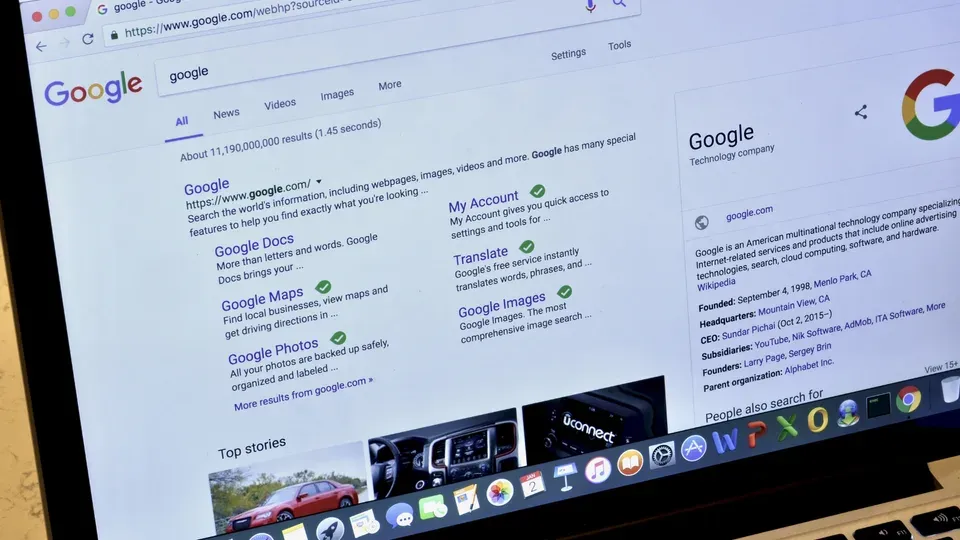
SEO — Search Engine Optimization — is the practice of optimizing your website so Google and other search engines understand your content and show it to people searching for what you offer.
Think of the internet as a massive library with billions of books. SEO is the process of organizing and labeling your book so the librarian (Google) can find it instantly and place it on the shelf right in front of the reader looking for exactly what you wrote. Without that organization, even the best book gets buried in a back corner no one visits.
In plain terms: SEO helps you get free, organic traffic from search results — without paying for ads every time someone clicks.
This guide covers the four core types of SEO (on-page, off-page, technical, and local), how search engines actually work, real-world examples, and why business leaders treat SEO as one of their most valuable long-term investments.
How SEO Works: The Search Engine Ranking Process
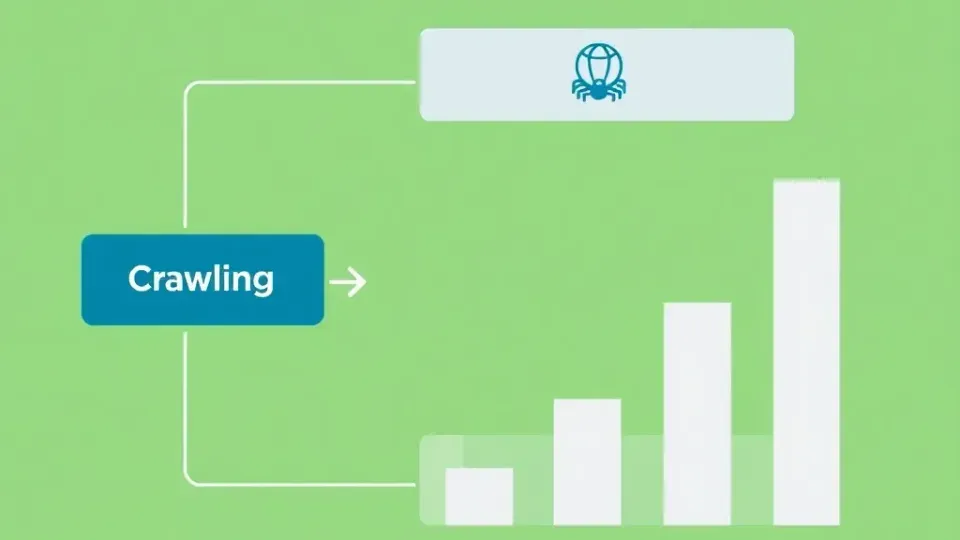
Before optimizing anything, it helps to understand what you're optimizing for. Google doesn't manually review every webpage — it uses automated systems to discover, analyze, and rank content at enormous scale.
The entire process boils down to one goal: matching the most relevant, authoritative, and trustworthy content to a user's search query. When your page satisfies that goal better than competitors, you rank higher. Higher rankings mean more clicks, more traffic, and more business.
Understanding this process also clarifies why keyword research is your logical first step — you need to know what queries your audience is actually typing before you can optimize for them.
Crawling, Indexing, and Ranking Explained
Search engines operate in three distinct stages:
1. Crawling Google's automated bots (called "spiders" or "crawlers") continuously browse the web by following hyperlinks from page to page. They discover new content and revisit existing pages to check for updates. If a page isn't crawlable — due to a blocked robots.txt file, broken links, or login walls — Google simply never sees it.
2. Indexing Once crawled, Google analyzes a page's content, images, and metadata, then stores it in a massive database called the index. Think of it as Google's internal catalog. A page must be indexed before it can ever appear in search results. You can check whether your pages are indexed using Google Search Console.
3. Ranking When a user types a query, Google's algorithm evaluates hundreds of signals — relevance, authority, page experience, freshness — and ranks indexed pages in order of quality. The pages at positions 1–3 capture the majority of clicks: according to research from Backlinko, the #1 organic result earns an average click-through rate of 27.6%, while position 10 earns just 2.4%.
Key takeaway: SEO works by making your site easier to crawl, ensuring it gets indexed, and sending the right signals so the ranking algorithm favors your pages over competitors.
The 4 Types of SEO

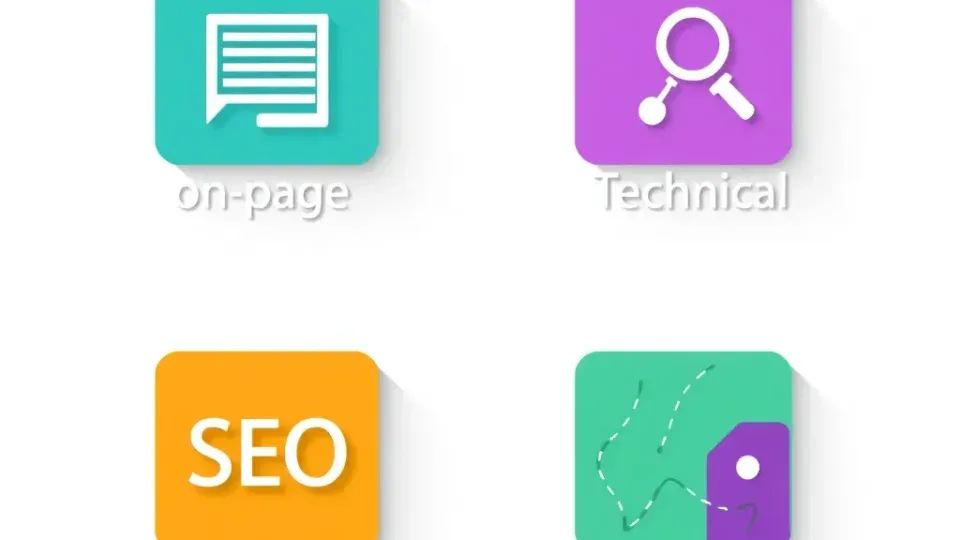
The search engine optimization meaning extends well beyond writing blog posts with keywords. Modern SEO is a multi-disciplinary practice that spans content, authority building, technical infrastructure, and geographic targeting. Here's how each type works — and why all four matter.
On-Page SEO: Optimizing Your Content and Pages
On-page SEO refers to everything you control directly on your own website: the words on the page, how they're structured, and the signals you send to search engines through HTML elements.
Core on-page elements include:
- Title tags — The clickable headline in search results; should include your primary keyword near the front
- Meta descriptions — A 150–160 character summary that influences click-through rates
- Headings (H1–H6) — Structural hierarchy that helps Google understand content organization
- Body content — In-depth, original writing that thoroughly addresses the user's search intent
- Image alt text — Descriptive text that makes images understandable to crawlers and accessible to screen readers
- Internal links — Connections between your own pages that distribute authority and help users navigate
For example, if you run a bakery in Austin and want to rank for "custom wedding cakes Austin," your page title, H1, and first paragraph should naturally include that phrase. But stuffing it in 30 times does more harm than good — modern Google's algorithms penalize keyword manipulation.
For a deeper breakdown of every element, see our guide on on-page optimization.
In my experience, the highest-impact on-page change most sites can make immediately is rewriting title tags to better match actual search intent. I've seen traffic increases of 15–25% from title tag updates alone, without changing a single word of body content.
Off-Page SEO: Building Authority and Backlinks
Off-page SEO covers actions taken outside your website that influence how search engines perceive your authority and trustworthiness. The most powerful off-page signal? Backlinks — hyperlinks from other websites pointing to yours.
Google's original PageRank algorithm was built on this insight: a page linked to by many trustworthy sites must itself be trustworthy. That core logic still holds in 2026. According to Google's own documentation, links remain one of the top three ranking factors alongside content and RankBrain.
Quality matters far more than quantity when it comes to backlinks:
| Link Type | Impact | |---|---| | High-authority editorial link (e.g., Forbes, industry publication) | Very high | | Niche-relevant blog link | High | | Directory or forum link | Low to moderate | | Paid link (violates Google guidelines) | Negative (penalty risk) |
Off-page SEO also includes:
- Brand mentions (even without links) that reinforce entity recognition
- Social sharing that drives traffic and signals content quality indirectly
- PR and digital outreach that earns coverage and editorial links
Building a sustainable backlink profile takes time. Our backlink strategy guide covers white-hat link building tactics — from guest posting to data-driven content that attracts natural links.
Technical SEO: Site Speed, Structure, and Mobile Performance
Technical SEO addresses the infrastructure of your site — the behind-the-scenes factors that determine whether Google can efficiently crawl, index, and serve your pages to users.
Google's Core Web Vitals framework (officially a ranking signal since 2021) measures three dimensions of page experience:
- Largest Contentful Paint (LCP): How fast the main content loads. Target: under 2.5 seconds
- Interaction to Next Paint (INP): How quickly the page responds to user input. Target: under 200ms
- Cumulative Layout Shift (CLS): How much the page layout shifts unexpectedly. Target: under 0.1
Beyond Core Web Vitals, technical SEO includes:
- Mobile-first indexing — Google now indexes the mobile version of your site first; a poor mobile experience directly harms rankings
- HTTPS security — Google confirmed SSL as a ranking signal; non-HTTPS sites receive warning labels in Chrome
- Crawl budget management — Large sites must ensure bots aren't wasting crawl time on duplicate or low-value pages
- Structured data (schema markup) — Code that helps Google understand content types and can unlock rich results like star ratings and FAQs in SERPs
- XML sitemaps — A roadmap of your site's pages that guides crawlers efficiently
For a practical guide to improving load times and Core Web Vitals scores, see our page speed optimization resource.
Local SEO: Optimizing for Geographic Search
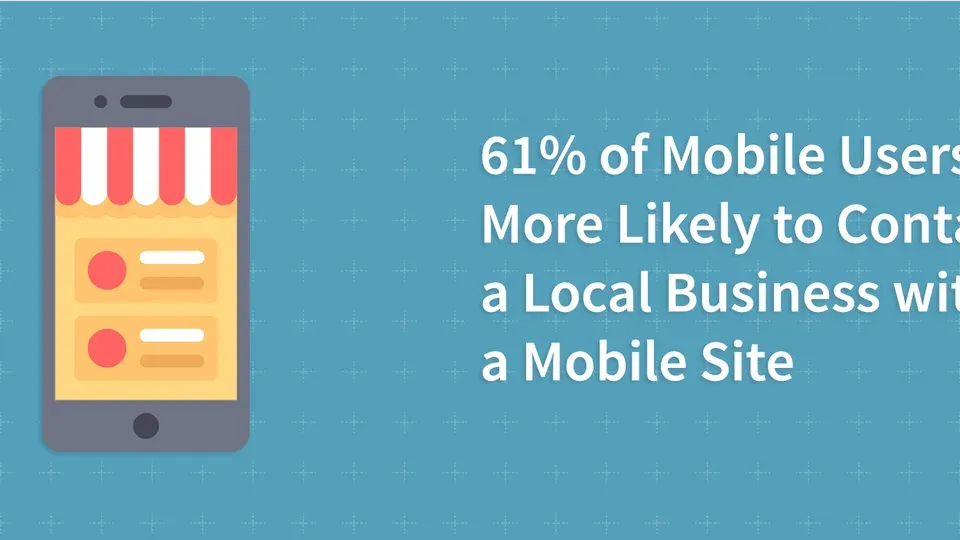
Local SEO is the practice of optimizing your online presence to appear in geographically relevant searches — queries like "dentist near me," "best coffee shop in Brooklyn," or "emergency electrician Dallas."
The defining feature of local SEO is the Google Business Profile (GBP), formerly Google My Business. A fully optimized GBP listing appears in the Local Pack — the map and three-listing block that appears above organic results for most local queries. Ranking in the Local Pack can be more valuable than ranking #1 in organic results because of its prominent placement and trust signals (reviews, photos, hours).
Key local SEO tactics include:
- Claim and complete your Google Business Profile with accurate NAP (Name, Address, Phone) data
- Earn and respond to reviews — review quantity and recency are documented local ranking signals
- Consistent citations across directories (Yelp, Yellow Pages, industry-specific directories)
- Locally targeted content — city or neighborhood-specific landing pages
- Local backlinks from chambers of commerce, local news sites, and community organizations
For businesses serving customers in specific geographic areas, local SEO often delivers the fastest measurable ROI of any SEO investment. Download our local SEO checklist for a step-by-step setup guide.
Real-World Examples of SEO in Action
The seo definition clicks into place when you see it applied to real business scenarios. Here are three concrete examples across different industries.
Example 1: The Local Plumber
Before SEO: A plumbing company in Chicago had a basic website with no keyword targeting, slow load times, and zero Google Business Profile presence. They relied entirely on word-of-mouth.
SEO actions taken:
- Added location-specific keywords ("emergency plumber Chicago," "burst pipe repair Lincoln Park") to page titles and content
- Optimized Google Business Profile with photos, service areas, and hours
- Built citations on 15 local directories
- Created a helpful blog post: "What to Do When a Pipe Bursts at 2am"
Results: Within six months, the site ranked in the top 3 for seven local plumbing queries and appeared in the Local Pack. Inbound calls from search increased by 140%. This timeline is consistent with Google's own guidance that SEO improvements typically take 4–12 months to fully materialize.
Example 2: The E-Commerce Store
An online retailer selling sustainable kitchen products was publishing product pages with manufacturer-copied descriptions — a classic duplicate content problem. Organic traffic was essentially zero despite a solid product catalog.
SEO actions taken:
- Rewrote all product descriptions with unique, benefit-focused copy
- Added an FAQ section to each product page using structured data markup
- Built a content hub around "sustainable kitchen" topics to attract informational searchers
- Earned backlinks from eco-lifestyle blogs through a data-driven "plastic waste in kitchens" research report
Results: Organic sessions grew from ~800/month to over 14,000/month over 10 months. The research report alone earned 47 editorial backlinks from relevant publications.
Example 3: The B2B SaaS Company
A project management software company was competing against industry giants for head terms like "project management software." Rather than fighting for impossible rankings immediately, they adopted a topic cluster strategy.
They created a comprehensive "hub" page around project management, then published 30+ supporting articles targeting long-tail queries like "how to manage remote team projects" and "agile vs. waterfall for small teams." Internal links connected all articles back to the hub.
Result: The hub page reached page 1 for its target keyword within eight months, while the cluster articles collectively drove 60% of the site's total organic traffic — most of it highly purchase-intent qualified.
SEO in Marketing and Business: Why It Matters

Understanding the SEO meaning in business context is what separates companies that treat it as a checkbox from those that treat it as a core growth channel.
Organic search drives more web traffic than any other channel. According to BrightEdge research, organic search accounts for approximately 53% of all trackable website traffic — more than paid search, social, email, and direct combined. For B2B companies specifically, that figure climbs higher.
The business case for SEO rests on three pillars:
1. Cost efficiency over time Unlike pay-per-click (PPC) advertising, where traffic stops the moment your budget does, SEO builds compounding returns. A well-optimized page published today can generate leads for years. HubSpot data consistently shows that inbound leads (largely SEO-driven) cost 61% less than outbound leads on average.
2. Trust and credibility Users trust organic results more than ads. Multiple eye-tracking studies show that searchers naturally scan organic results first. Ranking at the top of Google functions as an implicit third-party endorsement of your authority.
3. Competitive moat Organic rankings are hard to replicate quickly. A competitor can outbid you on Google Ads overnight, but displacing your organic position requires months of sustained effort. This makes SEO one of the few marketing investments that builds a genuine barrier to entry.
For independent publishers and content-driven businesses in particular, SEO isn't optional — it's the primary distribution channel for everything you create.
Key SEO Ranking Factors You Should Know
Google's algorithm reportedly evaluates over 200 ranking signals, but the research consistently points to a core set that deserves the most attention. Here's what the evidence supports:
Content Quality and Relevance
- Search intent match — Does your page deliver what the searcher actually wants (informational, transactional, navigational)?
- Topical depth — Does the content comprehensively cover the subject, or does it leave key questions unanswered?
- Originality — Unique insights, data, and perspectives outperform rehashed content
Authority Signals
- Backlink quality and quantity — Links from trusted, relevant sites remain a top-tier signal
- Domain authority — The cumulative trust built by a site over time through its link profile
- E-E-A-T signals — Google's Quality Rater Guidelines emphasize Experience, Expertise, Authoritativeness, and Trustworthiness as quality proxies
Technical Performance
- Core Web Vitals scores (LCP, INP, CLS)
- Mobile usability
- HTTPS
- No crawl errors or broken links
User Experience Signals
- Click-through rate from SERPs (an engaged result gets rewarded)
- Dwell time and pogo-sticking (users who immediately return to Google signal a poor content match)
Tracking these factors requires solid tooling. SEO tools like Google Search Console, Ahrefs, and Semrush let you monitor rankings, audit technical health, and identify link opportunities in one place. If you want an integrated platform that combines keyword clustering with content creation and publishing, Writora is built specifically for independent publishers managing this workflow end-to-end.
SEO vs. Paid Search: The Key Differences

A common point of confusion — especially for business owners new to digital marketing — is the distinction between SEO and paid search advertising (PPC, or pay-per-click). Both appear in Google search results, but they operate on fundamentally different models.
| Factor | SEO (Organic) | Paid Search (PPC) | |---|---|---| | Cost per click | Free (after investment in content/optimization) | Paid per click (variable by keyword) | | Time to results | 4–12 months typically | Immediate (same day) | | Longevity | Compounding — rankings persist | Stops when budget stops | | Trust level | Higher perceived trust | Marked as "Sponsored" | | Control | Limited (Google decides ranking) | Full control over placement | | Scalability | Grows organically over time | Scales with budget |
The practical takeaway: PPC is ideal for immediate visibility, product launches, or testing new markets. SEO is the long-term foundation for sustainable, cost-efficient traffic. Most successful businesses use both in a complementary strategy — PPC captures immediate demand while SEO builds the organic foundation.
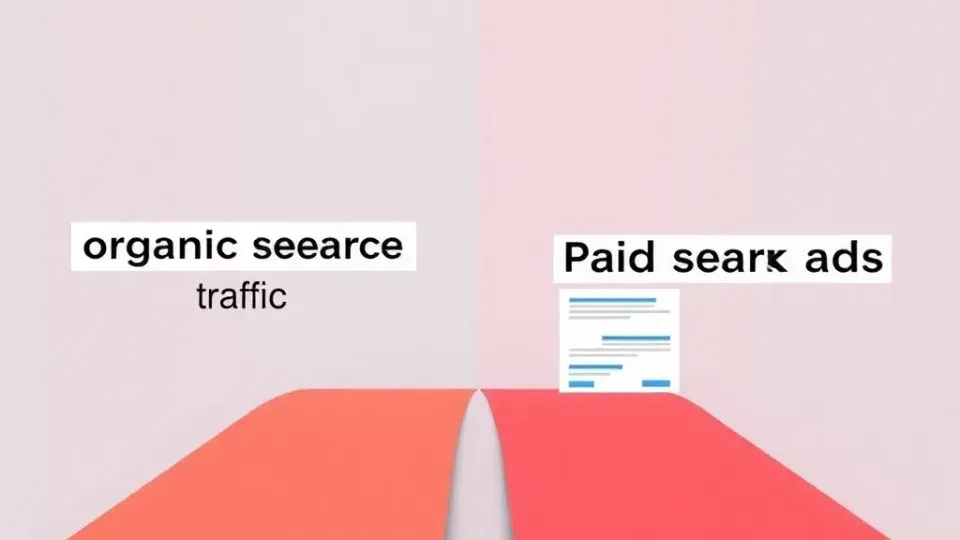
It's also worth distinguishing organic search traffic from paid: organic visitors arrive through unpaid results, while paid visitors click on ads. SEO's goal is maximizing organic traffic volume and quality.
SEO in the Age of AI and LLMs: What's Changing
The SEO landscape in 2026 looks meaningfully different from five years ago, largely because of how AI and large language models have reshaped search itself.
Google's AI Overviews (formerly Search Generative Experience) now appear at the top of results for a significant portion of queries, providing synthesized answers directly on the SERP. This means some users get their answer without clicking through — a trend industry analysts call "zero-click searches."
What this means for SEO practitioners:
- Entity-based optimization is more important than ever. AI summaries pull from pages that clearly define who they are, what they cover, and why they're authoritative. Structured data and clear entity definition help.
- GEO (Generative Engine Optimization) is emerging as a discipline — optimizing content specifically to be cited within AI-generated answers in Google, Bing Copilot, ChatGPT, and similar tools.
- Conversational, question-answering formats (like this FAQ section) get extracted by AI systems because they're concise and directly responsive to intent.
- Brand and E-E-A-T signals matter more, not less — AI systems preferentially cite authoritative, well-linked sources.
The core SEO definition hasn't changed: you're still trying to make valuable content discoverable to the right audience. But the surfaces where that content appears have expanded beyond the traditional 10 blue links. Optimizing for AI extraction is now a legitimate, measurable part of an SEO strategy.
Frequently Asked Questions About SEO
What is SEO in simple terms?
SEO (Search Engine Optimization) is the process of improving your website so it appears higher in search engine results when people search for topics related to your business. It involves optimizing your content, technical setup, and authority signals so Google understands what your pages are about and shows them to the right people — without you paying for each click.
What are the 4 types of SEO?
The four universally recognized types of SEO are:
- On-page SEO — Optimizing content, title tags, headings, and keywords on your web pages
- Off-page SEO — Building backlinks and brand authority from external sources
- Technical SEO — Improving site speed, mobile usability, crawlability, and structured data
- Local SEO — Optimizing your presence for geographic searches and Google Business Profile
What is an example of SEO?
A concrete example: A local plumber in Chicago adds location-specific keywords to their website ("emergency plumber Chicago"), optimizes their Google Business Profile, ensures their site loads in under 2 seconds, and earns backlinks from local directories. As a result, Google ranks their site in the top 3 when someone nearby searches "emergency plumber." The traffic is free and ongoing — that's SEO working.
What does SEO mean in social media marketing?
In social media, SEO-like principles apply to how content gets discovered within platforms. Optimizing your Instagram bio with relevant keywords, using strategic hashtags, and writing keyword-rich captions can improve your visibility in platform search results (Instagram Search, TikTok Search, LinkedIn search). However, social "SEO" operates within each platform's own algorithm — it doesn't directly affect Google rankings. Social content that earns shares and backlinks can indirectly support traditional SEO by driving links and branded search volume.
Why is SEO important for business?
SEO is important because it drives a continuous stream of targeted, organic traffic without paying per click. Organic search accounts for roughly 53% of all web traffic (BrightEdge). Unlike paid ads that disappear when your budget runs out, well-optimized content compounds over time — a single article can generate qualified leads for years. For businesses that rely on online discovery (e-commerce, local services, SaaS, media), SEO is typically the highest-ROI long-term marketing channel available.
The Bottom Line
The SEO definition is straightforward: it's the practice of making your website visible, understandable, and authoritative to search engines — so the right people find you organically, without paid advertising.
But the practice of SEO spans four interconnected disciplines: on-page optimization (content and structure), off-page SEO (authority and backlinks), technical SEO (infrastructure and performance), and local SEO (geographic relevance). Neglecting any one of them creates gaps that limit your overall results.
SEO is an ongoing investment, not a one-time project. Here's a practical starting point:
- ✅ Start with keyword research to understand what your audience actually searches for
- ✅ Optimize your highest-traffic pages for search intent and on-page elements
- ✅ Audit your technical health using Google Search Console
- ✅ Begin earning backlinks through valuable, shareable content
- ✅ Set up or optimize your Google Business Profile if you serve local customers
- ✅ Track rankings, traffic, and conversions monthly — adjust based on data
If you're managing content at scale and want a platform that handles keyword clustering, AI-assisted article creation, and one-click publishing in one place, Writora was built for exactly that workflow. It's worth exploring if you're an independent publisher looking to systematize your SEO content process.
For your next step, dive into our on-page optimization guide to apply the principles from this article directly to your most important pages.