SEO Defined: What Search Engine Optimization Is and How It Works
SEO stands for Search Engine Optimization—the practice of improving your website so search engines like Google can find it, understand it, and rank it hi...

SEO stands for Search Engine Optimization—the practice of improving your website so search engines like Google can find it, understand it, and rank it higher in organic (unpaid) search results. That single sentence is the foundation everything else in this guide builds upon.
Have you ever wondered how Google decides which websites appear first when you search for something? The answer, in large part, is SEO. With SEO defined as a core discipline, every business, publisher, and creator competing for attention online needs to understand how it works—and more importantly, how to apply it.
In this guide, you'll get a layered explanation that starts with the simplest possible definition and progressively deepens into how search engines actually work, the three pillars of SEO, real-world examples across industries, common myths, and a practical checklist you can act on today. Whether you're a business owner hearing the term for the first time or a marketer looking to sharpen your fundamentals, this is the resource you'll want to bookmark.
SEO Defined: The Simple Explanation Everyone Needs

SEO (Search Engine Optimization) is the practice of improving your website's content, structure, and authority so that search engines can find, understand, and rank it higher in search results—bringing more organic traffic to your site.
That definition is worth unpacking because every word matters. Let's break it down.
Core Definition and Core Components
The search engine optimization meaning encompasses three critical ideas:
- Improving your website — SEO is active, not passive. It requires deliberate changes to how your site is built, what content it contains, and how other sites reference it.
- So search engines can find, understand, and rank it — Search engines aren't human. They rely on crawlers, algorithms, and signals to interpret your pages. SEO is about making your site legible and valuable to those systems.
- Bringing more organic traffic — The word "organic" is key. Unlike paid advertising, organic search traffic doesn't cost you money per click. It's earned through relevance, quality, and trust.
In my experience working with sites across dozens of niches, the simplest way to think about SEO is this: you're building a bridge between what people are searching for and the answers your website provides. The stronger and more precise that bridge, the more traffic flows across it.
When people ask "what is SEO," they're really asking about an interconnected system of practices. The core components that make up that system include:
- Keyword research — Identifying the terms and phrases your audience actually types into search engines
- Content optimization — Creating and refining content that matches search intent
- Technical infrastructure — Ensuring your site loads fast, is mobile-friendly, and is crawlable
- Authority building — Earning backlinks and brand signals that tell search engines your site is trustworthy
- User experience — Making sure visitors find value and engage with your content
These components work together as a system. Neglecting any one of them weakens the whole. Once you have SEO defined in these practical terms, the path to implementation becomes much clearer.
How Search Engines Work: The Foundation of SEO Defined

Before you can optimize for search engines, you need to understand what they actually do. How SEO works is inseparable from how search engines work—they are two sides of the same coin.
The Search Engine Crawling and Indexing Process
Search engines like Google operate in three stages: crawling, indexing, and ranking.
Crawling is the discovery phase. Google uses automated programs called "crawlers" (also known as spiders or Googlebot) that follow links across the web, visiting pages and reading their content. According to Google's own SEO Starter Guide, the crawler discovers new and updated pages by following links from known pages and processing sitemaps submitted by site owners.
Indexing is the storage and processing phase. Once a page is crawled, Google analyzes its content—text, images, videos, structured data—and stores it in a massive database called the index. Think of the index as an enormous library catalog. If your page isn't indexed, it simply doesn't exist in Google's world.
Ranking is the retrieval and ordering phase. When someone types a query, Google's algorithm sifts through its index to find the most relevant, high-quality pages and presents them in an ordered list. This is where SEO directly influences outcomes.
A common mistake I see is people assuming their site is automatically in Google's index just because it exists online. That's not always the case. Technical issues—like a misconfigured robots.txt file blocking crawlers, or pages returning server errors—can prevent indexing entirely. This is why technical SEO fundamentals deserve serious attention.
How Ranking Algorithms Evaluate Content
Google's ranking algorithm evaluates pages using hundreds of signals to determine which results best answer a searcher's query. While Google doesn't publish a complete list, the major categories of ranking signals are well-documented:
| Signal Category | What It Measures | Examples | |---|---|---| | Relevance | How closely content matches the query | Keyword usage, topical coverage, semantic relevance | | Quality | How valuable and trustworthy the content is | Depth, accuracy, E-E-A-T signals, originality | | User Experience | How easy and pleasant the page is to use | Core Web Vitals, mobile-friendliness, page speed | | Authority | How credible the site and page are | Backlink profile, domain authority, brand mentions | | Freshness | How current the content is (when relevant) | Publication date, content updates, recency signals |
Google has officially confirmed that page experience signals, including Core Web Vitals (Largest Contentful Paint, Interaction to Next Paint, and Cumulative Layout Shift), are ranking factors. Mobile responsiveness and site speed aren't optional extras—they directly influence where your pages appear in results.
Why the SEO Definition Matters for Business
Understanding what is SEO isn't just academic—it has direct, measurable business impact.
Organic search drives free traffic from high-intent users. When someone types "best project management software for remote teams" into Google, they're actively looking for a solution. If your page ranks for that query, you're reaching a potential customer at the exact moment of interest—without paying for that click.
Consider the economics: paid search (Google Ads) charges you every time someone clicks your ad. For competitive commercial keywords, costs can range from $2 to $50+ per click. Organic rankings, once achieved, deliver clicks at no per-click cost. Over time, the cumulative value of organic traffic typically far outweighs the investment in SEO.
SEO also compounds over time. A well-optimized article published today can continue generating traffic for months or years. After working with content sites for over a decade, I've seen individual articles that still drive thousands of monthly visits three or four years after publication—with only periodic updates needed. That's fundamentally different from paid advertising, where traffic stops the moment you stop spending. This compounding effect is central to how SEO defined as a strategy differs from nearly every other marketing channel.
The Three Pillars of SEO Explained
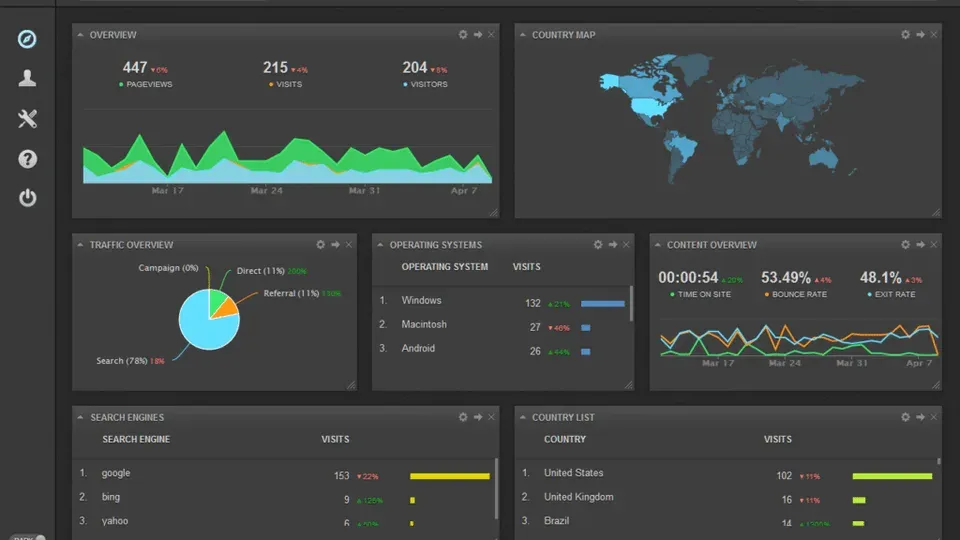
The SEO definition becomes much more actionable when you break it into three distinct pillars: on-page SEO, technical SEO, and off-page SEO. This framework is the industry standard, adopted by major SEO platforms and referenced across leading educational resources from Moz, Ahrefs, and Google's own documentation.
Think of these pillars as the legs of a stool. Remove one, and the whole thing collapses.
On-Page SEO: Content and User Experience
On-page SEO refers to everything you do directly on your web pages to improve their search visibility. This is the pillar you have the most control over, and it's typically where beginners should start.
The major elements of on-page SEO include:
- Title tags — The clickable headline that appears in search results. It should include your primary keyword and accurately describe the page's content. Keep it under 60 characters to avoid truncation.
- Meta descriptions — The brief summary below the title in search results. While not a direct ranking factor, a compelling meta description improves click-through rates, which indirectly signals quality to Google.
- Header tags (H1, H2, H3) — These create a hierarchical structure that helps both users and search engines understand your content's organization. Your H1 should include your primary keyword. Use H2s and H3s to break content into logical sections.
- Keyword usage — Place your primary keyword in the title, first 100 words, at least two subheadings, and naturally throughout the body. Avoid stuffing—aim for 1-2% keyword density.
- Content quality and depth — Google's systems increasingly reward content that demonstrates genuine expertise, experience, authoritativeness, and trustworthiness (E-E-A-T). Thin, generic content loses to in-depth, original analysis.
- Internal linking — Links between pages on your own site help search engines discover content and understand topical relationships. They also keep users engaged longer.
- Image optimization — Use descriptive alt text, compress images for fast loading, and use modern formats like WebP.
For a deeper dive into each of these elements, our guide on on-page SEO optimization techniques covers keyword placement strategies, content structure best practices, and advanced meta tag optimization.
A practical example: Imagine you run a bakery in Austin, Texas, and you publish a blog post titled "Best Birthday Cakes in Austin." Strong on-page SEO would mean:
- Your title tag reads: "Best Birthday Cakes in Austin | [Your Bakery Name]"
- The H1 matches the title closely
- The first paragraph mentions "birthday cakes in Austin" naturally
- You include sections (H2s) for different cake types, price ranges, and ordering information
- Images of your cakes include alt text like "three-tier chocolate birthday cake from [Bakery Name] in Austin"
- You link internally to your online ordering page and your blog post about custom cake designs
That's on-page SEO in action—straightforward, controllable, and impactful.
Technical SEO: Site Structure and Performance
Technical SEO is the practice of optimizing your website's infrastructure so search engines can efficiently crawl, index, and render your pages. It's the behind-the-scenes work that makes everything else possible.
Even the best content in the world won't rank if Google can't access it, load it, or understand its structure. Key technical SEO elements include:
- Site speed and Core Web Vitals — Google has officially confirmed that page experience signals are ranking factors. Pages that load slowly (LCP over 2.5 seconds), respond sluggishly to interactions (INP over 200ms), or shift visually during loading (CLS over 0.1) are at a disadvantage.
- Mobile responsiveness — Google uses mobile-first indexing, meaning it primarily uses the mobile version of your site for ranking. If your site isn't mobile-friendly, you're effectively invisible to Google's primary crawler.
- Crawlability — Your
robots.txtfile tells search engines which pages they can and can't access. Your XML sitemap provides a roadmap of all important pages. Errors in either can block indexing. - HTTPS security — Sites without SSL certificates (using HTTP instead of HTTPS) are flagged as "not secure" by browsers and receive a minor ranking penalty.
- Structured data (schema markup) — Adding structured data helps search engines understand what your content is about, enabling rich results like FAQ dropdowns, review stars, and recipe cards in search.
- URL structure — Clean, descriptive URLs (e.g.,
/birthday-cakes-austin/) perform better than cryptic ones (e.g.,/page?id=4837). - Canonical tags — These tell search engines which version of a page is the "official" one, preventing duplicate content issues.
In my experience, technical SEO issues are the most common reason good content underperforms. I've audited sites where a single misplaced noindex tag was preventing their highest-value pages from appearing in search results at all. Our technical SEO fundamentals guide walks through site speed optimization, XML sitemap configuration, and mobile responsiveness testing in detail.
Off-Page SEO: Authority and Backlinks
Off-page SEO encompasses all the activities that happen outside your website to improve its search engine rankings. The most important off-page signal is backlinks—hyperlinks from other websites pointing to yours.
A backlink is essentially a vote of confidence. When a reputable website links to your content, it signals to search engines that your page is trustworthy and valuable. Not all backlinks are equal, though:
| Backlink Quality Factor | High Value | Low Value | |---|---|---| | Source authority | Link from a major news outlet or industry leader | Link from a spammy directory or unknown blog | | Relevance | Link from a site in your niche | Link from a completely unrelated industry | | Context | Link embedded naturally in relevant content | Link buried in a footer or sidebar | | Anchor text | Descriptive, relevant anchor text | Generic "click here" or exact-match keyword stuffing | | Uniqueness | First link from that domain | Tenth link from the same domain |
Building backlinks ethically requires creating content worth linking to—original research, comprehensive guides, unique data, or genuinely useful tools. Tactics like buying links, participating in link schemes, or mass-submitting to low-quality directories violate Google's guidelines and risk penalties.
Effective off-page SEO also includes:
- Brand mentions — Even unlinked mentions of your brand can serve as authority signals
- Social signals — While not direct ranking factors, social sharing increases content visibility and can lead to natural backlinks
- Online reviews — Particularly important for local SEO, reviews on Google Business Profile influence local pack rankings
- Digital PR — Earning coverage in reputable publications through newsworthy content, expert commentary, or original research
For strategies on building a healthy backlink profile, check our guide on backlink strategy and link building.
Search Engine Optimization Meaning Across Different Industries

One reason the SEO definition can feel slippery is that its application varies significantly depending on your business type and goals. Having SEO defined in general terms is useful, but understanding how it applies to your specific context is where real value emerges.
E-Commerce SEO
For online stores, SEO centers on product pages and category pages. Key priorities include:
- Optimizing product titles and descriptions with buyer-intent keywords ("buy organic cotton t-shirts")
- Creating unique descriptions rather than copying manufacturer text
- Implementing product schema markup for rich snippets (price, availability, reviews)
- Optimizing site architecture so every product is reachable within 3-4 clicks
- Managing faceted navigation to prevent crawl bloat
Real-world example: An online furniture retailer I worked with saw a 140% increase in organic traffic over eight months after restructuring their category pages. The key changes: rewriting thin category descriptions with 500+ words of genuinely helpful buying guidance, adding FAQ sections to top categories, and fixing thousands of duplicate pages caused by filter parameters being indexed separately.
Local SEO
For brick-and-mortar businesses, local SEO is about appearing in the Google Local Pack (the map results) and local organic listings. Priorities include:
- Claiming and optimizing your Google Business Profile with accurate name, address, phone (NAP) information
- Earning positive reviews and responding to them
- Building local citations (directory listings) with consistent NAP data
- Creating location-specific content ("best coffee shops in Portland")
- Earning backlinks from local news outlets, chambers of commerce, and community organizations
SaaS and B2B SEO
Software companies and B2B businesses typically focus on content-driven SEO targeting every stage of the buyer's journey:
- Top of funnel: Educational blog posts targeting informational queries ("what is project management software")
- Middle of funnel: Comparison and evaluation content ("Asana vs. Monday.com")
- Bottom of funnel: Product-specific pages optimized for high-intent keywords ("project management software pricing")
Publisher and Content Site SEO
For publishers, SEO is fundamentally about topical authority and content volume. Priorities include clustering content around core topics, maintaining editorial quality standards at scale, optimizing for featured snippets and AI-generated answers, and building a strong internal linking architecture.
Regardless of your industry, the core principles remain the same: understand what your audience searches for, create the best possible content to answer those queries, ensure your site is technically sound, and build authority through legitimate means. That's the search engine optimization meaning in practice, no matter your niche.
SEO vs. SEM, Content Marketing, and Other Channels

A common source of confusion is how SEO relates to other digital marketing practices. Let's clarify these distinctions with SEO defined in contrast to its neighboring disciplines.
SEO vs. SEM (Search Engine Marketing)
SEO focuses on earning organic, unpaid search traffic by optimizing websites. SEM (Search Engine Marketing) is the broader umbrella that includes both SEO and paid search advertising (PPC/Google Ads).
In practice, most marketers use "SEM" to refer specifically to paid search, even though technically SEO falls under it. Here's how they compare:
| Factor | SEO | SEM (Paid Search) | |---|---|---| | Cost model | Investment in content and optimization; no per-click cost | Pay-per-click; costs scale with traffic | | Timeline | 3-12 months to see significant results | Immediate traffic once campaigns launch | | Sustainability | Traffic persists after optimization work | Traffic stops when budget runs out | | Trust signals | Organic results often receive higher trust from users | "Sponsored" label may reduce trust | | Click share | ~70-80% of search clicks go to organic results | ~20-30% of clicks go to ads | | Control | Less control over exact ranking position | Full control over placement (if budget allows) |
The smartest approach isn't choosing one over the other—it's using them together. Paid search delivers immediate visibility while you build organic rankings. Over time, as your SEO matures, you can shift budget away from paid ads for keywords where you rank organically.
For a more detailed breakdown, see our SEO vs. PPC and paid search comparison.
SEO vs. Content Marketing
SEO and content marketing overlap significantly but aren't identical. Content marketing is the strategic creation and distribution of valuable content to attract and engage an audience. SEO is one distribution channel for that content—specifically, the organic search channel.
You can do content marketing without SEO (e.g., email newsletters, social media content). You can do SEO with minimal content (e.g., technical optimization of existing pages). But the most effective digital strategies combine both: creating high-quality content specifically optimized for search visibility.
SEO vs. Social Media Marketing
Social media platforms have their own internal search functions, but they operate on fundamentally different algorithms (recency, engagement, social graph) compared to Google (relevance, authority, content quality). Social media is excellent for brand awareness and community building, while SEO excels at capturing high-intent demand—people actively searching for solutions.
Practical SEO Examples: How SEO Works in the Real World

Definitions are helpful, but seeing how SEO works in practice makes it tangible. Here are concrete examples that illustrate SEO principles in action, demonstrating what it looks like when SEO is properly defined and executed.
Example 1: A Blog Post Targeting a Specific Keyword
Scenario: A personal finance blog wants to rank for "how to start investing with $100."
SEO actions taken:
- Keyword research revealed that this query receives approximately 4,400 monthly searches with moderate competition
- Content creation produced a 2,500-word guide covering brokerage account options, index funds, fractional shares, and step-by-step instructions
- On-page optimization placed the keyword in the title tag, H1, first paragraph, two H2 subheadings, and meta description
- Internal linking connected the post to related articles about brokerage reviews, index fund guides, and investing basics
- Structured data added FAQ schema for common questions answered within the post
Result: The post reached page one within four months, eventually securing position three. It now drives approximately 3,200 organic visits per month—readers with high intent to take action on investment products.
Example 2: Local Business Optimization
Scenario: A dental practice in Denver wants to appear in the local pack for "dentist near me" and "best dentist in Denver."
SEO actions taken:
- Claimed and fully optimized Google Business Profile with photos, services, business hours, and insurance information
- Generated 85+ Google reviews over six months by implementing a post-visit email review request system
- Created location-specific service pages (e.g., "/denver-teeth-whitening/", "/denver-dental-implants/")
- Built citations on 40+ local and dental-specific directories with consistent NAP data
- Earned backlinks from a local health magazine and the Denver Chamber of Commerce
Result: The practice moved from not appearing in the local pack to consistently ranking in the top three map results, generating an estimated 50+ new patient inquiries per month from organic search alone.
Example 3: E-Commerce Category Page Optimization
Scenario: An online retailer selling running shoes wants to improve rankings for "best trail running shoes."
SEO actions taken:
- Transformed a thin category page (just a product grid) into a comprehensive resource with a 600-word buying guide, comparison table, and FAQ section
- Added product schema markup to every listed shoe for rich snippets
- Improved page speed from 4.2 seconds to 1.8 seconds by compressing images and implementing lazy loading
- Built internal links from relevant blog posts ("How to Choose Trail Running Shoes," "Trail Running for Beginners")
- Earned a backlink from a running gear review site by providing exclusive product data
Result: The category page moved from position 14 to position 4 within five months, with organic revenue from that page increasing by 210%.
These examples illustrate a consistent pattern: SEO success comes from combining strong content with technical excellence and authority building—all three pillars working together.
Common SEO Myths and Misconceptions

After years of working in search optimization, I've encountered the same myths repeatedly. Let's address the most damaging ones so that when you have SEO defined in your own mind, it's based on reality rather than outdated advice.
Myth: SEO is a one-time task. Reality: SEO is an ongoing practice. Search algorithms update constantly (Google makes thousands of changes per year), competitors publish new content, and user behavior evolves. Treating SEO as "set it and forget it" guarantees declining results over time.
Myth: Keyword stuffing helps you rank higher. Reality: Keyword stuffing—unnaturally repeating your target keyword—has been a negative ranking signal for over a decade. Modern algorithms understand semantic meaning and reward natural, comprehensive coverage of a topic over mechanical repetition.
Myth: SEO is just about Google. Reality: While Google holds roughly 90% of the global search market, SEO principles apply to Bing, YouTube (the second-largest search engine), Amazon product search, app store optimization, and increasingly, AI-powered answer engines. The core skill—matching content to search intent—is platform-agnostic.
Myth: More pages always means more traffic. Reality: Publishing hundreds of thin, low-quality pages can actually hurt your site through what's known as "content bloat." Google's Helpful Content system evaluates your site as a whole. A smaller site with 50 excellent, well-optimized pages will typically outperform a site with 500 mediocre ones.
Myth: AI and LLMs have made SEO irrelevant. Reality: The rise of AI-generated answers in search (like Google's AI Overviews) has changed how SEO works, not whether it works. Websites still need to be the source that AI systems cite. In fact, appearing as a cited source in AI-generated answers is emerging as a new form of organic visibility. The fundamentals—quality content, clear structure, authoritative signals—matter more than ever because AI systems preferentially cite trustworthy, well-structured sources.
Myth: You need to submit your site to Google. Reality: Google discovers most sites automatically through crawling. While submitting your sitemap via Google Search Console can speed up discovery, it's not required. What is required is making sure your site is crawlable and free of indexing errors.
Myth: Social media directly improves rankings. Reality: Social signals (likes, shares, followers) are not confirmed as direct ranking factors. However, social media can amplify content visibility, which leads to more backlinks, brand searches, and engagement—all of which indirectly support SEO.
How AI and Algorithm Evolution Are Reshaping SEO Defined for the Modern Era

The search engine optimization meaning has expanded significantly with recent developments. Understanding these changes is essential for anyone practicing SEO today—because how we have SEO defined in 2024 and beyond looks notably different from a decade ago.
The Impact of Large Language Models (LLMs)
Google's integration of AI Overviews—AI-generated summaries that appear above traditional search results—has added a new dimension to SEO. These summaries pull information from indexed web pages, meaning your content needs to be:
- Clearly structured so AI systems can extract key points
- Factually accurate because AI systems are calibrated to prefer authoritative sources
- Directly answering questions since AI summaries favor content that provides clear, concise answers
This doesn't replace traditional SEO; it adds another layer to it. Sites that already follow E-E-A-T principles and use structured content formats (tables, lists, clear definitions) are naturally well-positioned for AI answer extraction.
Core Updates and Quality Standards
Google's Helpful Content system and regular core updates have increasingly rewarded content created for humans first. The algorithm now evaluates whether content was created to help users or merely to rank in search engines. This means:
- Content written purely to target keywords without genuine expertise is penalized
- First-hand experience signals (original data, case studies, personal testing) carry more weight
- Sites with clear topical authority—demonstrated through depth and breadth of coverage—outperform sites that publish on every trending topic superficially
The direction is clear: SEO is converging with simply building a great, authoritative website. The tactical tricks matter less each year; the fundamentals matter more.
Getting Started With SEO: An Actionable Checklist
You now have SEO defined from multiple angles—its meaning, its mechanics, and its application across industries. Here's a practical checklist you can work through immediately—whether you're starting from scratch or auditing an existing site.
Foundation Setup (Week 1)
- [ ] Set up Google Search Console — This free tool shows you which queries drive impressions and clicks, flags indexing issues, and lets you submit sitemaps
- [ ] Set up Google Analytics — Track organic traffic, user behavior, and conversion data
- [ ] Conduct keyword research — Identify 10-20 primary keywords your target audience searches for. Use tools like Google Keyword Planner, Ahrefs, or Writora's keyword clustering feature to group related terms into content topics. For a complete walkthrough, see our keyword research tools and strategies guide.
- [ ] Audit your existing content — Inventory what you already have and identify gaps between your content and the keywords you want to target
On-Page Optimization (Weeks 2-4)
- [ ] Optimize title tags — Include primary keywords, keep under 60 characters, make them compelling
- [ ] Write meta descriptions — Include a value proposition and call to action, keep under 155 characters
- [ ] Structure content with header tags — Use a logical H1 → H2 → H3 hierarchy
- [ ] Optimize images — Add descriptive alt text, compress file sizes, use modern formats
- [ ] Build internal links — Connect related pages with descriptive anchor text (aim for 3-5 internal links per page)
- [ ] Review content quality — Does each page thoroughly answer the searcher's question? Add depth where needed.
Technical Optimization (Weeks 2-4)
- [ ] Test page speed — Use Google PageSpeed Insights; aim for LCP under 2.5 seconds
- [ ] Verify mobile responsiveness — Test on multiple devices and screen sizes
- [ ] Check crawlability — Review
robots.txtand ensure important pages aren't blocked - [ ] Submit XML sitemap — Generate and submit through Google Search Console
- [ ] Implement HTTPS — Ensure your entire site runs on a secure connection
- [ ] Fix broken links — Use a crawling tool to identify and fix 404 errors
- [ ] Add structured data — Implement relevant schema markup (Article, FAQ, Product, LocalBusiness)
Off-Page Foundation (Months 2-6)
- [ ] Claim business listings — Google Business Profile (for local), relevant industry directories
- [ ] Create link-worthy content — Original research, comprehensive guides, free tools, infographics
- [ ] Begin outreach — Connect with industry bloggers, journalists, and complementary businesses
- [ ] Monitor your backlink profile — Track new and lost links using SEO tools
- [ ] Engage in your community — Participate in industry forums, conferences, and collaborations
Ongoing Maintenance (Monthly)
- [ ] Monitor rankings and traffic in Google Search Console and Analytics
- [ ] Update existing content — Refresh statistics, add new sections, fix outdated information
- [ ] Publish new content on a consistent schedule targeting your keyword roadmap
- [ ] Review and respond to algorithm updates and industry changes
- [ ] Audit technical health quarterly—site speed, crawl errors, mobile usability
If you're looking for a streamlined way to handle keyword clustering, content creation, and publishing from one platform, Writora is built specifically for independent publishers managing SEO-driven content. Its AI article generation is paired with keyword clustering, so you can move from research to published content efficiently—though you'll still want to add your own expertise and review AI-generated drafts before publishing.
Frequently Asked Questions About SEO
What is the simple definition of SEO?
SEO (Search Engine Optimization) is the practice of improving your website's content, structure, and authority so that search engines rank it higher in organic search results, driving more free traffic to your site. It encompasses everything from the words on your pages to the technical speed of your server to the links pointing to your site from elsewhere on the web. In short, having SEO defined clearly means understanding that it's about earning visibility through quality rather than paying for placement.
How long does it take to see results from SEO?
SEO is a long-term strategy. Most websites see meaningful improvements within 3 to 6 months, but competitive keywords in saturated industries may take 6 to 12 months or longer to achieve strong rankings. The timeline depends on several factors:
- Domain authority — Established sites with existing backlinks see faster results than brand-new domains
- Competition level — Ranking for "best CRM software" takes longer than ranking for "CRM software for veterinary clinics"
- Content quality and quantity — More comprehensive, higher-quality content accelerates results
- Technical health — Sites with clean technical foundations index faster and rank sooner
Consistency is key. In my experience, sites that publish quality content on a regular schedule and maintain technical health see compounding returns after the initial 6-month ramp-up period.
Is SEO still important?
Absolutely. Despite the rise of social media, AI-generated answers, and new platforms, organic search remains one of the largest sources of website traffic globally. Google processes billions of searches daily, and the majority of online experiences still begin with a search engine.
What has changed is how SEO is practiced. The focus has shifted from technical tricks and keyword manipulation to creating genuinely helpful, authoritative content backed by a solid technical foundation. AI Overviews and similar features haven't replaced organic results—they've added another format where well-optimized content can appear.
What is the difference between SEO and SEM?
SEO focuses on earning organic (free) search traffic through website optimization. SEM (Search Engine Marketing) is the broader discipline that includes both SEO and paid search advertising (PPC). In everyday usage, "SEM" usually refers specifically to paid search campaigns (Google Ads, Bing Ads), while "SEO" refers to organic optimization.
The key difference is the cost model: SEO requires upfront investment in content and optimization with no per-click cost, while PPC charges you for every click. Both can work together effectively—paid ads provide immediate visibility while organic rankings build over time.
Can I do SEO myself or do I need to hire a professional?
You can absolutely start doing SEO yourself, especially with the checklist in this guide. Many small business owners and solo content creators achieve strong results with self-directed SEO. The foundational work—keyword research, on-page optimization, content creation, Google Business Profile optimization—doesn't require specialized technical skills.
However, you may want to consider professional help for:
- Technical SEO audits on large or complex sites
- Competitive industries where strategy and link building require experience
- Site migrations or redesigns that risk losing existing rankings
- Diagnosing traffic drops after algorithm updates
A good middle ground: learn the fundamentals and handle day-to-day SEO yourself, but consult with a specialist for complex projects or strategic direction. Tools like Writora can also bridge the gap by automating keyword research and content planning, freeing you to focus on strategy and quality.
Final Thoughts: SEO Defined and Ready to Apply
With SEO defined as the practice of optimizing your website's content, technical infrastructure, and authority to rank higher in organic search results, the path forward becomes clear. The three pillars—on-page SEO, technical SEO, and off-page SEO—form the foundation of every successful search optimization strategy, regardless of your industry or business size.
The most important takeaway is this: SEO is not a one-time project. It's an ongoing practice that evolves alongside search engine algorithms, user behavior, and competitive landscapes. The sites that consistently win in organic search are the ones that commit to regularly publishing valuable content, maintaining technical excellence, and earning authority through genuine expertise