Meaning of SEO: A Complete Guide to Search Engine Optimization
What Is SEO? The Quick Answer SEO — Search Engine Optimization — is the practice of improving a website's visibility and ranking in organic (unpaid) sear...

What Is SEO? The Quick Answer
SEO — Search Engine Optimization — is the practice of improving a website's visibility and ranking in organic (unpaid) search engine results. It works by aligning your content, technical structure, and authority signals with how search engines evaluate and rank pages.
Understanding the meaning of SEO matters because organic search is one of the highest-intent traffic channels available to any business online. When someone types a query into Google, they're actively looking for an answer, product, or service — making that moment far more valuable than a passive ad impression.
This guide covers everything from the core search engine optimization definition to the mechanics behind rankings, the three main types of SEO, how it fits into a broader digital marketing strategy, and a practical checklist you can apply today.
The Full Meaning of SEO Explained
SEO stands for Search Engine Optimization. At its core, it serves a dual purpose: helping search engines understand what your content is about, and helping users find it when they search for relevant topics. Google's own Search Essentials documentation frames it this way — great SEO is fundamentally about building pages that are useful for people, structured in a way that search engines can process.
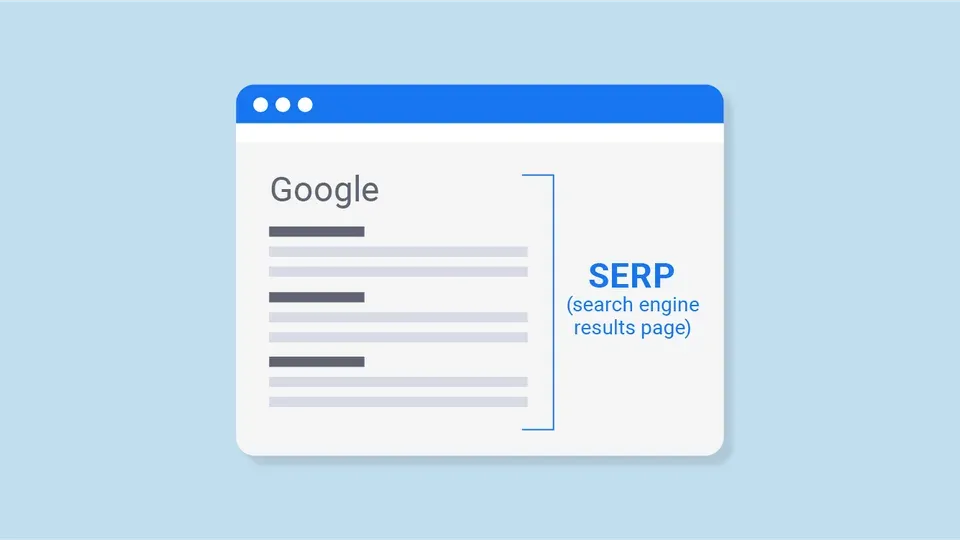
The "optimization" part of the definition is deliberate. It implies a systematic, ongoing process of measuring and improving — not a one-time setup. Every element of your website, from the words on the page to the code underneath it, sends signals to search engines that influence where you rank on a SERP (Search Engine Results Page).
A SERP is the page a search engine displays after you submit a query. It can contain organic results, paid ads, featured snippets, knowledge panels, and local listings. SEO specifically targets organic results — the algorithm-driven rankings you earn without paying per click.
On-Page SEO: Content and Technical Optimization
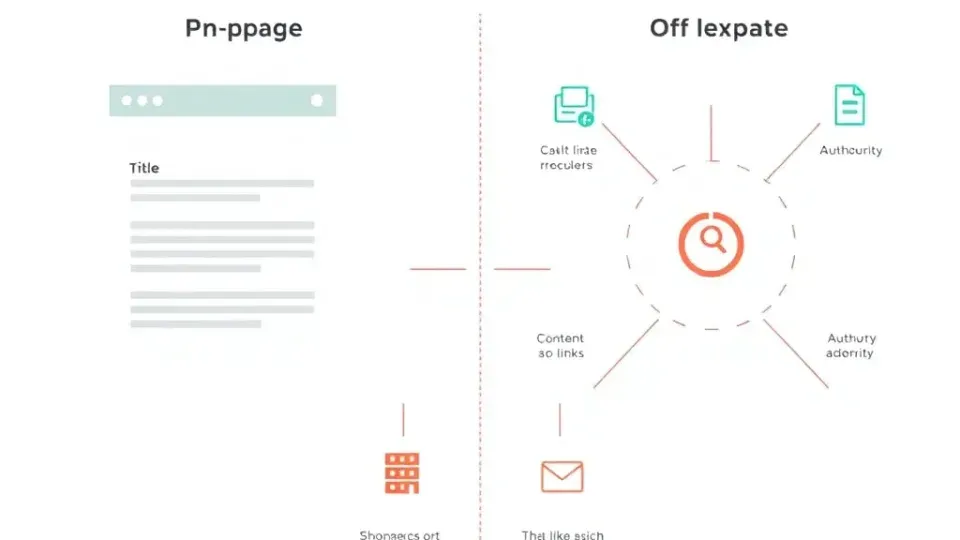
On-page SEO refers to everything you control directly on your website. This includes:
- Keyword research and placement — identifying terms your audience searches and incorporating them naturally into titles, headings, and body copy
- Title tags and meta descriptions — HTML elements that tell both search engines and users what a page is about
- Content quality and depth — comprehensive, accurate content that matches the intent behind a search query
- Internal linking — connecting related pages to distribute authority and aid navigation
- Image optimization — descriptive alt text and compressed file sizes for faster loading
On-page SEO is where most beginners start, and for good reason. It's the most direct lever you have over how search engines interpret your content.
Off-Page SEO: Authority and Links
Off-page SEO covers signals generated outside your website that indicate trust and relevance. The most important off-page signal is backlinks — hyperlinks from external websites pointing to your content.
Search engines treat backlinks as endorsements. A link from a reputable, high-authority site carries significantly more weight than a link from a low-quality directory. This is why link-building — the process of earning or acquiring quality inbound links — is a core SEO discipline.
Off-page signals also include brand mentions, social signals, reviews, and citations (especially for local SEO). Collectively, these signals shape your site's perceived authority in the eyes of search algorithms.
| SEO Type | What It Covers | Key Tactics | |---|---|---| | On-Page SEO | Content, HTML, internal structure | Keyword optimization, title tags, content depth | | Off-Page SEO | External authority signals | Link-building, PR, brand mentions | | Technical SEO | Site infrastructure | Crawlability, site speed, mobile-friendliness |
How SEO Works: The Mechanics Behind Search Rankings

To understand the full meaning of SEO, you need to know how search engines actually process websites. The process has three stages: crawling, indexing, and ranking.
Crawling and Indexing
Search engines use automated programs called crawlers (or spiders) to discover web pages. Crawlers follow links from page to page, scanning content and sending data back to the search engine's servers.
Once a page is crawled, it's added to the search engine's index — a massive database of web content organized for rapid retrieval. If your page isn't indexed, it simply doesn't exist in search results. Common reasons pages fail to get indexed include:
- Blocked crawl access via
robots.txt - Missing or broken internal links
- Duplicate content flags
- Thin or low-quality content that doesn't meet indexing thresholds
Ranking and Evaluation
After indexing, search engines use complex algorithms to evaluate and rank pages for specific queries. Google's algorithm considers hundreds of ranking factors — signals that help determine which pages best satisfy a user's search intent.
Key confirmed ranking factors include:
- Content relevance and quality — does the page genuinely answer the query?
- Backlink authority — how many quality sites link to this page?
- Core Web Vitals — Google's official metrics for page experience, including loading speed (LCP), interactivity (INP), and visual stability (CLS)
- Mobile-friendliness — Google uses mobile-first indexing, meaning it primarily evaluates the mobile version of your site
- HTTPS security — a confirmed (lightweight) ranking signal since 2014
For a real-world example of how these factors play out in practice, it helps to think of Google as a librarian evaluating millions of books simultaneously — relevance, authority, and usability all factor into what gets recommended.
SEO Meaning in Digital Marketing and Business
Within a digital marketing strategy, SEO in digital marketing operates as a long-term acquisition channel distinct from paid advertising, email, or social media. Its defining characteristic is intent alignment — people arriving from organic search are actively seeking what you offer.
From a business value perspective, the case for SEO is compelling. While paid search delivers immediate visibility, it stops the moment you stop spending. Organic rankings, once established, continue driving traffic without a cost-per-click. Industry data from BrightEdge consistently shows that organic search drives over 50% of all website traffic across most industries — often more than paid and social combined.
Customer acquisition cost (CAC) through organic search also tends to be lower over a 12-24 month horizon compared to paid channels, though the upfront investment in content and technical infrastructure is real. In my experience working with small publishers and e-commerce sites, brands that compound SEO efforts over 12+ months typically reach a point where their organic channel costs a fraction of what equivalent paid traffic would.
SEO also reinforces other marketing channels. A well-optimized content library supports email newsletters, social sharing, and PR outreach — making it a force multiplier across the entire marketing mix.
Organic Search vs. Paid Search: What's the Difference?

This is one of the most common points of confusion for people new to digital marketing. Here's a clear breakdown:
| Factor | Organic SEO | Paid Search (PPC) | |---|---|---| | Cost model | No cost-per-click; investment is in content and optimization | Pay per click or impression | | Time to results | Weeks to months | Immediate | | Longevity | Rankings persist (with maintenance) | Stops when budget stops | | Trust perception | Often perceived as more credible by users | Clearly labeled as ads | | Control | Less direct control over exact rankings | Full control over placement and targeting |
SEO is not the same as SEM (Search Engine Marketing). SEM is the broader category that includes both organic SEO and paid search advertising (PPC). SEO specifically refers to the organic, non-paid component. Confusing these terms leads to budget misallocations and unrealistic expectations.
The smartest digital marketing strategies use both. Paid search captures immediate demand and tests keyword value; SEO builds durable organic presence that compounds over time.
Types of SEO: Technical, Content, and Link-Building

The three main types of SEO represent the industry-standard framework for organizing optimization work:
1. Technical SEO Technical SEO ensures that search engines can efficiently crawl, index, and render your website. It's the foundation everything else depends on. Key areas include:
- XML sitemaps and robots.txt configuration
- Site speed and Core Web Vitals optimization
- Structured data markup (Schema.org)
- Fixing crawl errors, broken links, and redirect chains
- Implementing HTTPS
2. Content SEO (On-Page) Content SEO focuses on creating and optimizing the material users and search engines engage with. This includes keyword research, content structure, topical authority building, and ensuring content matches the search intent behind target queries — whether informational, navigational, or transactional.
3. Off-Page SEO (Link-Building) Link-building is the process of acquiring backlinks from authoritative external sites. Tactics include digital PR, guest posting, broken link building, and creating genuinely link-worthy resources. The goal is to increase your domain authority so that your pages rank more competitively for target keywords.
Each type is necessary. Technical SEO without content gives search engines nothing to rank. Content without technical health may never get properly indexed. And without off-page authority, competing in contested niches is extremely difficult.
Your SEO Implementation Checklist
This checklist translates the meaning of SEO into immediate action. For a deeper walkthrough on execution, see our guide on how to do SEO.
Technical Foundation
- [ ] Verify your site is indexed in Google Search Console
- [ ] Submit an XML sitemap
- [ ] Check and resolve Core Web Vitals issues (use PageSpeed Insights)
- [ ] Ensure all pages use HTTPS
- [ ] Fix crawl errors and broken internal links
- [ ] Confirm mobile-friendliness with Google's Mobile-Friendly Test
On-Page Optimization
- [ ] Conduct keyword research using a dedicated tool (Google Keyword Planner, Ahrefs, or a platform like Writora for keyword clustering)
- [ ] Include the primary keyword in the title tag, H1, first paragraph, and at least one H2
- [ ] Write unique, descriptive meta descriptions for each page
- [ ] Optimize image alt text and file names
- [ ] Add internal links between related pages
Content Strategy
- [ ] Map content to specific search intents (informational, navigational, transactional)
- [ ] Ensure each page has a clear topic focus — avoid keyword cannibalization
- [ ] Update older content with fresh data, examples, and improved structure
- [ ] Build topic clusters around your core subject areas
Off-Page Authority
- [ ] Identify and pursue relevant link-building opportunities (industry publications, partnerships)
- [ ] Set up Google Alerts or a brand monitoring tool to track mentions
- [ ] Ensure NAP (Name, Address, Phone) consistency for local SEO
Ongoing Monitoring
- [ ] Review Google Search Console weekly for impressions, clicks, and errors
- [ ] Track keyword rankings with a rank-tracking tool
- [ ] Audit top pages quarterly for content freshness and technical health
Common SEO Misconceptions Debunked
Even experienced marketers carry outdated assumptions about how SEO works. Here are the most persistent myths — and the reality behind them.
Myth: More keywords = better rankings. Reality: Keyword stuffing has been penalized by Google since the Panda algorithm update in 2011. Modern SEO rewards content that comprehensively covers a topic and naturally uses semantic variations — not pages that repeat the same phrase obsessively. For a detailed look at what actually moves rankings, see our guide on SEO ranking factors.
Myth: SEO is a one-time setup. Reality: SEO is an ongoing practice. Competitors improve their sites, algorithms update, content ages, and user behavior shifts. Sites that treat SEO as a launch-and-forget task typically see rankings erode within 6-12 months.
Myth: Social media shares directly boost search rankings. Reality: Google has clarified that social signals (likes, shares) are not direct ranking factors. However, social promotion increases content visibility, which can lead to more backlinks — an indirect benefit.
Myth: Paid search ads help you rank organically. Reality: Organic rankings and paid ads operate in entirely separate systems. Spending on Google Ads has zero influence on your organic search position.
Myth: SEO results appear within a few days. Reality: Most SEO practitioners and official Google guidance acknowledge that meaningful results typically take 3-6 months for newer sites and 4-12 weeks for well-established sites with existing authority — depending on competition, content quality, and technical health. This timeline expectation is critical for setting realistic goals.
Frequently Asked Questions
What does SEO stand for? SEO stands for Search Engine Optimization — the practice of improving a website's visibility in organic (unpaid) search engine results through content, technical, and authority-building strategies.
How long does it take to see SEO results? Most websites begin seeing measurable results within 3-6 months of consistent optimization. Established sites with existing authority may see movement faster, while brand-new domains often take longer to build credibility with search engines.
Is SEO the same as SEM or paid search? No. SEO refers specifically to organic search optimization with no direct cost-per-click. SEM (Search Engine Marketing) is the broader discipline that includes both SEO and paid search advertising (PPC). They are related but distinct.
Can I do SEO myself or do I need an agency? For many small to mid-sized websites, in-house SEO is achievable — especially with structured tools and platforms that simplify keyword research and content production. Writora, for example, offers keyword clustering and AI-assisted content generation that makes independent SEO execution significantly more accessible at writora.online. Larger sites in competitive niches often benefit from agency expertise, particularly for technical audits and link-building campaigns.
What are the most important SEO ranking factors? According to Google's official documentation and industry research, the most important factors are: content relevance and quality, the number and authority of backlinks, Core Web Vitals (page speed and user experience), mobile-friendliness, and HTTPS security. User engagement signals like click-through rate and dwell time are also considered influential, though Google's treatment of these remains somewhat opaque.
The Bottom Line
The meaning of SEO — Search Engine Optimization — is both simple and layered. At its simplest, it's the practice of making your website easier for search engines to understand and easier for users to find. In practice, it spans technical infrastructure, content strategy, and authority-building, each reinforcing the others.
SEO's value in digital marketing comes from its compounding nature: unlike paid advertising, organic rankings don't disappear the moment your budget does. But that durability requires sustained investment — algorithm updates, competitor activity, and content decay mean that SEO is genuinely an ongoing practice, not a one-time project.
The three pillars of SEO — technical, on-page, and off-page — give you a framework for prioritizing work. Start with technical foundations, build content aligned to real search intent, and earn authority through quality backlinks. Use the checklist above as your starting point.
As search engines become more sophisticated — integrating AI-generated answers, voice search, and multimodal results — the underlying principles of SEO remain consistent: be genuinely useful, be technically accessible, and be authoritative in your niche.
Ready to move from understanding to execution? Explore our detailed guide on how to do SEO for a step-by-step implementation roadmap, and consider using a platform like Writora to streamline keyword research and content production as you build your organic presence.