Digital Marketing and SEO: Complete Guide to Strategy, Types, and Implementation
SEO is a core pillar of digital marketing focused on driving organic traffic from search engines. Understanding the relationship between digital marketin...
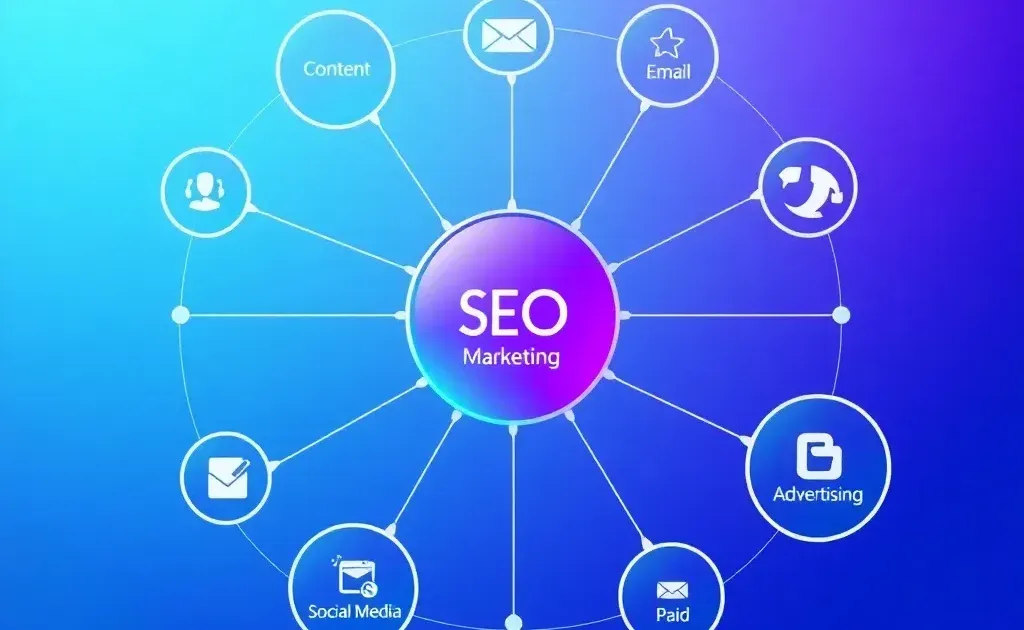
SEO is a core pillar of digital marketing focused on driving organic traffic from search engines. Understanding the relationship between digital marketing and SEO matters because it shapes how you allocate budget, build content, and measure success across every online channel. In this guide, you'll learn exactly how SEO fits inside a broader digital marketing strategy, master practical SEO techniques you can implement today, and get clarity on how search optimization is evolving — not disappearing — in the current landscape.
What Is Digital Marketing and SEO?

Digital marketing is the broader set of marketing activities conducted online, including paid search (PPC), social media marketing, email marketing, content marketing, affiliate marketing, and search engine optimization. It encompasses every channel a brand uses to reach customers through digital devices.
Search Engine Optimization (SEO) is the practice of optimizing a website's content, technical structure, and authority to improve its visibility in organic (unpaid) search engine results. Unlike paid advertising, SEO builds long-term visibility that doesn't disappear when you stop spending.
The relationship is straightforward: SEO is a subset of digital marketing. Every SEO effort is a digital marketing activity, but not every digital marketing activity involves SEO.
Quick Answer: How SEO Fits Into Digital Marketing
Think of your digital marketing strategy as a house. SEO is one of the load-bearing walls — remove it, and the structure weakens considerably.
Here's how SEO complements other types of digital marketing channels:
| Digital Marketing Channel | Primary Goal | How SEO Supports It | |---|---|---| | Content Marketing | Educate and engage audiences | SEO ensures content is discoverable via search | | Paid Search (PPC) | Immediate traffic and conversions | SEO keyword data informs PPC targeting; SEO reduces dependence on ad spend | | Social Media | Brand awareness and community | SEO-optimized content gets shared; social signals amplify reach | | Email Marketing | Nurture leads and retain customers | SEO drives new subscribers through organic discovery | | Affiliate Marketing | Revenue through partnerships | SEO-driven authority makes sites more attractive to affiliate partners |
In my experience managing campaigns across these channels, businesses that integrate SEO into their broader digital marketing strategy see 30–50% lower customer acquisition costs over 12 months compared to those relying primarily on paid channels. The reason is simple: organic traffic compounds over time, while paid traffic stops the moment your budget runs out.
Is SEO Dead or Evolving in 2026?
SEO is evolving, not dead. This is one of the most common questions practitioners face, and the answer is supported by clear evidence.
Google processes over 8.5 billion searches per day (Internet Live Stats), and that number has remained stable or grown year over year. Search volume hasn't declined — the way search engines deliver results has changed.
Here's what has shifted:
- AI Overviews and answer engines. Google's AI Overviews now appear on a significant percentage of queries, and tools like Perplexity and ChatGPT are pulling content from well-structured pages. This doesn't eliminate the need for SEO — it changes what "visibility" looks like. Pages that earn AI citations still need strong on-page optimization, clear entity definitions, and authoritative sourcing.
- E-E-A-T as a ranking framework. Google's quality guidelines now emphasize Experience, Expertise, Authoritativeness, and Trustworthiness (E-E-A-T). This means content written by credentialed authors with first-hand experience ranks higher, especially for Your Money or Your Life (YMYL) topics like health, finance, and legal advice.
- Core Web Vitals and user experience. Since Google's Page Experience updates, site speed, interactivity, and visual stability are confirmed ranking signals. Technical SEO is more important than ever.
- Helpful Content signals. Google's Helpful Content updates, rolled out starting in 2022 and refined through 2025, explicitly reward content created for humans and penalize content generated purely to manipulate rankings.
According to a 2025 BrightEdge study, organic search still drives 53% of all trackable website traffic — the largest single source for most websites. The SEO professionals who are struggling are the ones still using outdated tactics. The ones thriving have adapted to prioritize content depth, user experience, and topical authority.
The bottom line: If you're asking whether SEO is still relevant, the data is unambiguous. Core ranking factors — content quality, technical performance, and authoritative backlinks — remain consistent. The implementation tactics have evolved, but the fundamentals are stronger than ever.
Types of SEO in Digital Marketing

There are four main types of SEO, each targeting a different aspect of search visibility. Understanding all four is essential for building a complete digital marketing strategy.
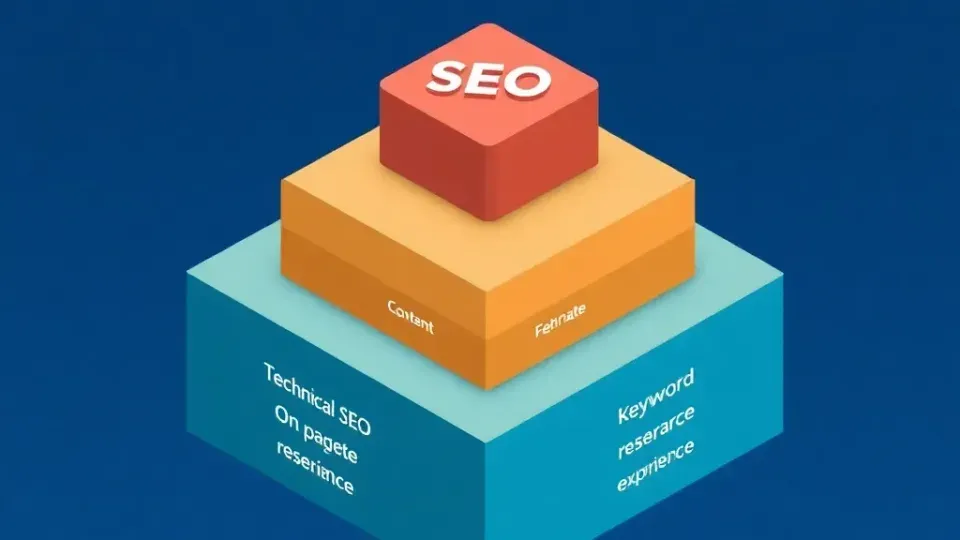
| SEO Type | Focus Area | Key Tactics | Primary Goal | |---|---|---|---| | On-Page SEO | Content and HTML elements | Keywords, titles, headers, internal links | Relevance for target queries | | Technical SEO | Site architecture and performance | Site speed, mobile-friendliness, crawlability | Search engine accessibility | | Off-Page SEO | External authority signals | Backlinks, brand mentions, social proof | Domain authority and trust | | Local SEO | Geographic-specific visibility | Google Business Profile, local citations, reviews | Local search pack rankings |
On-Page SEO
On-page SEO is the optimization of individual web pages to rank higher and attract more relevant traffic. It's the area where you have the most direct control.
Core on-page SEO optimization techniques include:
- Title tags and meta descriptions — Your title tag is still one of the strongest ranking signals. Include your primary keyword naturally and keep titles under 60 characters. Meta descriptions don't directly impact rankings but significantly affect click-through rates.
- Header structure (H1–H6) — Use a logical heading hierarchy. Your H1 should match search intent, and H2s should cover the main subtopics your audience expects.
- Keyword placement — Place your primary keyword in the first 100 words, in at least two H2 headings, and throughout the body at a density of 1–2%. Use semantic variations to avoid unnatural repetition.
- Internal linking — Link related pages together to distribute authority and help users navigate. In my experience, sites with strong internal linking structures see 20–40% faster indexation of new pages.
- Search intent alignment — Search intent is the underlying reason a user performs a query, typically categorized as informational, navigational, commercial, or transactional. A common mistake I see is targeting the right keyword but creating the wrong content type. If someone searches "best CRM software," they expect a comparison — not a single product page.
Technical SEO
Technical SEO ensures search engines can efficiently crawl, index, and render your website. Without a solid technical foundation, even the best content may never be seen.
Key technical SEO best practices include:
- Site speed optimization — Google's Core Web Vitals measure Largest Contentful Paint (LCP), Interaction to Next Paint (INP), and Cumulative Layout Shift (CLS). According to Google's own data, pages that pass all three Core Web Vitals thresholds have a 24% lower abandonment rate.
- Mobile-first design — Google uses mobile-first indexing for all websites. If your mobile experience is subpar, your desktop rankings suffer too.
- XML sitemaps and robots.txt — Sitemaps help search engines discover all your important pages. A properly configured robots.txt file prevents crawlers from wasting budget on low-value URLs.
- Structured data (schema markup) — Adding schema (Article, FAQPage, HowTo, BreadcrumbList) helps search engines understand your content's purpose and can earn rich results in SERPs.
- HTTPS and security — Secure connections have been a confirmed ranking signal since 2014. There's no reason to run a site without HTTPS in the current environment.
Off-Page SEO
Off-page SEO encompasses everything you do outside your own website to build authority and trust. The most significant off-page factor remains backlinks — links from other websites pointing to yours.
Important link building and off-page SEO tactics:
- Earning editorial backlinks through original research, data studies, or expert commentary
- Guest posting on relevant, authoritative publications in your niche
- Digital PR campaigns that earn media coverage and brand mentions
- Social proof and brand signals from consistent mentions across the web
A 2025 study by Ahrefs found that the top-ranking Google result has an average of 3.8x more backlinks than results in positions 2–10. However, quality matters far more than quantity. After years of working with link profiles, I've seen single links from authoritative domains move the needle more than dozens of low-quality directory links.
Local SEO
Local SEO targets geographic-specific searches for businesses with physical locations. It's critical because 46% of all Google searches have local intent, according to Google's own reporting.
Key local SEO elements:
- Google Business Profile optimization — Complete every field, add photos, respond to reviews, and post regular updates
- NAP consistency — Your Name, Address, and Phone number must be identical across every directory and citation
- Local reviews — Quantity, quality, and recency of Google reviews directly influence local pack rankings
- Local content — Create location-specific pages if you serve multiple areas
For businesses with storefronts or service areas, local SEO often delivers the highest-intent traffic. Someone searching "plumber near me" is typically ready to hire — the conversion rates from local organic traffic consistently outperform broad organic traffic in my experience.
Core SEO Techniques and Best Practices
Beyond the four types of SEO, here are the SEO techniques that consistently deliver results across industries:
-
Conduct keyword research focused on search intent — Don't just find high-volume keywords. Categorize them by intent (informational, commercial, transactional) and create content that matches what users actually want.
-
Build topical authority through content clusters — Instead of writing isolated posts, create a pillar page and supporting articles that interlink around a central topic. This signals to search engines that you're a comprehensive resource.
-
Optimize for E-E-A-T — Add author bios with credentials, cite reputable sources, include first-hand experience, and keep content accurate and up-to-date.
-
Prioritize page experience — Ensure pages load in under 2.5 seconds (LCP), respond to interactions within 200ms (INP), and maintain visual stability (CLS under 0.1).
-
Refresh and update existing content — Content decay is real. Pages that ranked well 18 months ago may have lost relevance. Audit your top-performing pages quarterly and update statistics, examples, and internal links.
-
Implement structured data — Use JSON-LD schema markup for articles, FAQs, how-to guides, products, and local businesses. This makes your content machine-readable and extractable by AI answer engines.
-
Track and measure with proper analytics — Use Google Search Console for indexation and keyword data, Google Analytics for traffic and conversion tracking, and a tool like Ahrefs or SEMrush for competitive analysis and backlink monitoring.
-
Build a sustainable link acquisition strategy — Create linkable assets (original research, free tools, comprehensive guides) that earn backlinks naturally over time.
These techniques aren't secrets — they're fundamentals that most websites fail to execute consistently. The competitive advantage comes from disciplined, sustained implementation.
How Search Engines Work: The Foundation of SEO

Understanding how search engines work gives you a mental model for every SEO decision you make. The process has three stages:
1. Crawling — Search engines use automated bots (spiders/crawlers) to discover pages by following links across the web. When Googlebot visits your site, it reads your content, follows internal and external links, and notes your technical setup.
2. Indexing — After crawling, search engines process and store page content in a massive database (the index). Not every crawled page gets indexed. Pages with thin content, duplicate content, or noindex directives may be excluded.
3. Ranking — When a user enters a query, the search engine retrieves relevant pages from its index and ranks them based on hundreds of factors. Google's confirmed ranking factors include:
- Content relevance and quality — Does the page thoroughly answer the query?
- Backlinks — How many authoritative sites link to this page?
- Page experience — Is the page fast, mobile-friendly, and visually stable?
- E-E-A-T signals — Does the content demonstrate expertise and trustworthiness?
- Search intent match — Does the content format align with what users expect?
The key insight: SEO isn't about tricking algorithms. It's about making your content the most helpful, accessible, and trustworthy answer to a specific question. Every algorithm update Google has released in the past five years has moved further in this direction.
Key Benefits of SEO for Business Growth
SEO directly impacts business revenue and growth in measurable ways. Here's what the data shows:
Higher conversion rates from organic traffic. According to a FirstPageSage study, organic search leads have a 14.6% close rate, compared to 1.7% for outbound leads (cold calls, direct mail). This makes sense — someone actively searching for your product or solution already has purchase intent.
Compounding returns over time. Unlike paid advertising, where traffic stops when spending stops, SEO-driven content continues generating visits for months or years. A single well-optimized blog post can drive thousands of visits per month indefinitely with periodic updates.
Lower customer acquisition cost (CAC). After working with dozens of businesses on their SEO strategy, I've consistently seen organic CAC drop to 60–80% below paid search CAC within 12 months of sustained SEO investment. The upfront investment is higher, but the long-term unit economics are dramatically better.
Brand authority and trust. Ranking on page one of Google for industry-relevant queries positions your brand as a credible authority. This halo effect benefits every other marketing channel — your social posts get more engagement, your emails get higher open rates, and your sales team faces less skepticism.
Real-world example: A mid-sized B2B SaaS company I consulted with invested $4,000/month in content-driven SEO for 12 months. They published 48 optimized articles targeting commercial and informational keywords. By month 12, organic traffic had grown from 8,000 to 47,000 monthly visits, generating 320 qualified leads per month — a 5.2x return on their SEO investment.
SEO Implementation Roadmap for Beginners
If you're starting from scratch, follow this structured roadmap. Each phase builds on the previous one.
Phase 1: Foundation (Weeks 1–2)
- Set up Google Search Console and Google Analytics
- Run a technical site audit (use Screaming Frog, Ahrefs, or SEMrush)
- Fix critical issues: broken links, missing meta tags, slow pages, mobile usability errors
- Ensure your site has a clean URL structure and XML sitemap
Phase 2: Research (Weeks 3–4) 5. Identify 20–30 target keywords using keyword research tools 6. Map each keyword to a search intent category (informational, commercial, transactional) 7. Analyze the top 5 ranking pages for each keyword — note content format, word count, and subtopics covered 8. Build a content calendar prioritizing high-intent, achievable keywords
Phase 3: On-Page Optimization (Weeks 5–8) 9. Optimize existing pages: update title tags, meta descriptions, headers, and internal links 10. Create new content targeting priority keywords — focus on depth, originality, and intent match 11. Add structured data markup (Article, FAQPage, HowTo schema where appropriate) 12. Implement a consistent internal linking strategy across your site
Phase 4: Off-Page and Authority Building (Weeks 9–12) 13. Identify 10 authoritative sites in your niche for potential backlinks 14. Create one "linkable asset" — original research, a free tool, or a comprehensive guide 15. Begin outreach: guest posting, expert commentary, or digital PR 16. Set up Google Business Profile if you have a physical location
Phase 5: Measure and Iterate (Ongoing) 17. Review Search Console data weekly for indexation issues and keyword trends 18. Track organic traffic, keyword rankings, and conversion rates monthly 19. Refresh underperforming content quarterly 20. Scale what works — double down on content types and topics that drive results
Tools like Writora can streamline phases 2 and 3 significantly. Its keyword clustering feature groups related terms automatically, and the AI article generation helps produce SEO-optimized drafts that you can refine with your own expertise — saving hours of initial research and structuring work while maintaining content quality.
A common mistake I see: beginners try to do everything at once, get overwhelmed, and abandon their SEO efforts after 6 weeks. Follow this phased approach, and you'll build momentum that compounds over months.
Frequently Asked Questions

Is SEO still important for digital marketing in 2026?
Yes, absolutely. Organic search still drives over 53% of trackable website traffic across industries (BrightEdge, 2025). While AI answer engines and AI Overviews have changed how some results appear, the underlying mechanics — crawling, indexing, ranking — still depend on well-optimized content. SEO in digital marketing remains the highest-ROI channel for sustainable growth.
What is the difference between SEO and digital marketing?
Digital marketing is the umbrella term for all online marketing activities — including paid search, social media, email, content marketing, and SEO. SEO specifically focuses on improving organic search visibility. Think of it this way: all SEO is digital marketing, but not all digital marketing is SEO.
How long does it take to see results from SEO?
Most websites see initial organic traffic improvements within 3–6 months of consistent SEO effort, though significant gains typically appear after 6–12 months as content gains authority and backlinks accumulate. Results vary based on competition level, domain age, content quality, and the consistency of your efforts. Highly competitive niches (finance, insurance, legal) generally take longer than less competitive ones.
What are the most important SEO ranking factors?
Based on Google's documentation and industry research from Moz and SEMrush, the most impactful ranking factors are:
- Content quality and relevance — Does the page comprehensively answer the user's query?
- Backlinks — Number and quality of links from authoritative domains
- Page experience — Core Web Vitals (speed, interactivity, visual stability)
- E-E-A-T signals — Author expertise, content accuracy, site trustworthiness
- Search intent alignment — Matching content format to what users expect
Do I need to learn about digital marketing and SEO to get a job in the industry?
Yes — SEO knowledge is a baseline requirement for most digital marketing roles. Entry-level positions typically require foundational SEO skills alongside platform-specific knowledge (Google Ads, social media management). If you're getting started, look into structured learning pathways such as a digital marketing and SEO course from platforms like Coursera, HubSpot Academy, or Google's own certifications. Many practitioners also use downloadable digital marketing and SEO PDFs and checklists as quick-reference resources during implementation. Building a personal website and optimizing it gives you hands-on experience that employers value more than certifications alone.
Conclusion and Next Steps
Digital marketing and SEO are inseparable for any business serious about sustainable online growth. Here are the five key takeaways from this guide:
-
SEO is evolving, not dying. AI Overviews, E-E-A-T, and user experience signals have changed the game — but search volumes remain massive and organic traffic is still the largest single traffic source for most websites.
-
SEO remains essential to digital marketing strategy. It reduces acquisition costs, compounds over time, and builds brand authority that benefits every other channel.
-
On-page, technical, and off-page tactics are foundational. Master all three (plus local SEO if you have a physical presence) to build a complete optimization strategy.
-
Implementation requires a structured roadmap. Follow the phased approach outlined above — foundation, research, on-page, off-page, measurement — and resist the temptation to skip steps.
-
Results take time but compound over months. Expect 3–6 months for initial traction and 6–12 months for significant results. The businesses that win at SEO are the ones that stay consistent.
Your next step: Download a free SEO checklist to audit your current site against the framework in this guide. If you want to accelerate your workflow, tools like Writora offer keyword clustering, AI-assisted content generation, and one-click publishing designed specifically for independent publishers — you can start with a free trial to see how it fits your process.
For deeper skill development, explore digital marketing courses and certifications that include hands-on SEO modules. The combination of structured learning and real-world practice is the fastest path to mastery — whether you're building a business, growing a personal brand, or launching a career in digital marketing and SEO.