Define SEO: Search Engine Optimization Explained for Beginners
What Is SEO? How to Define Search Engine Optimization If you've been told your website needs SEO but aren't sure what that actually means, you're not alo...

What Is SEO? How to Define Search Engine Optimization
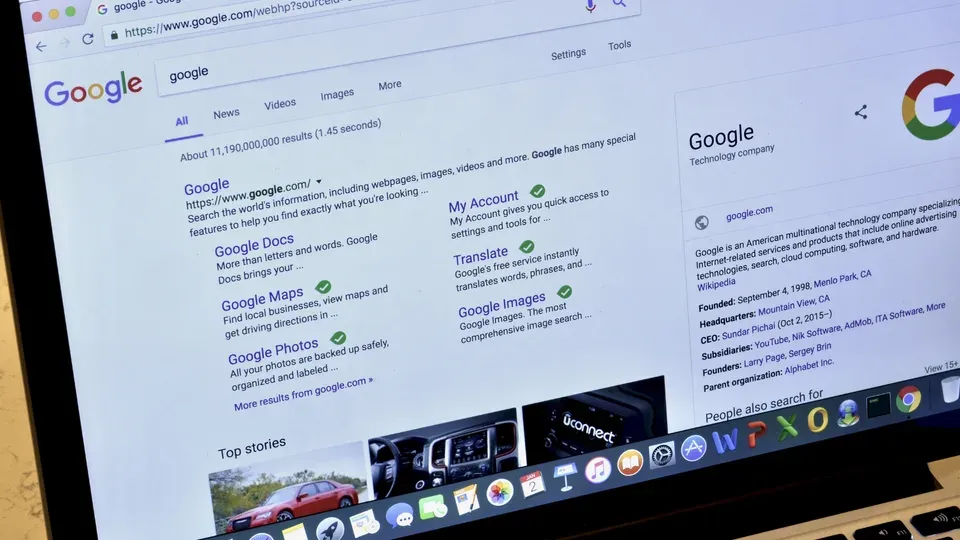
If you've been told your website needs SEO but aren't sure what that actually means, you're not alone. To define SEO simply: Search Engine Optimization is the practice of improving your website so it appears higher in unpaid search results. When someone searches "best running shoes" or "how to fix a leaky faucet," SEO determines whether your page shows up — or gets buried. Understanding the SEO meaning is the first step toward driving real, sustainable traffic without paying for every click.
This guide answers the most common beginner questions about SEO in plain language, backed by how search engines actually work. Whether you're a business owner, blogger, or marketer, these fundamentals apply across industries and website types.
How Do You Define SEO?

SEO stands for Search Engine Optimization — the discipline of making your website more visible in organic (unpaid) search results on Google, Bing, and similar platforms.
The acronym breaks down meaningfully:
- Search — what users type into a search engine
- Engine — the platform processing that query (Google, Bing, Yahoo)
- Optimization — the deliberate work of improving how well your content matches what those engines reward
When I first started advising businesses on their digital presence, most owners assumed SEO was either a technical dark art or a matter of stuffing keywords into a page. The reality is more principled: search engines want to show users the most helpful, relevant, and trustworthy results. Your job is to make it unmistakably clear that your content qualifies.
Why the SEO Meaning Goes Beyond Just Keywords
Early SEO — circa 2005 to 2010 — was largely about keyword density and link volume. Modern SEO is fundamentally different. Google's algorithm now evaluates hundreds of signals, including content depth, page experience, author credibility, and how well a page matches the user's actual intent behind a search query.
This shift means that defining SEO today requires understanding three interconnected goals:
- Relevance — Does your content genuinely answer the user's question?
- Authority — Does your site demonstrate expertise and earn external trust signals?
- Experience — Does your page load quickly, work on mobile, and keep users engaged?
Nail all three, and search engines have strong reasons to rank you. Neglect any one, and even excellent content can underperform.
Why Search Engine Optimization Matters
Organic search is the primary discovery channel for most websites. It accounts for a substantial share of total web traffic across industries — commonly cited in the range of 40–60% depending on sector and marketing mix, according to various industry benchmarks.
Here's why that matters in practical terms:
- Cost-effectiveness: Unlike paid advertising, you don't pay per click. Once you rank, traffic is essentially free.
- Credibility and trust: High organic rankings signal authority to users who instinctively trust them more than ads.
- Targeted intent: SEO drives users actively searching for what you offer — they arrive with genuine need or purchase intent.
- Compounding returns: A well-optimized article can drive consistent traffic for years after publication.
- Sustainable growth: You're building owned assets, not renting clicks that disappear when a budget runs out.
In my experience working across industries, organic search consistently delivers the highest-quality traffic over a 12-to-24-month horizon — even when paid channels generate faster early results.
How Does SEO Work?

Understanding how search engines actually process websites makes every other SEO concept easier to grasp. Google and other search engines use algorithms — complex, proprietary ranking systems — to evaluate billions of web pages and determine which best answer any given query.
Understanding Search Engine Crawling and Indexing
Before a page can rank, it must go through three stages:
Crawling: Search engines deploy automated bots called crawlers (or spiders) that visit web pages, follow links, and read the underlying HTML code. They capture text, image data, internal links, and structural signals. When I've tested different site architectures, pages buried three or four clicks from the homepage often get crawled less frequently than those with clean, shallow navigation.
Indexing: After crawling, the engine stores the page in its massive index — a database of hundreds of billions of documents. At this stage, the engine processes content signals: topic relevance, keyword context, freshness, and more. Not every crawled page gets indexed; thin, duplicate, or low-quality pages may be excluded.
Ranking: When a user submits a query, the engine retrieves relevant indexed pages and sorts them using hundreds of ranking factors. The pages on page one are those deemed most likely to satisfy the user's intent for that specific search.
SEO Ranking Factors: What Google Looks For
Google has publicly confirmed it considers more than 200 ranking signals. While exact weights remain proprietary, the major categories are well-documented:
Relevance signals: Does your page directly address the user's query? This includes keyword usage, content comprehensiveness, and topical authority across your site.
Authority signals: Is your site trusted? Backlinks from reputable domains, consistent brand mentions, and citation patterns all contribute. A link from a respected industry publication carries far more weight than dozens of links from unrelated directories.
User experience signals: Do visitors find your page valuable? Google measures engagement through click-through rate, dwell time, and page-level experience metrics. The company's official rollout of Core Web Vitals — measuring load speed, interactivity, and visual stability — confirmed that performance directly impacts rankings, not just usability.
Freshness signals: How current is your content? Freshness matters most for rapidly changing topics (news, product releases, policy changes) and less for evergreen content.
Mobile-friendliness: Google's mobile-first indexing means it primarily evaluates the mobile version of your site. This is no longer optional — a page that doesn't work on phones is a page with a significant ranking handicap.
Types of SEO: On-Page, Off-Page, and Technical
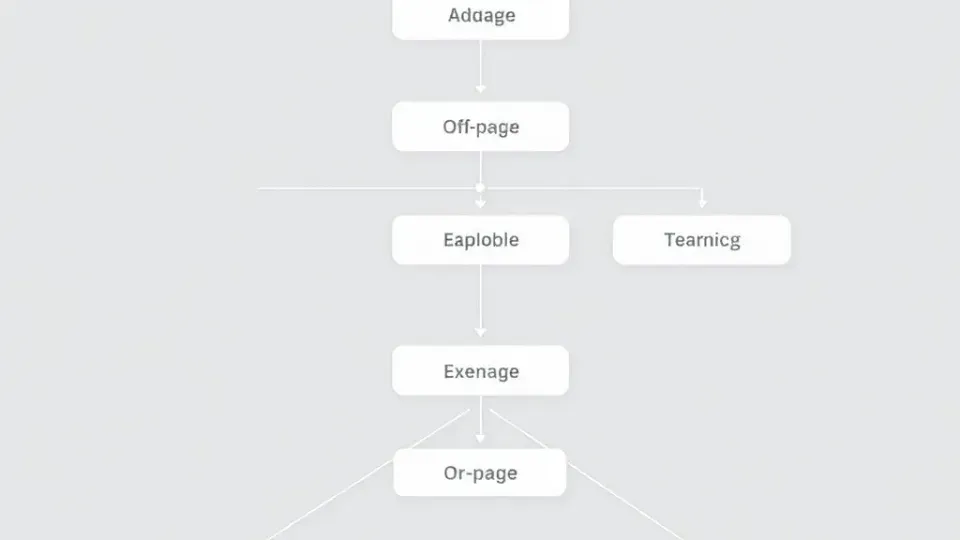
SEO techniques fall into three overlapping pillars. Each serves a different purpose, but they reinforce each other. Neglect one and the other two can only compensate so much.
On-Page SEO: Content and Keyword Optimization
On-page SEO covers everything on your own website — content quality, keyword targeting, HTML structure, and internal linking.
When I work through on-page audits with clients, I prioritize in this order:
Content quality first: Your page must provide genuine value, answer the user's question thoroughly, and offer something that competing pages don't. Search engines and users both reward comprehensive, well-researched content. Thin content — a 300-word page trying to rank for a competitive topic — rarely succeeds anymore.
Keyword targeting: Understand what search terms your audience actually uses, then incorporate them naturally. This is not about stuffing keywords into every sentence — that's a black hat tactic that triggers quality penalties. Instead, identify your primary keyword and 3–5 related terms, then weave them naturally into your title, headings, opening paragraph, and body copy.
For example: if you're writing about vegetable gardening for beginners, your primary keyword might be "how to start a vegetable garden." Related terms could include "raised bed gardening," "beginner vegetable garden," and "growing vegetables at home." Your title might read: "How to Start a Vegetable Garden: A Beginner's Step-by-Step Guide." The keyword is present naturally, and the title is still written for humans.
Meta tags and titles: Your page title (visible in search results) should include your primary keyword and clearly describe the page. The meta description — the 155–160 character summary beneath the title — won't directly affect rankings, but it heavily influences whether users click. Write it for humans, not robots.
Heading structure: Use H1 for your main page title, H2 for major sections, H3 for subsections. This hierarchy helps search engines understand your content's organization and helps users scan the page quickly.
Internal linking: Link between related pages on your site using descriptive anchor text. This helps search engines discover and understand your content structure, distributes authority across pages, and keeps users engaged longer.
Off-Page SEO: Backlinks and Authority
Off-page SEO refers to actions taken outside your website that signal credibility and authority to search engines.
Backlinks — hyperlinks from external websites to yours — remain the most powerful off-page ranking factor. Think of each link as a vote of confidence. A link from a recognized industry publication outweighs dozens of links from obscure, unrelated directories.
Not all backlinks are equal, and this is where many beginners go wrong. Low-quality link schemes can hurt rankings rather than help. The most durable backlinks come from:
- Creating genuinely valuable content that other sites want to reference
- Guest posting on relevant industry publications
- Earning press coverage or expert quotes in articles
- Building relationships with complementary businesses and organizations
In my experience, the sites that build the strongest backlink profiles focus first on creating "linkable assets" — original research, comprehensive guides, unique data, or tools — rather than pursuing links directly.
Brand mentions and citations: Search engines track your brand's presence across the web even without direct links. Consistent mentions in relevant publications, review platforms, and industry directories all contribute to perceived authority.
Social signals: Social shares and engagement don't directly influence rankings, but they amplify content visibility — which can lead to organic links, traffic, and brand recognition over time.
Technical SEO: Site Structure and Performance
Technical SEO ensures that search engines can efficiently crawl, index, and interpret your site — and that users have a smooth experience when they land on it.
Key technical factors include:
- Site speed: Faster pages rank better and convert better. Optimization involves server response time, image compression, and code efficiency.
- Mobile-friendliness: Your site must function flawlessly on smartphones and tablets.
- SSL certificate (HTTPS): Secure sites are a confirmed ranking signal and essential for user trust.
- XML sitemap: A structured file listing your pages that helps search engines discover and prioritize content.
- Robots.txt: A file that tells crawlers which pages to access and which to skip.
- URL structure: Clean, descriptive URLs like
/seo-for-beginnersoutperform cryptic ones like/page?id=1034for both users and crawlers. - Duplicate content: Near-identical pages across your site confuse search engines. Use canonical tags to designate the authoritative version.
- Schema markup: Adding structured data from Schema.org helps search engines understand your content's context and can unlock rich snippets (star ratings, FAQs, recipe cards) in search results.
Technical issues are often invisible to users but silently suppressing rankings. Running a regular technical audit — at minimum quarterly — catches problems before they compound.
SEO Examples: Practical Applications

Abstract concepts become clearer with concrete examples. Here's how the three SEO pillars play out in real scenarios.
Example 1 — Blog post optimization: You run a fitness blog targeting "best home workout for beginners." Your approach:
- Research the keyword and related terms (home exercise routine, beginner bodyweight workout)
- Write a 1,500+ word article that genuinely teaches beginner workouts with clear progressions
- Include the primary keyword in your H1 and naturally in the first 100 words
- Structure content with H2 and H3 headings that address specific subtopics (equipment-free exercises, beginner weekly schedule)
- Add internal links to related posts on nutrition and recovery
- Optimize images with descriptive alt text
- Promote the post to fitness communities and relevant bloggers to earn initial backlinks
Within 3–6 months, as your domain authority grows and backlinks accumulate, this post could reach the first page for that keyword and related long-tail variations.
Example 2 — E-commerce product page: You sell running shoes. Optimization steps:
- Title: "Nike Air Zoom Pegasus 40 Running Shoes — Lightweight & Breathable"
- Detailed product description addressing fit, durability, and runner type (instead of generic manufacturer copy)
- High-quality images with descriptive alt text (which Google indexes for image search)
- Customer reviews and Q&A sections (social proof plus fresh, user-generated content)
- Internal links to related product categories and buying guides
- Fast, mobile-optimized checkout flow
This approach captures both informational searches ("best cushioned running shoes") and transactional ones ("buy Nike Pegasus 40").
Example 3 — Local SEO for a service business: You operate a plumbing company in Denver. Your strategy:
- Optimize your Google Business Profile with accurate address, hours, service area, and real photos
- Create location-specific service pages ("Denver Emergency Plumber," "Water Heater Installation Denver")
- Build local citations across Yelp, Angi, and the Better Business Bureau
- Actively earn and respond to Google reviews
- Pursue local backlinks through community partnerships, sponsorships, and local press
This combination helps your business surface when someone searches "plumber near me" or "emergency plumber Denver" — high-intent, high-value searches.
Define SEO Ethics: White Hat vs. Black Hat Techniques

Not all SEO tactics are legitimate — or safe. Understanding the distinction is critical for anyone building a long-term web presence.
White hat SEO follows search engine guidelines and prioritizes genuine user value. It includes creating quality content, earning natural backlinks, improving site usability, and maintaining technical health. White hat techniques take longer to show results but build sustainable competitive advantages.
Black hat SEO uses manipulative shortcuts that violate search engine quality guidelines. Common tactics include:
- Keyword stuffing: Overloading pages with keywords in unnatural, repetitive ways
- Cloaking: Showing different content to search engines than to users
- Private blog networks (PBNs): Creating networks of fake sites solely to generate backlinks
- Paid link schemes: Purchasing links from irrelevant or low-quality sources
- Content spinning: Using software to produce low-quality "unique" content from existing articles
- Hidden text: Placing keywords in white text on white backgrounds, invisible to users but readable by crawlers
Google's official Search Essentials documentation explicitly prohibits these tactics. Penalties range from significant ranking drops to complete removal from the index. I've seen businesses that spent years building organic traffic lose their entire rankings within weeks of a manual penalty — and recovery can take 12 months or longer even after the issue is corrected.
Gray hat SEO sits between the two — not explicitly prohibited but ethically questionable. Examples include aggressive link-building outreach bordering on spam or exploiting algorithm gaps before they're addressed. The risks rarely justify the temporary gains.
White hat SEO is the only approach worth investing in. The compounding nature of organic traffic means that shortcuts which produce temporary gains often set you back further than if you'd started with fundamentals.
SEO vs. SEM: What Is SEO Compared to Paid Search?

These terms appear together constantly, but they're not interchangeable.
SEO (Search Engine Optimization) focuses entirely on earning higher rankings in organic (unpaid) search results through optimization work. You don't pay Google for the rankings — you earn them.
SEM (Search Engine Marketing) is the broader category encompassing both organic SEO and paid search advertising (also called PPC — Pay Per Click). When you run a Google Ads campaign, that's SEM. When you optimize a blog post to rank without paying, that's SEO.
Here's a practical comparison:
| Aspect | SEO | SEM/PPC | |--------|-----|---------| | Cost model | Traffic is free once you rank | Pay per click | | Timeline | 3–12 months for significant results | Immediate visibility | | Sustainability | Long-term compounding returns | Stops when budget stops | | Barrier to entry | Time and expertise | Requires ongoing budget | | Best for | Long-term authority and growth | Immediate conversions, testing |
Most established businesses use both: paid ads deliver immediate conversions while SEO builds durable organic authority. Paid campaigns also generate keyword and audience data that can sharpen your organic content strategy.
SEO Checklist: Getting Started

Ready to apply what you've learned? Use this structured checklist as your starting framework.
Technical Foundation
- [ ] Test site speed on Google PageSpeed Insights and address critical issues
- [ ] Confirm your site has an SSL certificate (HTTPS)
- [ ] Create and submit an XML sitemap via Google Search Console
- [ ] Review your robots.txt file to ensure important pages aren't accidentally blocked
- [ ] Identify and fix broken internal links and missing redirects
Content and On-Page Optimization
- [ ] Conduct keyword research to identify the terms your audience actually searches
- [ ] Optimize your most important pages with target keywords in titles, H1 headings, and opening paragraphs
- [ ] Write compelling meta descriptions (155–160 characters) for all key pages
- [ ] Add descriptive internal links between related pages using relevant anchor text
- [ ] Structure every page with a clear H1, H2s for sections, and H3s for subsections
- [ ] Add descriptive alt text to all images
- [ ] Aim for comprehensive content — typically 1,500+ words for competitive topics
Off-Page and Authority Building
- [ ] Identify 10–20 relevant, authoritative sites in your niche that could link to your content
- [ ] Develop at least one "linkable asset" — original research, a comprehensive guide, or a useful tool
- [ ] Claim or optimize your Google Business Profile (essential for local visibility)
- [ ] Encourage genuine customer reviews on Google and relevant platforms
- [ ] Establish presence in relevant industry directories and associations
Monitoring and Improvement
- [ ] Set up Google Search Console to track rankings, impressions, and click-through rates
- [ ] Set up Google Analytics 4 to monitor organic traffic and user behavior
- [ ] Track rankings for your 10–20 priority keywords monthly
- [ ] Review and update older content every 6–12 months to maintain relevance
- [ ] Run a technical SEO audit quarterly to catch crawl errors, speed issues, and indexing problems
Tools to Leverage
- [ ] Use keyword research tools (many offer free tiers) to identify search volume, competition, and related terms
- [ ] Consider an AI-powered content platform like Writora to streamline keyword clustering, content generation, and publishing — particularly useful if you're managing multiple topics or need to scale content production without sacrificing quality
Frequently Asked Questions About SEO

Is SEO free?
Yes — in the sense that you don't pay search engines directly for rankings. However, SEO requires real investment in time, tools, and sometimes outside expertise.
If you're doing it yourself, expect to spend significant hours on keyword research, content creation, and technical optimization. If you hire an agency, costs typically range from $1,000 to $5,000+ per month depending on scope. Freelance SEO specialists vary widely — from $50 to $300+ per hour depending on experience and specialization.
The key distinction from paid advertising: once you rank, that traffic doesn't stop when a budget runs out. A well-optimized page can deliver consistent, free traffic for years. Most beginners start with DIY SEO, invest in a few affordable tools, and bring in professional help as their site and competitive requirements grow.
How Long Does SEO Take to Show Results?
Most businesses see measurable early results within 3 to 6 months and meaningful ranking improvements within 6 to 12 months. Several factors influence this timeline:
- Competition level: Ranking for "project management software" takes far longer than "project management software for freelance graphic designers"
- Domain authority: Newer domains rank more slowly than established ones with existing backlink profiles
- Content quality: Genuinely helpful, comprehensive content outpaces thin pages faster than most people expect
- Publishing consistency: Sites that publish regularly and update existing content outpace sporadic publishers
- Technical health: Sites with crawl errors, slow load times, or mobile issues start at a disadvantage
In my experience, competitive head terms in saturated industries can take 12–18 months. Long-tail keywords in niche topics often show movement within 6–8 weeks. SEO is a compounding investment — the first months feel slow, but momentum builds as authority accumulates.
What Is the Most Important SEO Ranking Factor?
If you could only focus on one thing, content quality is the foundation. Google's core mission is to surface the most helpful, relevant result for every query. No amount of technical polish or backlink volume will sustain rankings for thin, low-value content.
That said, SEO genuinely requires balance across all three pillars. Think of it as a three-legged stool:
- Content quality (on-page) provides the reason to rank
- Authority (off-page, especially backlinks) provides the competitive signal
- Technical health ensures search engines can access and understand what you've built
Weaken any leg, and performance suffers. A technically perfect site with weak content won't outrank a content-rich site. Strong content with no backlinks will struggle in competitive markets. All three matter.
Can I Do SEO Myself, or Do I Need an Agency?
You can absolutely learn and implement SEO yourself — and in many cases, starting with DIY SEO is the better approach because you'll understand what's actually happening on your site.
Practical DIY SEO requires learning to:
- Research keywords and map them to specific pages or content topics
- Write and structure content that satisfies search intent
- Handle technical basics: site speed, mobile optimization, sitemaps
- Build relationships and earn backlinks through content and outreach
- Analyze data in Google Search Console and Google Analytics 4
Free and low-cost tools make this accessible. As your site grows and competition increases, you may want to bring in specialists for specific areas — technical SEO audits and link building are the two areas where professional expertise typically delivers the highest ROI. Many small businesses follow a hybrid model: owners or internal teams handle content, specialists handle technical and off-page work.
What Is the Difference Between SEO and SEM?
SEO (Search Engine Optimization) focuses on organic, unpaid rankings. You optimize content, build authority, and improve technical factors to earn higher positions — no direct payment to the search engine.
SEM (Search Engine Marketing) is the broader category that includes both SEO and paid search advertising (PPC — Pay Per Click). Running a Google Ads campaign is SEM. Optimizing a blog post to rank organically is SEO.
The practical distinction: SEO takes time but delivers compounding, cost-effective traffic long-term. Paid search delivers immediate visibility but stops the moment your budget does. Most mature businesses invest in both — using paid ads to capture immediate demand while SEO builds the durable organic foundation.
Does Social Media Affect SEO Rankings?
Social media signals — likes, shares, followers — are not direct ranking factors in Google's algorithm. Google has stated this publicly on multiple occasions, and there's no credible evidence that social engagement directly moves rankings.
What social media does do for SEO is indirect but meaningful:
- Amplifies content reach, which increases the chance other sites will discover and link to your content
- Drives referral traffic that can improve engagement signals on your pages
- Builds brand awareness, which influences branded search volume over time
- Supports local SEO through platform-specific profiles (Facebook, LinkedIn) that appear in search results
Think of social media as a distribution channel that supports SEO indirectly, rather than a ranking lever you can pull directly. Focus your direct SEO efforts on content, authority, and technical health — use social to extend reach.
How Do I Define SEO Success? What Metrics Should I Track?
Defining SEO success means tracking metrics that connect to actual business outcomes, not just vanity numbers. The metrics worth monitoring:
Traffic metrics:
- Organic sessions: Total visits from search engines (in Google Analytics 4)
- Organic click-through rate (CTR): Percentage of impressions that result in clicks (in Google Search Console)
- Impressions: How many times your pages appeared in search results
Ranking metrics:
- Keyword rankings: Positions for your target keywords, tracked over time
- Average position: Your overall average ranking in Google Search Console
Conversion metrics:
- Organic conversions: Leads, sales, or sign-ups attributed to organic traffic
- Goal completions: Specific actions users take after arriving from search
Technical health metrics:
- Core Web Vitals scores: Load speed, interactivity, and visual stability
- Crawl errors: Pages Google couldn't access or index
- Index coverage: How many of your pages are successfully indexed
The most common beginner mistake is fixating on keyword rankings while ignoring conversions. Rankings are a leading indicator; revenue and leads are the outcome. Track both, and connect your SEO work to business results.
The Bottom Line: Define SEO as a Long-Term Investment
To define SEO in its most practical form: it is the ongoing practice of making your website more visible, more authoritative, and more useful — so that search engines consistently choose your pages when users search for what you offer.
Search engine optimization is not a one-time task or a set of tricks. It's a discipline with three core pillars — on-page content quality, off-page authority, and technical health — that compound over time when applied consistently.
The honest reality: SEO takes months to show meaningful results, requires ongoing maintenance, and operates in an environment where Google regularly updates its algorithm. But the businesses that invest in it consistently tend to build the most durable, cost-effective traffic channels available. A page that ranks well today can drive qualified organic traffic for years without additional cost per click.
Your next step: Audit your current website, identify your 10–15 most important target keywords, and optimize your most critical pages first. If you're publishing frequently or managing SEO across multiple topics, platforms like Writora can streamline keyword clustering, content generation, and publishing — reducing the time cost of scaling without sacrificing quality.
SEO rewards consistency more than any other single factor. Start with fundamentals, track your progress, and build from there. The compounding returns are worth the patience.